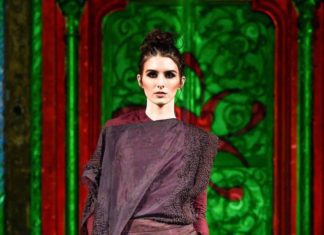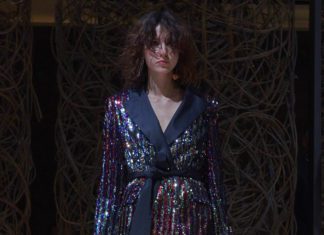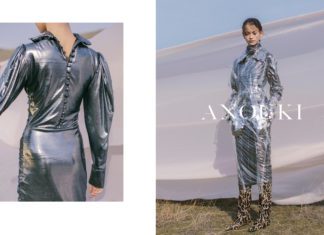

Here at FWO, we’ve been bringing you a little closer to fashion week since 2012. Now, we’re teaming up with FTL Moda and Savoteur.com to send you to NYFW.
What You’ll Get
Tickets for 2 to see FTL Moda’s #IAmNYFW show in Manhattan on February 15th at 6:30 PM, in super seats!
Our reporter Hannah writes from Paris, where she’s getting a sneak peak at a number of upcoming collections.
DROMe Pre-Fall 2016: Style Blast from the Past
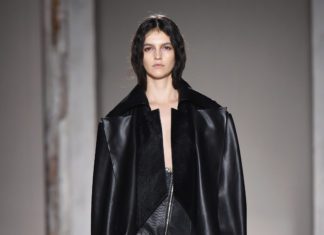
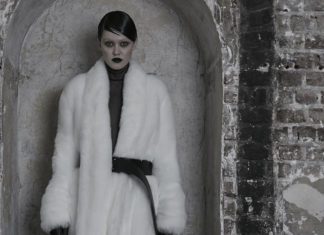
The DROMe pre-fall collection hits a craving you didn’t know you had. This collection explores current trends while channeling a ‘70s flare. The shearling jackets in particular innovate upon the ongoing trend of the heavy trench by setting it back five decades.
DROMe, a brand that proclaims to have a “zealous passion for” and “poetic vision” of leather, lives up to those remarks with this collection. With simple form and lines, the designer lets the material speak for itself in several total-body pieces.
An apparent theme is hodgepodge. First, there’s the clear assimilation of retro and modern trends, so trends that are ubiquitous today (i.e. trenches) … and trends left behind. Then there’s the comparison between elegant and casual — a lot of these garments are red-carpet ready, but casual enough to wear on a daily basis.
These garments are red-carpet ready, but casual enough for daily wear.
A literal hodgepodge of fabrics makes up some pieces, such as the coats above. These are pieces similar to a sweater your parents wore in high school, but are strangely current; a breath of novelty from the past.
The Refined Cowboy: A Look Into Brett Johnson’s FW16 Collection
Brett Johnson
The presence of Italy in the American frontier psyche is nothing new. After all, some of the best-loved depictions of the American West have come to us via “western all’italiana” films (sometimes referred to as “spaghetti westerns”), involving such luminaries as Sergio Leone, Ennio Morricone and Clint Eastwood. Now Brett Johnson pushes the marriage one step fashion forward, at his first NYFW: Men’s show. A Peek at The Collection
Q: Can you introduce yourself and the brand?
Brett Johnson launched in 2013, with just 3 pairs of shoes. Today, it’s blown up into a full collection. We’re currently sold at vendors like Neiman Marcus, but it’s our first time at NYFW: Men’s.
Brett Johnson launched in 2013, with just 3 pairs of shoes.
Q: What inspired this collection?
The main source of inspiration this season is Gianni Agnelli with a 1970s Western film vibe. The collection really resonates with me, because I grew up on a ranch in Virginia. So this classic Western style really reminds me of where I come from.
The main source of inspiration this season is Gianni Agnelli with a 1970s Western film vibe.
Q: What type of man wears Brett Johnson?
Young, professional men who are both creative and in the corporate world; it’s everyone from architects, to athletes, even accountants. It’s always men who are cultured and refined.
Q: Are there any noteworthy details about the designs? Anything in particular we should look for in terms of stitching?
All the details are aimed to convey the luxurious products. For instance, all of the materials for this collection are imported from Italy. The mahogany buttons are laser cut with the logo.
All of the materials for this collection are imported from Italy.
Q: What are three words to describe the Brett Johnson brand?
Refined, cultured, and global.
Q: What’s in store for Brett Johnson? What are your future plans?
My main focus is to continue to produce a collection season after season and really master my craft. I know that’s possible by making sure Brett Johnson stays relevant, and always continues to grow.
Q: Favorite part of NYFW: Men’s?
Honestly, it’s been great getting to celebrate with my team. We work well together, and we’ve really become a family. So this NYFW: Men’s was more a celebration in putting the collection together along with my friends and family.
Q: Final thoughts?
Get ready for great things from Brett Johnson, Spring/Summer 2017!
Via FortuneIf you work in fashion, you already know Eddie Mullon. His brainchild, Fashion GPS, tracks your samples (to the tune of $1 billion in merchandise per year), manages your invites (90% of NYFW shows), and you’re likely one of the 35k influencers and 250 brands or agencies in his community. But — as he tells FWO in his first-ever video interview — thanks to his new merger with Augure, this is just the beginning.
Q: Hello everyone, welcome again to another Influencer series here on FashionWeekOnline.com. I’m sitting here with our honored guest, Mr. Eddie Mullon, who single-handedly has changed the fashion week industry for the better with Fashion GPS. If you haven’t heard of Fashion GPS, we’re going to get into the journey of Mr. Eddie Mullon and how he started it; and it’s really an interesting story so I’m happy that he’s here to share with you. And just to let you know, a side note: this is literally 3 days before fashion week starts. So he took out his time to actually be with us. So we’re definitely pleased, and thank you very much Eddie.
No, no. Thank you for having me.
Q: So the first question is, let’s go back to the beginning. When we were talking off camera you said you had three companies when you first started?
Yeah, three companies.
Q: And none of which was Fashion GPS yet.
No. They weren’t, no.
Q: Okay, so Laptop MD, that’s the one I really know about.
Yeah and it’s still going around; actually I sold that to somebody back in … I think it was about 2004.
Q: Okay, okay. And with Laptop MD you were fixing laptops you said, or fixing anything, and you got to meet a lot of New Yorkers and celebrities.
Yeah.
Q: So with Laptop MD, did you have an idea in your mind already that you wanted to do more, or you were just trying to — in survival mode until something better came along.
Actually that’s a really good way of putting it — I was in survival mode.
So I just moved from the UK here in 2000. I worked for a company for about a year. And it was a very big, large company. And it really frustrated me because a lot of times I was just spending time having meetings.
And just one day I wanted to be productive and do something. So I’m a very hands-on person. So I actually ended up leaving and I had to find something to do. So I actually –- I was actually writing software when I was 12 years old. Back in …
I’m a very hands-on person. I was actually writing software when I was 12 years old.
Q: So you were a late bloomer.
Yeah, no. I think I was born with a computer. And at the time there was a computer called Sinclair. It was a ZX81.
Q: Oh yeah.
And amazingly now on these phones you have like gigabytes, it used to have 1K. And those days you had to actually write your own software to play a video game.
In those days you had to actually write your own software to play a video game.
Q: Right.
So that got me passionate and really that’s kind of the early history but I’ve always been very close to technology and that’s why I started Laptop MD. For me, I wanted to do something that you know, I could roll up my sleeves and I found that fixing computers was a quick way of doing that.
But amazingly you’re right, I actually met so many people in New York City because, for me, it was letting me just get the job done. I was very good at it. So I was fixing computers, maybe setting up your email, your wireless. I was really like a technical consultant but I met everyone from at the time — I actually met Seal, Heidi Klum …
I met Seal, Heidi Klum …
Q: Okay, so I’m going to start fixing laptops because I need to meet these people.
Yeah, at the time and I met some amazing people and it really gave me a good foundation.
Q: Right. So let me take you back one more time. You were mentioning the Sinclair. Do you remember the Commodore Vic 20?
I had all of them.
Q: What? You had a 64?
I had a 64, a Commodore Amiga. I grew up on … yeah.
Q: I had a Commodore Vic 20 and I remember it was so huge. When I put in 2 plus 2 and it gave me 4. I thought that was the best thing ever. I’m like what? I can actually do math on this? So did you ever fix those? Did you take those computers apart and kind of …
Yeah, that’s what I did, even as a kid — I actually have this crazy funny story. A bit younger, I don’t know what age, it must have been at around 10 or 11. I was so fascinated by it, I used to just break everything apart.
Q: I’m sure your parents were happy with that.
No, no, this is a crazy story. So I actually decided, I was looking at the TV, I just wanted to know how this thing worked. So I actually decided to go while it’s on behind it, unscrewed it and started just poking around. And of course you know what happens when you … ?
I was looking at the TV, I just wanted to know how this thing worked. While it was on.
Q: Oh my goodness. I’m glad you’re still here.
I got electrocuted, I got thrown back and I was just like … actually at the time I had hair, I was just like …
Q: So that’s what happened.
Yeah.
Q: So after that it was like no, no more.
Yeah, I always loved technology, I would just always break things apart and I feel like that’s what happened with the fashion industry. That same experience where I was so fascinated.
I would just always break things apart. I feel like that’s what happened with the fashion industry.
Q: So when did the fashion bug hit you? Or did it hit you?
No, it didn’t hit me. It happened by chance and actually it’s a really great story because when I had Laptop MD, I used to go around and post flyers.
And a publicist at KCD actually — at the time I didn’t know what KCD was, just another company — brought me in. She was frustrated because she couldn’t get her computer fixed for several weeks. And I was able to do it within like 20 minutes.
A publicist at KCD needed her computer fixed.
Q: So basically they fired the IT team.
Yeah.
Q: They basically fired them that day. They were like, “You’re fired. Eddie, let’s go.”
But I contributed to that because I’m sure he was really busy; it was a huge company. And then I just got referred through the company.
And then, from fixing the computer, I ended up doing a lot more for them.
Q: Did you go full time with them?
No, no, I actually was servicing other companies, people around the city. I actually enjoyed it at the time. So yeah.
Q: Wow, so after the KCD … was it during that time, or seeing their kind of infrastructure, that you said, “There has to be an easier way to facilitate what these people are doing?”
No, no, that’s not what actually happened. So with everything that I was doing — actually Rachna Shah [Executive Vice President, PR / Managing Director, KCD Digital] at the time — and she’s still there and a very good friend — she asked me, she goes, “Eddie you’re so good at computers and technology … we have a closet, and it’s a mess. Can you figure something out?” So I said “sure” and I actually ended up building a system … I think it took me about two or three weeks.
Rachna Shah at KCD asked me to build a system.
Q: Oh, so it took you a long time.
Yeah. That was actually …
Q: Two or three weeks — good grief! I’ll have to take you to our business closet.
It was a very simple system, and what it actually did was it allowed them to print bar codes and attach them to the samples, so when they’re sending them out they’re not spending 40 minutes hand-writing every single piece and detail …
It allowed them to print bar codes and attach them to samples.
Q: And itemizing.
They just scan, scan, scan; it prints out the delivery, and it will be done in 2 minutes. So for me, that was — and I actually didn’t realize when I built it — it was like, I saw what they were doing, and when they were using it, it was like, “This is incredible. You know, I can actually do this.”
And especially, what really touched me at the time was just watching the interns. Because it was really the interns: you had people in the back room, they just started giggling. It was just like, “Oh my God,” because they could see how much I was going to save them. And it not only did that, it also tracked where it was going, so when they needed to get the samples back …
The interns could see how much I was going to save them.
Q: Oh, they knew exactly.
They knew exactly where it was. So it was a very basic sample tracking and really that was the beginning.
Q: Did you call it “Fashion GPS” at that time?
No. I think I called it “Track 12” or “Track 0,” I couldn’t figure out — it actually took about 2 or 3 years to find the name “Fashion GPS,” and a lot of thinking.
Q: Really.
You know sometimes these things …
Q: When I heard it, I was like, “This is ingenious. How did he get that name?” And I always wanted to know how Fashion GPS came about, the name itself. What it because of just the GPS navigation, and you kind of said, “You know what? Fashion GPS.”
Actually, you kind of got it there, and I think for me, GPS is so instrumental to technology.
Everything around us is based on that now. So I just started thinking about technology, that’s the thing that’s really impacted us hugely. It was like GPS and tracking and location, and everything that GPS does. And I thought, “When you say ‘GPS,’ you instantly know it’s technology.” And as soon as I put the two together, I was like, “Is the .com available?” And it was available.
And at the time there were all these other companies available and they were calling them something like I think “celebrity GPS,” and now I see that. But back then, you know, I believe I was the first one who thought of that, and I created Fashion GPS.
And as soon as I put the two together, I was like, “Is the .com available?”
Q: So let me ask you, how did it go from Track 12 to Fashion GPS? How did you start expanding on just that technology of tracking the closets to now: where it facilitates invitations and everything with the shows?
That took many years … I feel like almost 15 years to get to where we are now.
And for me, it really was a discovery, you know. I feel like I was a kid in a candy store: from seeing a sample and what I could do there, and then I started to look at other things like what does it take to put on a fashion show?
And prior to technology or Fashion GPS, just sending out invitations that would be biked — you know, that would be printed; the seating they basically had a big table with stickies; they take a big picture; they take you to the copier that scales it down, and if you’ve got another office, they’re faxing it over. And it was just very …
For the seating, they basically had a big table with stickies.
Q: It was mayhem.
So … after all of that I actually went back to Rachna and I said, you know, “Just give me a chance; I know I can streamline the event management.” And she agreed, and we spent about a year just really understanding how that process really took place. You know, the seating and everything that’s involved. And built the technology around it.
And it was very basic at the beginning. It was, you can manage your guest list, you can send electronic invitations. And at the time, that was the first, I believe — I know there are others — but in fashion I would say.
And a very basic seating chart as well. And that just kept on evolving.
So for me it was just — I started to understand a sample ends up at a fashion show to be showed, people come and then I started to think about, you know, this is a community of people that have relationships, and there’s nothing that is really tying them together.
GPS Radar
And then I thought about starting a community — and that’s GPS Radar now — to really centralize all the events. Not only New York but London and Paris.
And it was challenging at the time because with the different agencies obviously they’re competing … but for me, I could say that it’s the same contact list. And it took about two years — and a lot of conversations — to have the major agencies and brands agree to do it.
It took about two years — and a lot of conversations — to have the major agencies and brands agree to do it.
And when they did, that’s when we launched Radar, which then integrated — which is a community. And it was more of a discovery. So where — after you go to a show — now you can RSVP very easily with the app, and you can log on and see all the shows that you went to.
Q: As I just did a few minutes ago. I was just showing the cameraman, I just did one. This is why I love it right here.
We had an opportunity to partner with Mercedes-Benz Fashion Week. And I don’t know if you remember Bryant Park, it was always …
Q: Do I remember it? Don’t cross my heart. I loved Bryant Park. I loved it. I loved it …
… there was a good attitude and I was the — I would just stand outside, back before we were doing events and I actually felt, you know, I want to be in there. Because this is really exciting, but I could see the chaos.
I actually felt, you know, I want to be in there.
Q: We were probably standing side by side, not knowing each other, looking at it like, “One day ….”
Yeah. And I could see the mess and it’s just — and I felt that we could actually help streamline a fashion week. And that’s when we partnered with Mercedes-Benz, and that’s when we introduced kiosks and other methods to just — really at the end of the day you guys are busy, you want to go to a show, you want to organize yourself, you want to get to the next one.
And I was just looking for a solution to do that. It worked out really well. It was a success. And I actually remember the time when we were just about to launch and it was — I’m sure it was like 9 o’clock in the morning, my team was still developing, and it was like a feature film …
Q: My hands are sweating now thinking about how nervous I would have been.
And there were people at the door, and they would hit the button, and everything booted up, and it just went you know, it’s okay.
Q: Oh, my good. Thank god.
And it was a success. It actually was.
But we had our kinks, you know — there is a process, but it worked out really well. But if we think about Paris, it is done differently. They don’t want kiosks; they don’t want to use phones; so what we decided to do is actually put RFID chips in the invitations.
Paris is done differently. They don’t want kiosks; they don’t want to use phones.
So now a lot of the shows in Europe, you can check in by just booking your invitation, but our technology is acknowledging that you’ve actually turned up. And it registers on the iPad, so that they can guide you to the seat.
And all you want to do is — you know, for me is how can we quickly get you in, watch the show, experience it, and come out.
Q: As fast as possible.
Yeah. And then just the final iteration of that was you’re going to a show to basically experience — but then you don’t have the content. So now we actually deliver the looks. Right after the show — within half an hour to an hour to the app — so that then it goes to 360: you have seen the show, you can favorite what you like, maybe you’ve seen 10 shows. At the end of the week you can then log in and you can see all the shows, which ones did you miss. But then you can also request a sample and then it goes 360 back to the sample tracking.
Q: That’s amazing.
Okay. Now I’ve kind of completed the circle. But that took a long time.
Q: Right. Right. You know, you mentioned something, when you went back to KCD and you asked them to give you a shot at streamlining everything. It’s funny that they didn’t try to say, “okay, well, since we basically allowed you to do this, we want a piece of it now.” They never approached you about trying to like let’s say get like 20% of the company and say, well, we helped you do this, this should be part of us as well. That’s why I was shocked about …
No, no. I was just going back. It wasn’t just KCD …
Q: Okay.
It was — you know, we worked with KCD and there was Bismarck Phillips, Donna Karan and then — there was a lot of brands and people asked me “How did you build this?” I didn’t build fashion GPS. I just executed it. I listen to the industry, I listen to my clients.
Q: Got you.
So really in the fashion industry all of my clients built this. I was just executing it …
Q: Got you.
… you know, making it together. So I think at the end of the day when I look at that it’s everyone really contributed and often that’s where I became really passionate about the industry because I was giving something and they were getting something. Because they’re frustrated and now — and if they’re running a report or checking in, it’s a lot easier. And I’m sure if you ask a lot of them, our clients on their end — you know, what has GPS done for them? Or even on the media side like the people.
So all I thought about was how can I make this — how can I connect the industry, make it efficient? And not just about connecting like LinkedIn, you know, you just usually connect with people and then nothing really, you’re just connected. And I know it actually has other uses but for me it is like how can I connect and make that useful? You know, get you and RSVP. Research new brands and I think that’s where we’re going now.
Q: That’s what I use it for, researching new brands. I love it. I love it.
And we’re covering brands worldwide and it’s not only look images, we’re putting in product images. We’ve got another product now, GPS Styles, that allows you to upload your brand and it’s really to me also what’s important because the company was organically grown. As I started to understand it what we do as a company, we help brands launch their product to the marketplace, from concept to consumer. And that’s really important for us.
GPS Styles
Q: Now for people that are watching and they have a brand, how — do they try to contact you to get on — like as far as introducing them to the marketplace, can a brand contact you and say “Well, we want to be on Fashion GPS” or they kind of organically — you discover them and you reach out to them and say we want to feature you …
Yeah. We have a sales team now. And also — you know, for me I’m passionate about emerging brands because I understand how difficult it is. You’re building a business, you’re creating beautiful things and you go to manage your contact. It’s a lot. And especially if you have a team of 2 or 3. So for us what’s important is we provide a technology.
So for them if they’re using our stars, they can upload. So instead of printing a look book you can upload your collection and that gives access to a — it’s about 33 — 35, I haven’t checked the last numbers of our community and instantly they’re getting access to that. So as you were saying you go on there to discover new brands. On their end they’re actually getting who’s looking at it so that they can contact you. They can say “oh you’re interested in my brand? Would you like a sample?” So it’s really a way …
Q: That’s ingenious.
Yeah.
Q: That’s ingenious.
No, it’s about how can we help both ends. So it’s helping the influencers, it’s helping the media, it’s also helping the brands. And we also want to be the connector but with smart technology.
Q: You are the connector. Not wanting to be anymore, you are …
I still feel that there’s a lot to do.
Q: So let’s get into that. Because I — and this is probably why the Lord didn’t bless me with the technology gene I’m not trying to do something like this. I would think we reached our plateau. Like there’s nothing else we can do. What else do you see for Fashion GPS and just overall, what else do you see it expanding into?
There is so much. So I don’t know if you heard, we just recently announced that we merged with a company, so …
Q: Merged?
We merged, yeah. It was just announced with Women’s Wear Daily.
Q: Oh in WWD, okay. That’s alright, we love WWD, they’re not competitive; we love everybody.
Yeah, Tech Crunch and it’s actually good because what was important to me was when we look at the world it’s all about digital, it’s all about influencers. And with that there’s a company that we’ve been competing with in France called Augure.
And I actually met with their CEO back in June, last year. And we started discussing, and what’s interesting is they’re doing sample tracking but they didn’t really focus on fashion, they’re a lot broader. And they were doing influencer marketing. So that’s what’s been on our minds for the last few years, but we’re just doing so much.
So part of the merger was to ultimately be able to provide a platform for the brand, for the agency so that not only can you be efficient in what you do, with sample management, event management, your digital assets but also how can you reach the right influencer?
How can you reach the right influencer?
Because everyone in today’s world is either on Instagram, you’ve got Twitter and there’s so much out there and it’s very noisy. And that’s what this technology does.
So the combination is to take the two and be able to provide something that is so compelling — and really at the end of the day it’s my passion — how can I help the designer be able to ultimately reach the target audience? And the influencer influences the consumer and that’s what the technology does, but then tie that back into your event. So our platform events GPS not only does full-blown — shows live Victoria’s Secret …
Q: You mean Victoria’s Secret that’s on CBS music?
Yeah, they use …
Q: Okay, so next year can you just slide me in as a Fashion GPS member because I need to go to the Victoria’s Secret …
I can’t do that; you’ve got to go through the right check. You should talk to KCD.
Q: Oh man.
Yeah, so …
Q: So that’s officially now launched. And people can actually start reaching out to that. Say there is an influence — say I’m an influencer. Could I reach out to events GPS and say listen, I just want to be in your system so if brands want to contact me …
So that’s exactly what we’re doing. It’s currently when you have an event or a press day or any event, it could be inviting 10 people or 1,000 people. You’re using your own contacts.
What we can now do is I’m launching say, for example, a red dress, and I want to reach influencers that write about red dresses right across the Internet.
And I think this is what’s important in today’s world. You can invite somebody to a physical show which should not go away. It’s an experience, it’s something that’s very important to the fashion industry. But you can also invite people that can’t attend because maybe they’re in Japan or worldwide. And that’s what we’re looking to do.
You know, you may have somebody in Japan that loves writing about red dresses — that’s an influencer that can reach consumers in Japan. And that’s what we want to do. So when you put on your event you’re inviting say 1,000 people. We’ll then in the future be able to, once we integrate — maybe you should be inviting these, because they’re closer to your brand and it’s the influencer that you should be working with.
And not only for events but for our GPS samples, our GPS Styles. It’s just a way that that could really streamline …
Q: Wow. That’s great because influencers are huge right now.
They are, but it’s very hard to find the right influencer. And it could be a small bracket of say 5,000 really high-end influencers. Like you’ve got …
Q: Olivia.
Yeah. But you also have thousands of — maybe hundreds of thousands — of upcoming, and that’s what we can track.
Because if you’ve got maybe one influencer but you’ve got maybe you’ve got a thousand that can talk about your brand because ultimately you want to collect that to make better decisions as a designer. What should I put into production?
Q: Absolutely. So you’re not wasting money on production on a dead product.
So you do your physical show or you just do a digital fashion show through our community.
Q: Wow and that’s ready to go right now?
No actually with GPS Styles you can upload your collection and we’ve got case studies that we’re putting together that within 24 hours you’ve got thousands of views and that’s your target list.
It’s your lead gen of retailers or media that are interested in talking about your collection. You know, maybe featuring it. So you can be more creative. Use data. And today’s world is all about data. And that’s what we want to do. Efficiency and provide all of that back to the designer so we’re making things that people want.
Today’s world is all about data.
Q: And making them easier to use.
Just connecting everything. And that’s really the reason for the merger. It’s important and I felt that back when I started the company. I self-funded it, I actually raised capital in 2010 and I just realized this is so big. And I can’t do it. I need investment.
But at the same time, when you’re growing a business as well — especially at the scale that we’re growing now — we really needed to find somebody that fits in nicely with our vision, our culture. And everything is integrated incredibly.
We really needed to find somebody that fits in nicely with our vision, our culture.
Q: So here’s a good question for you. Now, I always ask and I love to hear the answers. What would you say, what would the Eddie of today tell the 12 year old Eddie that was electrocuted about his journey to kind of expedite the process of getting to this point? What would you tell him about the pitfalls? How would you navigate him a little better to get him to this point and at a quicker rate?
I would have said study more.
Q: Really?
Because for me, everything was an experience, and I think this is really important. Diversity is very — because I was born in Malawi in Africa. Moved to the UK and then moved here.
Diversity is very important.
Q: So you traveled a lot.
I experienced a lot of different cultures. I travel a lot as well. And that’s very important. But you know, going back, I would have said I was more anxious about getting into … you know, I would have said, actually, “Electrocute yourself twice.”
I would have said, actually, “Electrocute yourself twice.”
Q: Oh wow, so much for studying more. There goes that.
I don’t know but, you know, it depends. It’s been a great journey and I think I wouldn’t change it. I think it’s everything has been an experience and it’s great.
Q: So, what do you think about the fashion industry today? Do you feel it’s more productive today or do you feel it’s — because some people say they liked the more exclusivity of it when it was back in the day when it was Bryant Park and it wasn’t like everyone could get in and it wasn’t such a spectacle where people didn’t appreciate it. Because I remember when I was attending Bryant Park shows no one would ask me, “How can I get tickets?” They just knew it wasn’t for them.
Yeah, of course.
Q: Now people call me like right now my phone probably has about 10 messages where people are like how can I get tickets? Can you give me a plus one? I’m like has it changed to where people think it’s a super bowl event for like fashion? Do you feel like it has changed more now because of technology that more people feel like they should be there? Or do you feel that technology has helped to bring it to a massive audience to where it’s just a bigger spectacle overall as far as …
No it is because everyone — you know, if you think about maybe 10 years ago and you were going to a show, you wouldn’t access the images or anything. Now you’ve got people Instagramming it, and I think that that’s the fascination. It’s the more desire to get in and get seen.
So I think it’s what the consumer had access to before, there was really nothing. And now they’ve got almost everything. Seeing it almost in real time; I think that’s really what’s changed. And I feel like and this is what I’ve been thinking a lot about it and a lot of the work that I’ve been doing is you know what is that next step?
Before the consumer had access to really nothing. And now they’ve got almost everything.
You know, how can we take the fashion show, the industry to where social and influencers are and engage it. Because there is a disconnect. And it is right, especially for luxuries. Luxury is a desire. And a lot of the consumers they can look at it but they can’t buy it. And I think that’s what a lot of the luxury brands want. Because it is there. You know, you want something and you save for two years to buy it or maybe you have luxury consumers that can buy.
Seeing it almost in real time; I think that’s really what’s changed.
But at the end of the day when I think of other brands, obviously they are producing beautiful things that they want to reach the right buyer or the right consumer. And I feel like that’s — you know there’s a lot of noise now with technology. So you can still have your intimate — and I’ve learned so much through the industry that our technology does do that, you can actually do a private event and then only broadcast it privately through specific — we call them Private Look Books, you know, through a system.
But I still feel like there’s a lot of changes that’s going to happen. A lot of discovery and hopefully you know, we’ll be able to help with that. But we are going for that transition.
Q: So do you feel now with that transition do you feel that the industry overall, just on a whole scale do you feel that you’ve learned more now that you’re lost in it or do you feel that you’ve learned more when you were first on it? Like right now what would you say is the biggest thing that you’ve learned after launching Fashion GPS?
The biggest thing I feel that there is still a lot that needs to be done further down the cycle.
So where I came in was sample management. Which is now you create your own prototype, your sample and you need to organize that with a press or even internally. So I figured all that out to reach it but if you go back to that you know, how was the sample made? You know, that you’ve got materials that comprise of it. And also samples you have different versions. You have version 1 to version 10. It changes and even the cutting and all of that.
So there are some technologies that do that, but I feel like if you can connect the material and the manufacturers all the way as it’s being launched that could really help tremendously. And that’s something that I feel I’ve learned a lot by spending a lot of time with just observing designers, meetings that I didn’t understand before.
Q: So who in the fashion industry did you meet where you were kind of like star struck where you were like wow, I can’t believe I met this person. Because I created Fashion GPS I got to meet this person and who was that person that — maybe not in front of them but after you finished talking with them you were like wow, I just talked to such and such.
I met numerous people from Francois Pienaar to Donna Karan and Carolina Herrera. I think they’re all — Calvin Klein — they’re all amazing people. And it’s such a great industry. And I’m so grateful to have stumbled back then to be part of it but …
Donna Karan, Carolina Herrera, Calvin Klein — they’re all amazing people.
Q: Right. If you weren’t doing this, what do you think you’d be doing? If you never went to KCD to fix their computers, what do you think you would be doing? You think you would have Laptop MD?
No, I think I got to the end of the road with Laptop MD with … I actually did another I actually was working with — at the time as I said was actually working with a lot of things.
I was managing an artist, Ellie Lawson and got her signed to Atlantic Records. So I think I would have ended up …
Q: What don’t you do over here? Give someone a chance I mean you’re changing industries and you’re managing artists and getting them signed?
No, that was back then. So I think with all of that I think I would have done something in video games. I actually also created a video game back in 2000. Which was with VT records at the time. Just part of Virgin Music. And that was a full-blown — I think I would have ended up in the video game industry.
Q: Funny you say that, I was going to add, that was my next question. Have you ever thought about creating say a game or something that’s like an educational tool to the younger people that are trying to get into the industry to kind of teach them kind of the steps of fashion kind of like a video game where it’s like, I don’t want to use this reference as the reference but like Kim Kardashian’s game. I know a lot of people don’t like her for whatever reason but …
She has a game? I didn’t know. Okay.
Q: Yeah, she has a game. It’s the number one sold or now Kyle Jenner’s just beat hers. But it was the number one most sold thing on the Internet, it was crazy. I actually downloaded it for my daughter.
Yeah.
Q: And once I started looking into it, it’s actually a good game because it teaches them how to pair colors, how to color block and things of that nature. So I was wondering if you had anything …
Actually that’s a great idea, thank you Chris.
Q: Oh listen. 20%, we’re going to grow it together.
Yeah.
Q: It’s going to be called GPS video games and we’re it. But just something — because when I go talk to children about the fashion industry, they always ask, the one thing they ask me is, how can they be a designer or how can they be what I’m doing. But I don’t think they take the time to — like you said — study. Or actually know the industry. They just want to skip from where I am now and how can I be in the front row of the show. Forget about a lot of the work. I think a lot of it is Instagram, it’s social media because they see a lot of Instagrammers who are famous because they’re free style on Instagram and they feel like they can do that and just skip learning history about it or just learning just basic things about patterns. So I was wondering maybe if you had something in the pipeline that I could kind of …
That is a great way of putting it because when you think about it, when you think about the front row of the fashion shows but there’s so much. You’ve got everything from production, you’ve got the designer element, it’s so vast, you’ve got accounting, it’s so deep when you look at — and I think that’s what you don’t really see.
So maybe that’s something that could be good as a journey that children can see and I think the game would be great as well. How to get through the industry to the front row.
Q: Okay, so we’re going to wrap it up really quick. I was going to do a quick lightning round three questions, whatever comes to your mind, really quick. I’m going to give you two options just yell it out and then that’s how we’ll close.
Okay.
Q: Okay, so first, champagne or coffee? Which one do you prefer?
Coffee.
Q: Coffee. Flying or driving?
Flying.
Q: I’m like man, my own words. The video game industry or the fashion industry?
Fashion.
Q: Really? He’s like “I’m not ruining my connections. Fashion.”
Fashion video.
Q: Fashion video. And lastly where’s your favorite place that your journey has taken you to that you loved?
For work or for … ?
Q: For pleasure.
For pleasure? Thailand.
Q: Thailand, really? Wow.
There’s a small island Koh Chang that’s incredible. It’s so hard to get there. You have to fly to Bangkok and then another plain to Trat and then you have to take a ferry which takes about two hours. And then you’re at this little island.
Q: That island better be worth it after all that travel.
It really is. If you’ve seen the beach, it’s like that. It’s beautiful, you really get away from everything. And you need that. Even though I’m a technology — I love technology, once you get away, it kind of cleanses you.
Q: You need to disconnect for a little while.
And the culture, everything about Thailand — I don’t know if you’ve been …
Q: No I haven’t been there.
You should go. So …
Q: As soon as you hire me I’m in. Gone.
Yeah.
Q: So thank you Eddie, I appreciate it. I hope you guys have learned a lot and we’ll see you next time here on Influencer series with Fashion GPS and Fashion Week Online. I’m Chris Collie, see you again.
##
Special thanks to Nick Gomez of Trunk Club NYC, for the space (and Chris’ blazer).
Artist Greg Lauren has some pretty strong ideas about masculinity and femininity. At least, if his Fall / Winter 2016 collection is any guide.
Anyone who fears menswear has gone too far into the realm of dandyism can breathe a sigh of relief.
After all, Lauren’s collection drips with macho sweat and grime, like Rocky Balboa out for a ride with Clint Eastwood in the world’s most improbable — yet oddly believable — pairing.
Lauren’s collection drips with macho sweat and grime, like Rocky Balboa out for a ride with Clint Eastwood.
Make it so.
But … just when you think you have the collection all figured out, you see these rugged, hyper-masculinized heroes … wearing skirts. Not a kilt, mind you. More akin to the “skant” that appears in the Star Trek universe.
Which is to say, a skirt.
2015 saw our culture take a longer look at what we perceive to be “masculine” and “feminine.” From gay marriage to the “tough gals” we cheer for in shows like Game of Thrones, Jessica Jones, and even Star Wars, the message is deeper than feminism or masculinism: it’s a sudden onrush of humanism.
This new wave of thinking forces us to consider that toughness or sensitivity may not be, at root, “masculine” or “feminine” traits after all, but human forces that exist in all of us, in varying degrees and combinations.
Toughness or sensitivity may not be, at root, “masculine” or “feminine” traits.
Although Lauren’s collection can be parsed many ways, it seems clear that its intention is to challenge our traditional ideas, and open our minds (as all great art does) to new skeins of possibilities.
The collection — which was presented as part of New York Fashion Week: Men’s at ARTBEAM — was captured in stunning detail by the museum-ready photography of Michael Barr with Greg Lauren.
Although certain elements recall some of his previous collections, channeling “urban nomadic” designers (such as Ann Demeulemeester, Rick Owens, or Yohji Yamamoto), this new collection shows more of kinship with the playful theatrical thunder of Dean and Dan Caten of DSquared2.
DSquared2 Fall / Winter 2013
But — just as a strong concept can only be a loom — comparisons fall short of Lauren’s true accomplishment with this collection: an assembly that demonstrates mastery in every detail.
In the end, the real standout was the masterfully paired and blended color and fabric combinations, with detailed, cinematic distressing. Every spot-on touch makes it clear Greg Lauren is nothing less than a genius at work.
Every spot-on touch makes it clear Greg Lauren is nothing less than a genius at work.
And a choice of The Meters for the video soundtrack is just the cherry on the sundae.
I spoke with Sara Moukhles, their freelance artistic director, regarding their fashion show “We Are The Kids Your Parents Warned You About.” The show took place on January 30th at Le Coeur Art Gallery on Rue de Turenne in Paris’ 3rd arrondissement.
Sixth June is affordable.
Trendy beanies start at 15 Euros, and sweatshirts can be purchased for 35 or less. This accessibility can be misaligned with the typical features of a high fashion name. In response to this conflict, one of the goals of the show was to assert the brand’s high fashion creativity in spite of its attainability. Another goal was to break down barriers between the often too-serious world of high fashion, and youth.
One goal was to break down barriers between high fashion and youth.
The show worked effectively like an art exhibit — you entered a studio with two floors, with several separate galleries throughout. Opposed to their usual place on the runway, models in this show bordered the periphery, which threw the spectator in the middle … as much a spectacle as the models.
Sara chose the format of an art gallery to equate the models as pieces of art. Deliberately, attendees were under two commands: “look but don’t touch,” and the irresistible drive for a perfect Snapchat story or Instagram. In effect, there was a tug-of-war between behaving adjacent to the untouchable world of art, and joining it.
The Collection
[portfolio_slideshow id=10637 align=center width=600 click=advance thumbnailsize=40 showcaps=true]
(Photos: Emma Foster)
Sara’s “We Are the Kids” was an argument in defense of young people today. She defined youths to be “this new generation condemned by some as no future generation.” She continued: this new generation is social media users, rule breakers, and mess makers.
“We Are the Kids” was an argument in defense of young people today.
The message in this show was to express that the new generation — via their arsenal of selfies, pithy quotations, and tumblr — will not only disrupt the current status quo, but will shatter it with utter disregard for the rules and expectations.
As far as the actual collection goes, the clothes carried a defiant and proud tone. Some were torn or defaced with red paint, and patched with slogans like “Please tear this up.”
Downstairs was a beige, tan, and rose ensemble that had a more commercial appeal. The endorsement of “Kanye for President” on baseball caps and shirts worked as a statement neglecting old-fashioned politics in favor of modern and remorseless idolatry.
“Le smoking,” the wingtip shoe, intentionally large watches, and a number of other masculine pieces make up many a fashionable woman’s wardrobe these days.
In fact, most of them are declared “must-haves.” Women have been stealing from the closets of men for decades, but perhaps it’s time for an ironic twist.
Women have been stealing from the closets of men for decades, but perhaps it’s time for an ironic twist.
SIX THINGS MEN CAN LEARN FROM WOMEN’S FASHION:
1) Dress for your body type
This rule of thumb is the first thing out of many women’s lips when asked: what fashion guideline do you live by?
Nearly every stylish woman knows which body type she is and how to flaunt it the best she can. Because of the extensive research on this subject regarding women, many men disregard the rule. But every male body is different, so dressing each type varies.
Every male body is different, so dressing each type varies.
2) Skincare is everything
Alpha Fit by Clarisonic
Women tend to be quite attentive to their skin: its smoothness, evidence of aging, spots, acne, and a plethora of other issues. Skin is skin; men have the same needs and issues, but the emphasis on their skin doesn’t stretch nearly as long.
With frequent shaving (or not!), the face becomes a battleground of oily, dry, or irritated skin. Products for the skin can be pricey or seem irrelevant, but its an investment for the future. And as always, sunscreen is a must.
The face becomes a battleground of oily, dry, or irritated skin.
To address the growing attentiveness of the male population to their skin, products have entered the market specially tailored for a man’s skin, such as the Alpha Fit, by Clarisonic.
(Our publisher got this for Christmas last month. Okay, he got it for himself. So far he reports it feels nice on the face, but it still hasn’t magically removed the hideous bags under his eyes.)
3) A thoughtful spray goes a long way
The art of choosing a perfume is a delicate and serious one.
And one can bet many women know where and how to apply it for maximum results in regard to allure.
Unfortunately, many a man has walked by with a wall of cologne at their heels — or a bottle of drugstore deodorant the victim of their abuse. With a little schooling in the matter and a discerning sniff, suddenly a few sprays make all the difference.
Many a man has walked by with a wall of cologne at their heels.
FWO recommends ditching the department store and trying more interesting and complex fragrances from someplace like Lucky Scent. Our two top picks? Arso by Profumum, and Kilian’s Pure Oud, for the adventurous.
In the closet of nearly every fashionable woman in the know, there is the mythical “little black dress” — quality-made, thoughtfully purchased, and instrumental to her array of ensembles.
The equivalent? A nice quality suit (NQS). The pieces and parts of a suit present endless opportunity for stylish combinations. In colors like gray, navy, or black, it’s a piece that’s worth the investment.
And don’t be afraid to mix it up. Over-coordination is a distinctly American obsession.
Many women enjoy looking chic at the post office or towering in heels in the dairy section. It’s a point of pride some fashionable women hold on to.
There’s also a sort of mystic allure when a man appears well dressed for no apparent reason. Even the framing of a car window when reaching for fries in the drive through is an opportunity to show off your new shirt.
There’s an allure when a man appears well dressed for no apparent reason.
6) Cling to your signature piece
The key to being stylish is just that: style.
To have style, women know that they need a clothing watermark: that one piece that is their signature. Whether it’s a pair of glasses, a perfect cat-eye, or a vintage bomber jacket, it’s what makes her who she is. As to avoid being lumped in the other 3 billion or so men in the world, a stand-out piece is a must.
We recently got a sneak peak at Hed Mayner’s AW 2016-2017 lookbook. This is his fourth series, after his début in SS 2015.
Historically, the Israeli designer has juxtaposed harsh with soft ensembles. In 2015, he used leather and slightly harsher pieces, perhaps most memorably with the torn bomber jacket shown below. As a contrast, he brought in gentle, vaguely monastic pieces, including the white outfits shown below. In the current collection he takes this religious theme and runs with it.
(F/W 15)
(S/S 15)
(S/S 15)
(S/S 15)
In his previous collections, Mayner honed his tactile style by comparing harsh and soft. In the current collection, he creates a new dichotomy between loud and muted. He commits fully to the monastic aesthetic, and he explores what happens when religious figures of varying degrees appear, from calming and airy to loud and proud.
He explores religious figures of varying degrees, from calming and airy to loud and proud
The hooded look and the Buddhist monk ensemble are unmistakably religious. Adjacent these pieces, the wrap-style lavender crew neck comes across as relatively diluted. In a previous collection, this piece may have carried more weight as a symbol of religion.
Mayner shows us how much he has learned in his still young career, through an erudite — and very vocal — collection.
French-born Claudine Sorel is a Parisian designer who has dedicated her life to art and fashion.
[portfolio_slideshow id=17059 width=550]
In 1998, after a trip to Paris to learn the art of putting patina on 18th-century furniture, Claudine launched her first furniture and lamp business. In late 2003, during a dinner held at the French Embassy, Claudine met Mark Bloomfield, a Washingtonian businessman. “Love at first sight” resulted in Claudine marrying Mark and moving to Washington D.C.
In 2007, Claudine founded her first online business, “Les Caprices de Claudine,” specializing in home decoration, with products imported from France and bronze sculptures designed by her. In 2012, she launched the POSTES line: 100% bespoke handbags, a re-imagining of the traditional all-leather French Postman bag.
The bags quickly gained a celebrity following, and were worn by celebrities such as Brooke Shields and New York stylist June Ambrose.
At that time, each POSTES bag required a few months to complete.
Now in 2014, Claudine is introducing a new line of POSTES bags, 100% handmade in Manhattan, in a very limited edition series.
Q: The POSTES Collection is a re-imagining of the traditional “French Postman Bag” – the leather mailbag used for more than 100 years by the French Postal Service. What drew you to it? And how did you make use of the form to create something new and fashion-forward in the POSTES line?
I saw the original bag at an antiques store in Paris, and it was love at first sight. I immediately imagined it in luxurious materials and carried by very sophisticated people. That was the beginning of my concept of the POSTES bag.
It was love at first sight. I immediately imagined the traditional bag in luxurious materials
I kept the main structure of the original bag: a top flap, two gussets divided by a zip compartment and a lock. Then, I entirely redesigned the bag around this main structure. My idea was to design a non-conventional, extremely feminine, practical, comfortable, cute and luxurious ‘POSTES’ bag.
My idea was to design a non-conventional, extremely feminine, practical, comfortable, cute and luxurious ‘POSTES’ bag.
I also aspired to give POSTES a strong identity characterized by striking contrasts and oppositions of colors and materials. I love oppositions and contrasts. Another feature that distinguishes POSTES from other bags is its unique clips system (the “Bethesda clips”) located under the padded shoulder straps, which allows the chain to be adjusted and the bag to be worn shoulder length or as a short arm bag.
Its unique clips system allows the bag to be worn shoulder-length or as a short arm bag.
POSTES’ “Bethesda Clips”
Q: A number of celebrities have worn your bag, including Brooke Shields. How does that make you feel?
I am so honored that Brooke Shields, who is so sophisticated and elegant, finds the POSTES bag “divine” and that she feels “quite chic” with it.
I was also very flattered that the very talented New York stylist June Ambrose carried the POSTES bag many times last year during New York Fashion Week. All these compliments give me a lot of motivation and strength to pursue my passion for the POSTES bag.
I was also very flattered that New York stylist June Ambrose carried the POSTES bag last New York Fashion Week.
[portfolio_slideshow id=17060 width=400]
The gorgeous and brilliant British actress Hannah Yelland will carry the “Hannah POSTES bag” during the premiere of the exquisite play “Brief Encounter,” which will be held February 14-23 in Los Angeles and March 29-April 13 in Washington DC at the Shakespeare Theater.
Q: The bags are 100% handmade in Manhattan. Was it difficult to find the right craftsmen to bring the bags to life? What was the journey? And what were (and are) the criteria for finding the “right” craftspeople?
It took me few years before achieving the final version of the POSTES bag. I had two criteria in mind: a very French design, 100% handcrafted in the USA, and only made in a limited edition series.
I had two criteria in mind: a very French design, 100% handcrafted in the USA, and in a very limited edition series.
These two criteria were part of my vision of the new POSTES line as it very much reflects who I am: bi-national and non-conformist. POSTES is creating a new identity through its limited edition series.
The journey started in 2011 when I went to Amish country in Ohio, where I had the first ‘test’ prototype made of the bag. Unfortunately, in spite of some very nice quality work, it didn’t meet my expectations. So in 2012, I pursued my quest in San Francisco, where I met very talented craftspeople who made the first versions of POSTES, including some in alligator leather. At that time it took 30 hours to create one bag (celebrities carry some of these special versions).
In the beginning it took 30 hours to create one bag.
Here are few criteria that I consider essential for finding the “right” craftspeople: High-end quality expertise; extreme attention to details and finish; discipline; talent; punctuality. It’s like cooking; you can’t miss one ingredient!
[portfolio_slideshow id=17061 width=550]
Q: What materials go into the making of POSTES?
Each POSTES is made entirely of leather (interior and exterior), including some with fur and in alligator.
The locks are designed by me and made in Italy and New York City. All the hardware is manufactured in Italy. The collection features some painted-edged bags as well as some with grosgrain ribbon sewn on each side of the bag.
The locks are designed by me and made in Italy and New York City. All the hardware is manufactured in Italy.
Q: What sizes does it come in? How many looks will be introduced in the new season, and how many of each look will be available?
Presently, POSTES exists in two sizes: a “City” size, perfect for a tablet and women’s everyday needs and one “Mini” size that is actually an extremely elegant, small cross-body POSTES bag, convertible to an adorable clutch that fits essential valuables (phone, key, make-up, etc.).
At the moment, the City POSTES Collection offers over 20 models; the Mini POSTES Collection has around 12 models. And both include models in fur and alligator leathers.
The City Collection offers over 20 models; the Mini Collection has around 12. Both include models in fur and alligator leathers.
Q: Where can people buy POSTES?
For the time being POSTES is available on our e-shopping website: www.claudinesorel.com.
Q: As a designer, do you want to expand into other areas? Do you plan to eventually create a full line of accessories? If you did, what would you create next?
Before I started the POSTES concept I was in the home decoration business, which still exists. But today, I want to devote my future to this new Claudine Sorel brand, starting with the POSTES line. The POSTES bag line will evolve over time with different kinds of material … and I will certainly create a new bag line and accessories.
Q: Do you foresee making the bags available in stores? What are the advantages or drawbacks of keeping control over production in limited editions?
Limited edition means exclusivity and uniqueness. POSTES is an intimate bag: only four people in the world might have the same one.