

For the better part of a century, the history of textured hair was written in the smell of burning keratin.
If you are over the age of twenty-five and possess a coil pattern ranging from 3A to 4C, you know this smell. It is the scent of a Sunday morning kitchen, a hot comb resting on a stove, and the silent prayer that your ear wouldn’t get singed. For generations, the salon experience wasn’t about care; it was about correction. It was a place where you went to apologize for the hair that grew out of your head.
To understand why the modern “Curly Specialist” is such a viral phenomenon today, we have to look at the architectural violence of the past.
The Era of Suppression (1950s – 1990s)
For decades, the cosmetology industry operated on a single, brutal metric: Straight is professional. Straight is clean. Straight is beautiful.
Cosmetology schools used mannequins with straight hair. They taught cutting techniques based on geometry that only applied to straight fibers. When a curly client walked in, the stylist had two tools: heat and chemicals.
We lived through the era of the “Chemical Cut.” The relaxer, often jokingly referred to as “creamy crack,” was the standard. It broke the bonds of the hair to force submission. The haircut that followed was irrelevant because the texture had been chemically annihilated. If you chose not to relax, you were met with the “Wet Cut”—a method designed for straight hair. Stylists would pull the curl taut, wet it down, and cut it in a straight line.
The result was the “Triangle of Doom.” As the hair dried, the bottom layers (which travel a shorter distance from the scalp) would shrink up, while the top layers weighed down, creating a pyramid shape that haunted millions of high school photos.
The YouTube Underground (2005 – 2015)
The change didn’t come from the salons. It came from the bedroom.
In the mid-2000s, the rise of YouTube created a subterranean network of rebels. Women began trading secrets. They whispered about ingredients like sulfates and silicones. They shared the horrors of the “Big Chop.”
This was the pivotal moment. Clients started knowing more than the professionals. Women would walk into high-end salons in London, New York, or Los Angeles, ask for a “trim,” and leave in tears because the stylist didn’t understand shrinkage. The disconnect was palpable. The consumer had evolved, but the industry was still stuck in 1990.
The Architecture of the Dry Cut
Then, the dam broke. A few pioneer stylists realized that you cannot treat a three-dimensional spiral like a two-dimensional line. You cannot cut a sculpture while it is wet and flat.
The “Dry Cut” was born. This is not just a technique; it is a philosophy. By cutting the hair dry, in its natural state, the stylist acts as an architect. They see how the curl sits, where the weight falls, and how individual ringlets interact with the jawline.
This shifted the paradigm from “taming” volume to engineering it. It allowed for the “Rezo” cuts and the “Deva” cuts—shapes that celebrate width and height.
A Global Renaissance
Today, we are witnessing the institutionalization of this rebellion. This is no longer just a niche movement in Brooklyn or Atlanta. It is a global standard of luxury.
The demand for specialized care has crossed oceans. We are seeing a boom in specialized education across Europe and Asia. There is a new standard for the luxury curly hair salon Singapore women are flocking to, mirroring the boutique studios of Paris and New York. In a climate defined by humidity—the historic enemy of the straight blowout—salons are finally teaching women to work with the elements rather than fighting a losing war against nature. Whether in a humid Asian metropolis or a dry European capital, the mandate is the same: Let the hair take up space.
The Final Liberation
A modern curly salon is more than a place to get a haircut. It is a rehabilitation center for hair trauma.
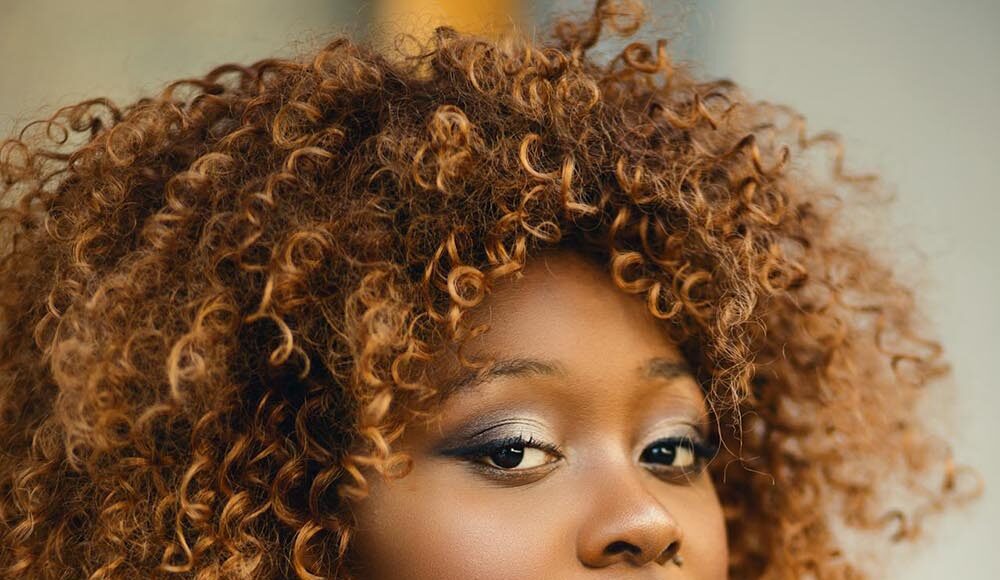
When you walk into these spaces now, you don’t smell burning hair. You smell peppermint, lavender, and hydration. You see mirrors reflecting halos of texture, not flat-ironed submission.
We have finally reached the end of the apology tour. The history of curly hair was long, painful, and often chemically burned, but the future? The future is dry-cut, hydrated, and absolutely massive.
##