

A diamond is one of the few things people buy without ever setting two of them side by side.
That is why a couple can spend a month’s salary and still wonder, weeks later, whether they chose well. Most people shopping for engagement rings in San Francisco are buying their first serious diamond, and the process feels harder than it should because every store speaks a slightly different language.
The good news is that the decision comes down to a handful of choices made in the right order. Get the order right and the ring almost designs itself.
This guide walks through that order, with the Bay Area in mind. Independent, family-run showrooms across San Francisco tend to keep their own loose-diamond inventory, which means you can compare real stones in person instead of guessing from a screen. That single habit changes how you shop.
Start with a budget, not a carat number
Pick the number you are comfortable spending first, then let the stone fit it. The old “two or three months’ salary” rule is marketing, not math. A clear budget protects you from the most common mistake, which is chasing carat weight at the expense of everything that makes a diamond beautiful.
A useful split is roughly 60 percent toward the center stone and 40 percent toward the setting and any side diamonds. Adjust to taste, but decide before you walk in.
Learn the four Cs before you shop
The four Cs are the grading standard the Gemological Institute of America (GIA) created for diamonds. You do not need to memorize them, but you should know what each one buys you.
| The C | What it measures | Where to spend | Where to save |
| Cut | How well the facets return light | Spend here first – cut drives sparkle | Do not save here |
| Color | How colorless the stone is (D to Z) | Aim for a near-colorless grade | Slight warmth is hard to see once set |
| Clarity | Internal and surface imperfections | Pick “eye-clean” | You rarely need flawless |
| Carat | The stone’s weight | Match to budget | Buy just under round numbers |
If you take one rule from the table, make it this: cut matters most. A well-cut one-carat stone outshines a poorly cut larger one in every light.
Match the shape to the wearer
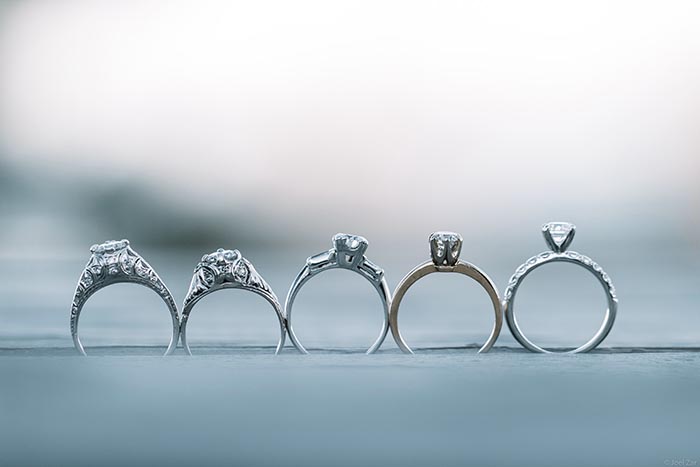
Shape is the most personal choice, and it is the one your partner will notice every day. Each shape has a different character.
Round brilliant: the brightest and most classic.
Oval: looks larger for its weight and flatters the finger.
Emerald and Asscher: clean, architectural, understated.
Radiant and pear: distinctive without being loud.
If you are buying as a surprise, study the jewelry your partner already wears. Delicate and vintage tastes often point toward emerald or oval; modern minimalists tend to love a clean round solitaire.
Choose a setting that fits daily life
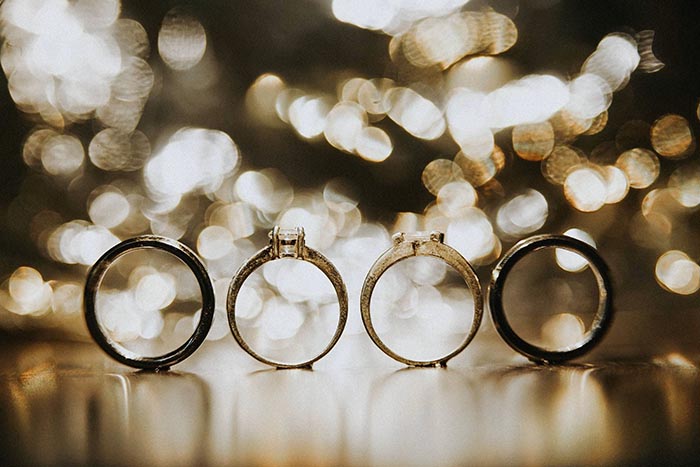
A ring is worn while typing, cooking, and carrying groceries, so the setting has to suit a real hand.
Solitaire: timeless and easy to clean.
Halo and hidden halo: add sparkle and make the center stone look larger.
Three-stone: symbolic, with strong presence.
Pave band: extra brilliance along the shank.
Platinum and 14K white gold look similar but wear differently. Platinum is denser and holds prongs securely; white gold is lighter and usually less expensive. Ask which suits an active lifestyle.
Get the size right without spoiling the surprise
Sizing trips up more proposals than any other detail. A few quiet ways to solve it:
Borrow a ring your partner already wears on that finger and have it measured.
Trace the inside circle on paper, or press the ring into soap.
Ask a sibling or close friend who might already know.
If the fit is slightly off after the proposal, that is normal. Many local jewelers include a first resizing, so confirm the policy before you buy.
Where to shop in the Bay Area
San Francisco rewards in-person shopping. Seeing stones under real lighting, next to one another, tells you more than any certificate summary.
The city offers several distinct shopping experiences. For a traditional luxury experience, couples often head to the historic retailers around Union Square. Meanwhile, the South of Market (SoMa) jewelry district and the Giftcenter & Jewelry Mart offer access to multi-generational, family-run showrooms. Longstanding local establishments like Edward’s Jewelry & Imports allow you to view an extensive loose-diamond inventory in a private, low-pressure setting.
Ask three questions wherever you go: Are the diamonds natural or lab-grown? Do they come with independent certification? And can I see the grading report for this exact stone? Clear answers are a good sign.
A realistic timeline
Give yourself room, especially if any custom work is involved.
| Timeframe before proposal | What to do |
| 8 to 12 weeks | Set budget, learn shapes, book appointments |
| 4 to 6 weeks | Select the stone and setting, confirm sizing |
| 2 to 3 weeks | Final fitting, cleaning, and pickup |
Rushing the last two weeks is where small regrets creep in, so plan backward from your date.
Choosing a ring is really just a series of small, confident decisions. By visiting patient, community-trusted jewelers in the Bay Area, you can make each choice with confidence and find a piece that lasts a lifetime.