

June 20, 2026
The luxury resale market has changed from a niche segment into one of the fastest-growing areas of retail. What was once mostly seen as a secondary marketplace is now an important part of the global luxury ecosystem, shaping consumer behavior, business models, and buying decisions.
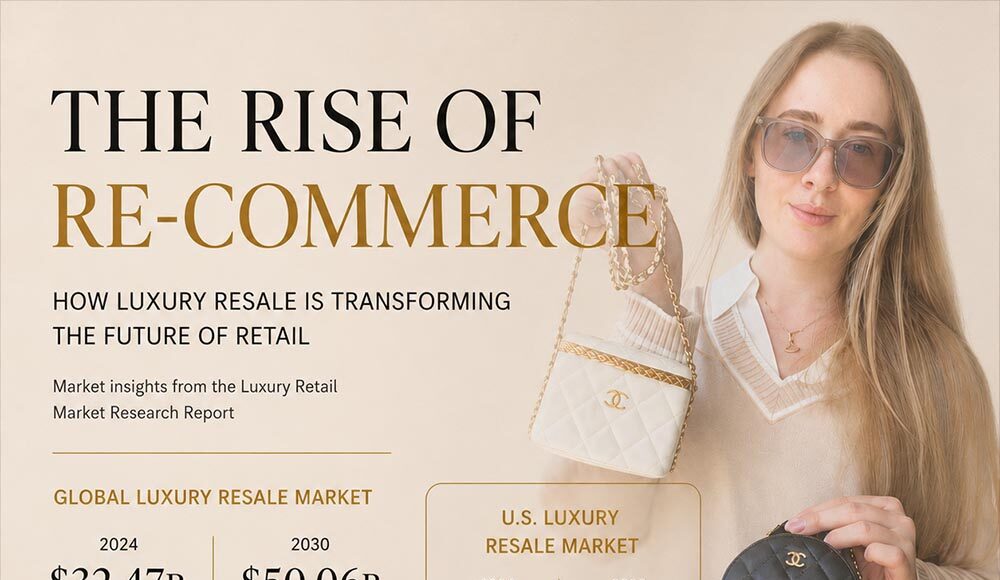
Recent industry research estimates that the global luxury resale market surpassed $32 billion in 2024 and could exceed $50 billion by 2030 (Research and Markets, 2025).
In the United States, the market is expected to grow from around $8.6 billion to over $13 billion during the same period (Arizton Research, 2025).
These numbers suggest that resale is no longer a fringe category; it has become a significant part of the retail economy.
Valeriia Turchanovych, Luxury Resale and E-commerce Expert & Executive Director of TrulyBags, shares her perspective.
Several factors are driving this growth. Consumers are now more price-conscious. Sustainability concerns also influence buying decisions, and luxury brands have raised retail prices significantly over the past decade.
These trends have led more buyers to consider authenticated pre-owned luxury goods.
“Consumers are becoming more intentional with their purchases than ever before,” says luxury resale executive Valeriia Turchanovych. “People are considering long-term value, sustainability, product longevity, and resale potential, not just the initial purchase price. This change in consumer behavior is transforming the retail landscape.”
One major development in the luxury market is the increasing emphasis on value retention. Unlike many consumer goods that lose value quickly after purchase, certain luxury products maintain strong demand in the secondary market for years. In some cases, highly sought-after models may even increase in value.
The rise in retail prices has boosted this trend. Many consumers now think about luxury purchases differently than they did before. They consider not just aesthetics and brand prestige but also how well an item will hold its value over time.
“Many buyers are starting to see luxury goods not only as fashion items but as assets that can retain value,” Turchanovych explains. “If a consumer buys the right model in excellent condition, they often have the chance to resell it years later for a price close to what they paid. In some cases, popular pieces may even gain in value.”
This shift shows a broader change in how people think about ownership. Instead of treating products as disposable, consumers increasingly see them as long-term assets that can circulate through the economy many times.
The economic impact goes beyond individual transactions. As the resale market grows, it creates a need for authentication specialists, logistics providers, technology platforms, inventory managers, digital marketers, photographers, customer service agents, and e-commerce operators. The industry supports a rising network of businesses and professionals that help make secure and efficient transactions between buyers and sellers.
Luxury resale also contributes to the ongoing growth of the U.S. e-commerce sector. Modern resale platforms rely on advanced digital systems, including fraud prevention, authentication technology, payment processing, data analysis, inventory management software, and nationwide shipping networks. As the industry expands, investment in these areas keeps increasing.
“People often focus on the products, but the resale industry supports an entire ecosystem of businesses and services,” says Turchanovych. “Authentication, logistics, technology, digital commerce, and customer support all help the market function well. As resale increases, so does the economic activity around it.”
At the same time, sustainability remains a strong driver of re-commerce growth.
Extending the life cycle of existing products cuts down on waste and promotes a more circular consumption model. Instead of relying only on new production, consumers are participating more in markets that maximize the useful life of products already available.
This trend is especially significant for luxury goods, which are often designed to last for decades. By keeping these items in use longer, resale helps reduce unnecessary consumption while giving consumers access to premium brands at more affordable prices.
The rapid acceptance of authentication technology has further fueled market growth.
Professional authentication services, expert verification processes, and AI-assisted tools have boosted consumer confidence in buying pre-owned luxury items online. As trust in the secondary market grows, more people are participating in resale.
Luxury brands are also starting to see the strategic value of a strong secondary market.
Products that maintain demand years after their initial purchase reinforce perceptions of quality, craftsmanship, and brand strength. A healthy resale market can help deepen consumer engagement and show the lasting relevance of iconic products.
“The future of retail will not be defined solely by what consumers buy,” Turchanovych states. “It will also depend on how long products remain valuable after the initial purchase. Re-commerce is becoming a critical part of that future.”
As consumer priorities evolve, resale is expected to take on a more significant role in the retail economy.
The growth of re-commerce mirrors larger trends in sustainability, digital commerce, value retention, and responsible consumption. What started as an alternative purchasing channel is quickly becoming a core part of how modern retail works.
For businesses, investors, and policymakers, the ongoing growth of the resale economy represents more than just a change in shopping habits. It marks a broader transformation in how value is created, preserved, and exchanged in the marketplace.