

That’s how many times the average American picks up their phone every single day, according to a 2024 survey by Reviews.org — once every five minutes during waking hours.
More than a wallet. More than a watch. More than any bag you’ve ever carried. Your phone is, statistically, the most-handled object in your daily life. And yet most people spend more time choosing a coffee order than they do thinking about what’s wrapped around it.
That’s starting to change.
The Accessory You’ve Been Ignoring
Walk through any fashion week street-style crowd — New York, Milan, Copenhagen — and something new is happening in the photos. It’s not just the coats or the sneakers getting attention. It’s what people are holding. A matte black magnetic case against an ecru trench. A crystal-clear shell showing off a titanium iPhone finish alongside a minimal crossbody. Tech has crossed the line from utility into wardrobe, and the industry has a name for it: tech-cessories.
The concept isn’t entirely new. Headphones became a fashion statement years ago. Laptop sleeves turned into status symbols. But the phone case is different — it’s attached to your body almost constantly, it appears in every selfie, every flat lay, every across-the-table dinner photo. It’s the accessory with the highest exposure rate of anything you own, and for the first time, people are starting to dress it accordingly.
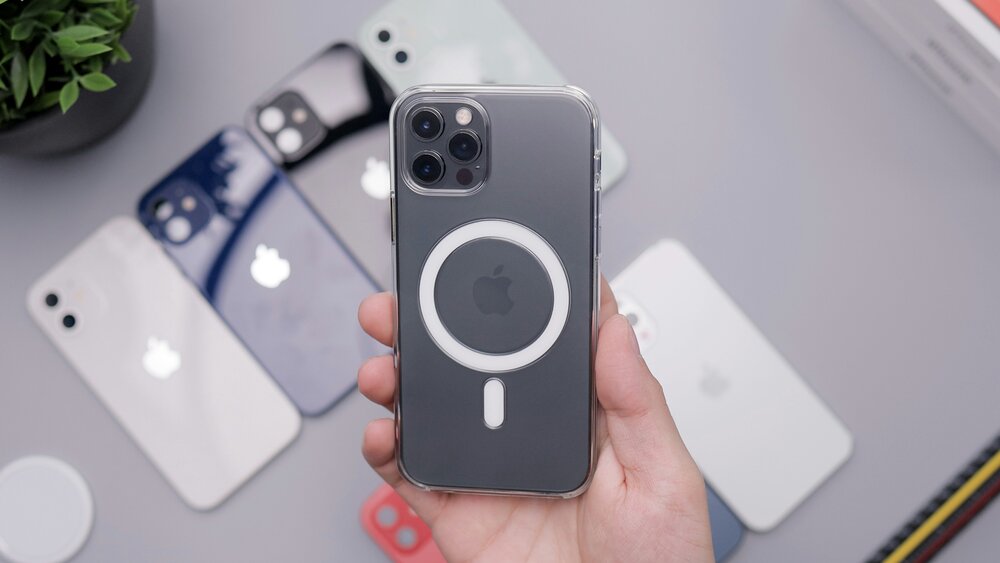
The MagSafe ecosystem has transformed the phone case into a modular style platform — allowing for the seamless attachment of coordinated accessories, turning the case into a dynamic hub for wallets, grips, and stands. That modularity is exactly what makes it interesting from a fashion standpoint. It’s not just a case. It’s a system.
What the Runway Is Actually Telling You
You don’t need to watch a runway show to understand how trends translate to tech. The mapping is pretty direct.
Minimalism — the quiet luxury wave that’s been building since 2022 — translates cleanly into clear cases and frosted finishes. The logic is the same as wearing a perfect white shirt: let the underlying thing speak. A transparent case on a Deep Purple or Natural Titanium iPhone is a deliberate choice, not a default. ESR’s Classic Hybrid Clear series leans straight into this — structured protection, zero visual noise.
Futurism and techwear — the aesthetic that puts function on display — maps to exposed magnetic rings, visible mechanical elements, and that industrial quality where the utility of a thing is the design. MagSafe made this possible. The magnet ring on the back of a HaloLock case isn’t something to hide; it’s the point. It signals that your phone is part of a system, the way a technical jacket signals that yours is built for something.
Utility dressing — gorpcore, workwear-influenced fits, the practical-is-beautiful movement — points directly at the wallet-case hybrid format. The Geo Wallet Stand from ESR replaces a separate card holder entirely. One object, two functions, zero redundancy. That’s the utilitarian design principle applied to tech.
Carbon fiber and cold metallics — a consistent thread across menswear and genderless fashion for several seasons now — show up in ESR’s carbon fiber Geo Wallet. It’s a texture with weight and intentionality, one that reads as sophisticated rather than flashy.
As Fashion Week Online has highlighted, the convergence of tech and high fashion means these patterns are executed with more nuance than ever before — finishes are key, with metallic and pearlescent details elevating designs by catching the light and adding a dynamic layer of luxury.
The point isn’t that phone cases are replacing fashion. It’s that they’ve joined it.
Why MagSafe Is the Most Interesting Design Story in Accessories Right Now
MagSafe gets talked about mostly in tech contexts — charging speeds, magnet strength, accessory compatibility. But the design conversation around it is more interesting than the spec sheet suggests.
When Apple reintroduced MagSafe with the iPhone 12 in 2020, they built a magnetic array directly into the back of the phone. The intention was functional: faster wireless charging, snap-on accessories. What they also created, unintentionally or not, was a modular accessory language. Every piece that snaps on — wallet, mount, charger, battery pack — is part of the same visual grammar. The system has a coherence to it that most accessory categories don’t.
For many users, once they switch to MagSafe, they rarely return to non-magnetic cases. Part of that is convenience. But part of it is that MagSafe cases create a setup — a considered combination of parts — that becomes an expression of how you move through your day. Wallet attached for a night out. Stand deployed for hands-free video on a long flight. Charger snapped on at a desk. The case is the foundation, but what you build on top of it changes depending on context. That’s not so different from how fashion people think about layering.
For ESR’s HaloLock line specifically, the compatibility runs across their full product ecosystem: cases, Geo Wallets, magnetic rings, car mounts. You can build a setup and rearrange it. You can go minimal one day and maximal the next. The flexibility is the feature.
The Case Against Paying Apple’s Price
Let’s get into it, because this is where the “best Apple alternative case” conversation gets genuinely interesting rather than just competitive.
Apple’s first-party cases are well-engineered. The TechWoven case — their current flagship fabric option for the iPhone 17 Pro and Pro Max — is built from recycled Jacquard loom-woven polyester and comes in at around $60. There’s real craft in it. The fit is exact, obviously, because Apple designed it alongside the phone. The MagSafe alignment is calibrated to spec. Nobody’s arguing it’s a bad product.
But here’s what a YouTube channel called Project Farm found when they put 16 popular iPhone cases — including Apple’s TechWoven — through objective real-world testing: Apple’s TechWoven Case ranked 15th out of 16 in side impact protection, 14th in edge buffer and case retention force, and 10th in MagSafe holding strength. The ESR Cyber Tough case, by contrast, ranked near the top across most protection-related parameters — at a fraction of the price.
That’s not an edge case. That’s a pattern. Apple’s first-party cases are priced at a premium for fit, finish, and brand alignment — not for protection performance. When you pay $60 for the TechWoven, you’re paying for the logo and the exact cutouts. Both of those things have value. But if you’re buying a case primarily because you want to protect a $1,000 phone, the math doesn’t necessarily favor the official option.
Third-party MagSafe cases from ESR land in the $20–$40 range depending on the line. The protection performance, based on independent testing, meets or exceeds Apple’s offering. MagSafe compatibility is engineered for full 15W charging and accessory alignment. Trustpilot puts ESR at 4.6 out of 5 across more than 2,500 reviews.
From a fashion standpoint, there’s also the wardrobe argument. If a single Apple case costs $60, you’re probably not buying two. But if you can pick up an ESR Classic Hybrid Clear for around $20 and a HaloLock case in a different finish for another $25, you now have options. You can match your case to your fit the same way you’d swap a watch or a bag. The lower price point is what makes that possible.
Three Ways to Actually Style This
This is where it becomes practical rather than theoretical. Here’s how the product combinations actually map to specific aesthetic directions.
Look 1 — Quiet Luxury / Copenhagen Street Style
ESR Classic Hybrid Clear + Black Geo Wallet + white or bone AirPods case.
The logic: a clear case disappears and lets the phone’s own color be the statement. Pair it with a slim black wallet that attaches magnetically — no bulk, no separate card holder — and you have a system that reads as deliberate and minimal. This works against any neutral-heavy outfit: grey, cream, off-white, camel. The phone becomes part of the tonal palette rather than a disruption of it.
Look 2 — Techwear / Futurist
Dark matte HaloLock case + Carbon Fiber Geo Wallet + ESR metallic magnetic ring.
The logic: expose the system. A dark case with a visible magnetic ring, paired with a carbon fiber wallet, signals that this is a considered setup rather than a default. The carbon fiber texture has the same energy as technical outerwear or structured synthetic fabrics — it’s materials-forward, it’s intentional. This combination works with black-on-black fits, utility vests, anything with visible functional details.
Look 3 — Utility / Gorpcore
ESR Stash Stand clear case + Geo Wallet Stand + lens protectors.
The logic: maximum function, visible capability. The Stash Stand folds out into a kickstand. The Geo Wallet Stand does double duty as a card holder and a prop. Add camera lens protectors and the entire back of the phone is visibly protected and optimized. This is the gorpcore approach — every component is doing something, nothing is decorative — which happens to map directly to what’s been happening in fashion for several seasons.
The Bigger Point
In 2025, phone cases have evolved far beyond simple device protection — they’ve become extensions of personal identity. Smartphone cases are now fashion accessories, productivity tools, lifestyle enhancers, and protective gear all at once.
That’s not hype. That’s just an accurate description of what a MagSafe iPhone case with a matching wallet and a mount system actually is. It’s a considered set of objects that you’ve chosen to carry, that reflect something about how you work and move and what you value in the stuff you own.
The fashion industry has been talking about considered consumption for a while now — the idea that you own fewer things but better things, things that do more, things that last. The best Apple alternative case argument isn’t really about saving money, though you do. It’s about having the flexibility to build a setup that actually fits how you live, at a price that doesn’t lock you into a single choice.
Your phone is already the most-seen accessory you own. It makes sense to start treating it like one.