

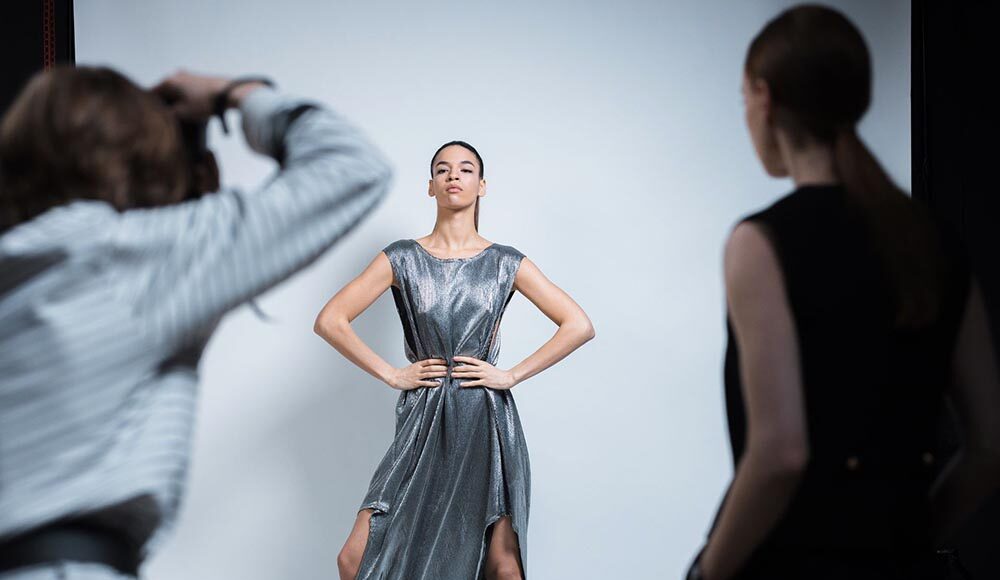
Before the tailoring, the fabric, or the label, there is the frame the clothes hang on. How you hold it changes everything the outfit does.
Walk any street-style set at fashion week, and you can spot it without knowing a thing about who designed what. Some people wear clothes. Other people wear clothes. The difference is rarely the budget. More often, it is the spine.
A stylist will worry about how their outfit fits the body; they should be concerned about this because this is what they do for a living. The problem is that all this information is processed through a factor that never makes it onto any designer’s mood boards: body posture. A well-fitting jacket will seem to hang off a body if the person wearing it slouches too much. A flowing dress will fold into itself if the person slumps into the position.
This is the most overlooked tool in styling, and unlike most of them, it is free.
Why Posture Changes How Clothes Actually Look
Garments are cut for an upright frame. Stand differently, and the design stops doing its job.
A well-made garment is engineered around an assumed posture. The shoulder seams, the drape, the hemline, the way a lapel rolls, all of it is designed to sit on a body that is reasonably upright and open through the chest. That is the body the pattern was drafted for.
Collapse the frame, and the engineering fails in visible ways:
- Round shoulders will draw the jacket down the body and cause the collar to split at the neck and the lapels to sag.
- A forward head and slumped chest shorten the visible torso, which is why an outfit can suddenly read frumpy on an off day.
- A tucked, hunched stance bunches fabric at the waist and stomach that would otherwise fall clean.
Standing tall is one of the simplest ways to elevate your personal style, and it costs nothing. The same dress, the same shoes, the same accessories, look more expensive on an open, lifted frame than a closed one. The clothes did not change. The architecture under them did.
What the Camera Sees
Posture is the difference between a photo you keep and one you delete.
If you have ever wondered why you look great in a mirror and strange in a candid shot, posture is often the culprit. A camera flattens depth, so a forward head and rounded upper back, which you barely notice in real life, show up as a slumped, foreshortened silhouette on screen.
This is why the same outfit can photograph completely differently from one shot to the next. It is also part of why the same outfit reads differently across occasions: a relaxed slouch reads casual, a lifted line reads polished, and the garment itself never moved. Models are trained in this relentlessly. The lengthened neck, the dropped shoulders, the long line from ear to hip, none of it is accidental. It is a posture deployed as a technique.
No runway needed here. All you need to remember is that your pictures are better off longer and more open.
The Part That Is Not Just Aesthetics
If holding good posture feels like work, there may be a physical reason worth addressing.
This is where the discussion on style collides with the truth about the body. While it comes easily to some, it is almost like an affectation to others – something they cannot maintain for more than one minute before slumping again.
According to Harvard Health Publishing, posture is shaped by muscle strength, flexibility, and daily habits, and persistently poor posture is associated with neck, shoulder, and back strain. In plain terms, posture is not pure willpower. If years of desk work and looking down at a phone have tightened the front of your body and weakened the muscles that hold you upright, willing yourself to stand straight will only ever be a temporary fix.
That is a function question, not a vanity one. If holding an upright position is genuinely uncomfortable, or if you carry neck and upper-back tension that pulls you forward, it can help to have the underlying movement looked at. An assessment from an experienced chiropractor in Charleston SC, can identify where things are stiff or weak and pair hands-on care with the strengthening that makes good posture feel natural rather than forced. The honest aim is comfortable, sustainable movement, not an instant transformation.
How to Make It Stick
Awareness first, then the habits and strength that hold it in place.
The posture you have to think about all day will not last. The goal is to make the path of least resistance upright.
- Adjust your screens to eye level. One of the primary factors that has led to people’s current problems is constantly lowering their heads to look, so elevate your monitor and bring your phone closer to eye level instead.
- Interrupt the stillness. Every position becomes a problem if you hold it long enough, so stand, roll your shoulders back, and reset every half hour.
- Strengthen the back of the body. Gentle work for the upper back and the muscles between the shoulder blades counters the forward pull that desk life builds in.
- Clothe yourself according to the shape you wish to project. Structured shoulders, tight waistlines, and vertical lines all create the image of an erect posture.
Frequently Asked Questions
Does posture really change how expensive my clothes look?
Yes, to some extent. The cuts are made on the assumption that the garment will be worn by someone with an erect posture; otherwise, there will be gaping and sagging, and the torso will appear short.
Why do I look fine in the mirror but slumped in photos?
A camera doesn’t have depth to it like a mirror does, meaning that when you have your head forward and rounded shoulders that go unnoticed in the mirror, they are very noticeable in the picture.
Can I just remind myself to stand up straight?
Just for a moment, if correct posture requires effort that you cannot maintain, it generally indicates that you have tight and weak muscles because of your day-to-day activities. You cannot resolve this through just being aware.
Is poor posture a health issue or just a style one?
Both can be true. Beyond appearance, persistently poor posture is associated with neck, shoulder, and back strain, which is why it is worth addressing the underlying movement, not just the look.
What is the fastest way to improve how I look in clothes today?
Open your chest, drop and relax your shoulders down and back, and lengthen through the top of your head. It is the closest thing to an instant, free styling upgrade.
The Bottom Line
It doesn’t matter how long you search for that elusive perfect wardrobe because what’s holding it all up is playing as big a part as anything else – whether you realize it or not. Good posture is one of those styling techniques that make everything you wear look more flattering, look good in photos without the use of filters, and actually have health benefits too. Wear like you were meant for the clothing because chances are you were.