

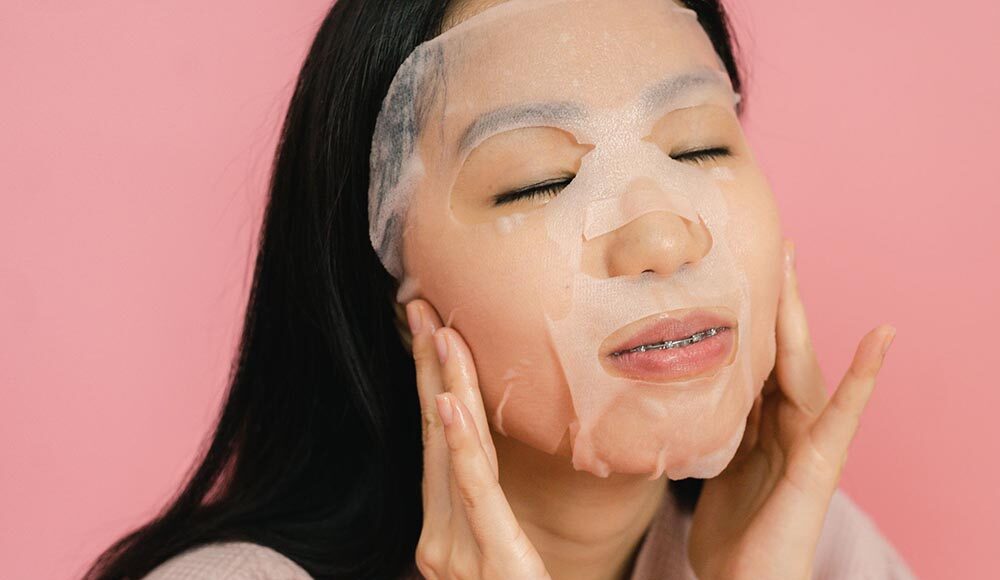
One may think that the question How long to keep a face mask on is a simple one, but its answer is not as simple as it is.
It will do more harm than good: A moisturizing sheet mask will suck moisture out of the skin and an abrasive clay mask will lead to redness and sensitivity. If you rinse too early, however, you will not be able to get the best results from the active ingredients. If you’re a new user just beginning to wear a mask for the first time, or if you’re feeling ready to get the most out of your mask, check out these tips for timing, skin type variations, and even how long it takes before you need to change your mask.
Main Points:
- Most face masks should be worn for 10 – 20 minutes, although it varies depending on the mask and skin sensitivity.
- The best time to wear a sheet mask is between 15 to 20 minutes — over 20 minutes may cause the reverse osmosis effect, which leads to skin dehydration.
- The best time for removing clay masks is when they are starting to dry and crack in 5-10 minutes.
- Sleeping and overnight masks have been specially designed to last longer and cannot use a normal sheet mask as an overnight mask.
- Avoid over masking and irritation by employing a timer and following label instructions.
The Ideal Wear Timing for Every Mask Type
Face masks should be “occlusive” which means that they form a barrier, allowing ingredients to penetrate deeper into the skin and not evaporate. The time that the skin is covered with these beneficial ingredients, as well as the time that the skin is exposed to potentially irritating surfactants, acids or absorbent clays is important, since the mask governs these times.
Always returns to mask formula and skin tolerance as to length of time to wear a face mask Below is a quick reference of the most common types of masks.
Sheet Masks: 15-20 Minutes
One of the categories that people tend to get wrong when it comes to how long to wear a face mask is sheet masks. The water-contaminated sheet serves as a waterproof barrier, which helps to penetrate the water and active ingredients into the Stratum Corneum. As the sheet dries, the mechanism reverses: the now dry material now pulls moisture back onto your skin, the “reverse osmosis”.
A Healthline study says leaving a sheet mask on for more than 15-20 minutes can make your skin even drier than when you first put the mask on. So if the question is, “How long should the face mask be on?” when using a sheet mask, you should stick to the 15-20 minute time frame, and definitely not let the sheet dry out completely on your face.
Clay Masks — 5 to 10 Minutes
Clay masks are far more different. They are made up of minerals such as kaolin or bentonite that have the ability to absorb excess oil and impurities by adsorption and absorption. A key guideline for using a clay-based face mask for an extended period is to remove it before it dries out completely, causing the mask to crack. After hardening, the clay mask will absorb moisture from the surface of the skin which can result in over dryness, skin inflammation, and barrier damage.
For those with oily skin, you can move closer to the 10-minute mark; for others with dry and sensitive skin, 5–7 minutes is typically enough. This advice is right, as too long on a mask can be harmful because it will remove the natural oils and weaken the barrier function of the skin, says the American Academy of Dermatology (AAD).
Sleeping Masks — All Night (Overnight)
Overnight masks are meant to be worn on an overnight basis. They are usually lightweight, non-comedogenic, and leave no residue after use and are effective over time as you sleep.
Unlike a wet sheet or drying clay, it is easy to apply the face mask after the evening skin care routine, allow it to absorb for approximately 30 minutes and then leave it on until morning. These masks are a special type though – do not attempt to use a regular sheet mask or clay mask as an overnight mask.
Peel-Off Masks — 15 to 30 Minutes
Peel-off masks are in between the sheet and clay masks. The mask must be dried to a complete film that will not rip easily off, but must not be so dry that it hurts to take off. Most formulas will take 15-30 minutes to get there.
Too much time in a peel off mask, causes the mask to cling very tightly to the skin, making it quite irritating and will cause your skin to get damaged and may even rip out vellus hair. Peeling is best when the mask is dry to the touch but still pliable.
Adjusting Face Mask Wear Time for Your Skin Type
These are only some general recommendations and you might need to change things a bit based on your skin type. It really does depend on how sensitive you are in terms of figuring out how long to leave a face mask on for.
The AAD also advises that if skin is sore/dry you should lessen the amount of time you have your mask on and how frequently.
- Oily/Combination Skin: Masking with clays can be for a maximum of 10 min, sometimes 12-15 minutes depending on the lightness of the mask, sheet masks still stay at 15-20 mins.
- Dry/Sensitive Skin: Clays cannot be kept on for any longer than 5-7 minutes, sheet masks are only to be kept on dry/sensitive skin for no more than 10-15 minutes to prevent stinging or reddening. Use moisturizing agents such as glycerin or panthenol; use soothing agents.
- Normal Skin: Sheet and Clay are perfect for 15-20 minutes and 7-10 minutes respectively.
Always take your mask off when you experience stinging, burning or excess itching regardless of the length of time left. The skin will not respond better the more it feels that way, it just means it is suffering irritation.
What Happens If You Leave a Face Mask On Too Long?
Wearing a face mask for a longer period of time than you are supposed to give you no additional advantages, most often it will cause issues. Below are the details for each mask type.
- Sheet Masks: When the sheet becomes void of the serum, the reverse osmosis comes into play. The dry mask takes the moisture out of your skin, rather than taking it in. That’s why it matters how long you should wear a face mask on: In this case, the “more is better” principle is actually very harmful.
- Clay Masks: When clay dries out, it shrinks and may lead to micro-fractures in the skin’s protective barrier. This leads to over-drying and redness, and sometimes to a burning sensation called “mask burn.” Those with sensitive or rosacea prone skin are particularly susceptible.
- Peel-Off Masks: These film-type masks tend to become too stiff and so adhere too tightly to the skin on extended wear, causing pain when removing masks as well as potential trauma to the skin barrier.
- Chemical Exfoliating Masks: These masks with ingredients like glycolic acid, salicylic acid or other activities can be the most dangerous if you overdo it. The deeper your mask goes the deeper it will penetrate, thus a reaction or irritant dermatitis can spontaneously occur when left on too long according to the advice from board-certified dermatologist Dan Belkin.
If you’ve already done too much and your skin feels raw, tender, or pink, you need to cleanse your face with cool water and avoid using any actives for a while (which means, steer clear of retinoids, vitamin C, or exfoliants), then once the skin has repaired itself, use a very bland occlusive like Vaseline or Aquaphor, or a fragrance-free barrier cream until the irritation is completely gone.
How to Time Your Mask for Best Results
Timing isn’t only about how to set a clock; it’s about creating a small ritual that you can use to the very best of effect, and avoid the pitfalls. Here’s how to ensure you always hit the right length of time when you put on a face mask.
- Set a timer: Do not use your sense of time. A very accurate timer, either on your mobile phone or a smart speaker, helps you avoid going over on time.
- Prep your skin correctly: Wash your face first. Excessive moisture like makeup, sunscreen or oil will form a barrier which prevents active ingredients from reaching the skin. If the canvas is clean, the timed window will be much more effective.
- Apply an essence or toner first: If your mask is hydrating, apply an essence or toner under your mask to premoistened skin before applying the mask.
- Seal with a moisturizer after removal: Upon removal of the mask apply a moisturizer to the remaining serum or essence. This helps to retain the hydration and also prevents transepidermal water loss, particularly if you’ve applied a sheet mask which temporarily plumped out your skin.
- Follow a weekly schedule: For most people, masking 1–3 times a week is sufficient. However, over-masking, even with perfect timing of each application, can still cause irritation by overloading the skin barrier with active ingredients. Once or twice weekly is a safe frequency, according to the AAD.
Why Timing Matters: What Your Mask Does in Each Minute
While waiting, what is happening with this mask, do you know? Let’s review the whole process that happened on a cellular level and minute by minute, in order to know for how long you should wear a face mask?
- Minutes 0–5: As it is applied on the face, a first wave of water and small molecule humectants (glycerin, hyaluronic acid) are absorbed. The occlusive film of the mask seals in the moisture and the local environment around the mask becomes more humid.
- Minutes 5–10: Active ingredients start penetrating the intercellular lipid matrix. Niacinamide, peptides or antioxidants in the mask is where they start to work with keratinocytes and fibroblasts. There is a dramatic increase in the moisture content of the skin.
- Minutes 10–15: The point of saturation is reached. The stratum corneum has absorbed about as much water as it can hold. The mask is still helpful at this point because it keeps the microclimate humid, but after this period, there’s a diminishing return from using the mask.
- Minutes 15–20: It is the end of the optimum time window. In sheet masks, the serum is still moist, though it’s starting to get thin. For clay masks, drying accelerates. Skin is optimally hydrated, but the mask will not benefit more if left on for an extended period — only the risk of irritation or dehydration.
- Beyond 20 minutes: With a sheet mask, reverse osmosis starts. When a clay mask is used, the cracking and increased uptake of protective lipids. When using a peel-off mask, the film gets too stiff. In all situations you’re harming yourself more than helping.
Knowing this time frame helps to make sense of how long to wear a face mask and helps avoid the urge to wear it longer.
Pairing Proper Mask Timing with Professional-Grade Repair
Time is crucial, but ingredients are just as important for any type of mask. Even a substandard mask on for the ideal time will yield no real results. Conversely, a mask that uses advanced repair technology, but is mishandled, will not be as effective. Here the French pharmacy tradition provides an extremely clever answer.
Follow the PDRN mask method. It uses DNA-based principles of repair that work with the natural saturation curve of your skin unlike a traditional sheet mask which has the potential of causing reverse osmosis if you lose track of time. The brand’s high-purity PDRN (polydeoxyribonucleotide) comes from wild salmon, is purified to 99% purity, and biomolecularly resembles human DNA by 98%. This means the active ingredient is a biomimetic signal – it communicates with the cells that make up the skin to stimulate collagen production and skin regeneration, not simply deliver additional hydration to the skin.
It is therefore an overnight mask that you would not need to remove during the night as it does not contain the same risks as traditional facial masks.The PDRN facial mask, then, is an overnight mask that you will not have to remove during the night, without having to face the risks associated with conventional facial masks. It’s very snow-melt and it changes from a creamy rich layer to a translucent permeable layer in around 15 minutes, giving deep, lasting repair without risk of over-absorption. Supported by clinical data, this 15-minute instant radiance boost of +52.69% and a hydration surge of +45.86% indicate that this sweet spot, if the formula’s right, can be very powerful. The mask then works for 14 days as well, and in regular use, it is able to diminish wrinkle depth by 20.69% and enhance skin firmness by 4.50%.
The actual thing to learn from how long to wear a face mask is this: If it’s a high quality mask, one that respects the biological limits of the skin, the length of time will virtually take care of itself. A PDRN overnight mask never needs to be watched, it self-regulates. Even those with sensitive or reactive skin can wear the mask for the entire recommended time without concern for irritation, as the products are created with pharmaceutical precision, mimicking the skin’s natural water and lipid content, proteins, vitamins and carbohydrates. You may have tried a mask before that stings, dries out, or makes it hard to watch the clock all day – it might be time to switch up the mask, not the timer.
FAQ
How long should you keep a face mask on for best results?
The most effective results will likely be achieved with most masks when used according to the manufacturer’s instructions. Typically, the duration of wearing a face mask range between 10 and 20 minutes. The working time for sheet masks is 15-20 minutes, for clay masks 5-10 minutes and for peel-off masks 15-30 minutes or until they are dry but not quite stiff. Sleeping masks should be worn when sleeping. Both Healthline and the AAD state that wearing a mask longer than recommended will not offer more benefits, and may just be bad for your skin.
How long to leave a face mask on if it’s a clay mask?
In the case of a clay mask, one should be careful to remove the mask before it gets completely dry and cracked, which usually takes 5-10 minutes. For oily skin, lean towards 10 minutes, but for dry or sensitive skin, stick around the 5-7 minute mark. Over drying will remove the natural oil from the skin and cause irritation and damage to the skin barrier.
Can you leave a sheet mask on for 30 minutes?
No, it isn’t recommended. The majority of sheet masks are intended to last for 15-20 minutes. For 30 minutes or until dry, you can end up with reverse osmosis – that dry sheet will absorb moisture from your skin, leaving it dry. In the event a package gives a longer period of wear, follow that guidelines, but never let a sheet mask dry out completely on your face.
What happens if you leave a face mask on overnight (non-sleeping mask)?
If you forget a non-sleeping mask overnight you’ll wake up with irritation, redness, dryness or even a rash. The skin will become dehydrated with sheet masks, barrier damage will occur with clay masks and chemical burn will happen with exfoliating masks. If you notice you’ve done this, wash your face with lukewarm water, put on a barrier cream without fragrance, and refrain from any active skin care products until your skin is better.
How long should you leave a PDRN mask on?
The PDRN overnight mask, like the Douce Aura Overnight Mask, is intended for nighttime usage. First it should be applied thinly on clean skin, it should become translucent after melting into a white cream (15 minutes) and it should remain there overnight. There’s no need to rinse. For a quick fix during the day, it can be applied as a leave-on mask, but for maximum repair and collagen stimulation, it’s best to apply it overnight.
Can I use a mask too often even if I time it right?
Indeed, frequency is not dependent on time. If you always wear the recommended mask for the allotted time, wearing your mask too often can overwork your skin’s barrier and make it sensitized. The American Academy of Dermatology recommends using 1–2 times a week for most masks, and reducing the frequency if you experience any stinging, dryness or redness.