TikTok has fundamentally changed who gets to tell the story of fashion week.
For decades, that story was controlled by a small circle of editors, photographers, and approved media — the people with front row seats and press credentials. What TikTok did was create a parallel distribution channel with different rules, where a creator filming a street style look outside the Palais de Tokyo can reach more people than the official show recap, and where a designer’s casting video can go viral before the collection is even shown.
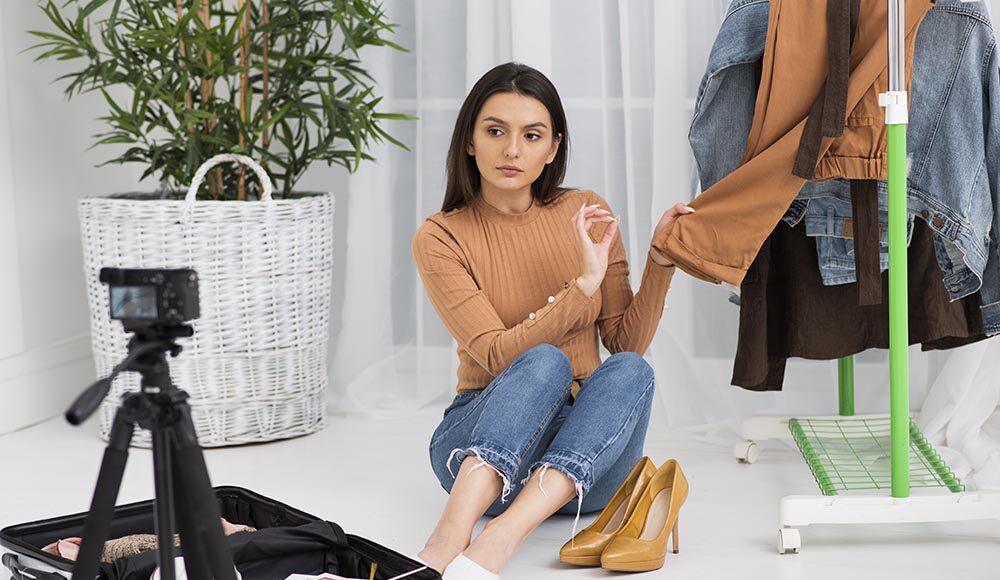
The opportunity for fashion creators is real and significant. The challenge is keeping up with the content velocity that TikTok rewards during fashion month, when four cities in roughly four weeks demand not just attendance but a constant stream of formatted, captioned, music-synced short-form video that performs in the algorithm. For creators who are also attending shows, doing fittings, conducting interviews, and managing client relationships during the same period, the production overhead of TikTok content can overwhelm the experience it’s supposed to document.
The Production Problem During Fashion Month
Fashion month compresses a year’s worth of content opportunity into a few frantic weeks. The creators who build the most significant audience during this period aren’t necessarily the ones with the most access — they’re the ones who can consistently translate that access into published content before the cycle moves on.
The window on any given show is narrow. A collection shown on Monday morning has cultural relevance for roughly 24-48 hours before the conversation shifts to what’s showing Tuesday afternoon. Content produced and published within that window captures audience energy that content produced three days later won’t. For creators managing their own production — filming, editing, adding captions and text overlays, selecting audio, resizing for TikTok’s vertical format, and posting — that window can close before the editing is finished.
AI TikTok video tools change this production timeline in a way that matters specifically for the fashion week context. The AI TikTok Video Generator on Pollo AI handles the technical production layer — formatting for TikTok’s vertical format, caption generation, pacing, and audio synchronization — so that a creator who has the footage and the creative vision doesn’t lose the timing advantage to production overhead. Pollo AI processes the input and outputs content that’s optimized for TikTok’s performance requirements, which means the creative energy goes into what to show, not into the mechanics of how to format it. For creators covering fashion week across multiple cities, this is the difference between publishing consistently and falling behind the news cycle.
What TikTok Actually Rewards in Fashion Content
Understanding what the algorithm favors helps creators prioritize which content to produce quickly and which merits more production attention.
First looks and exclusives have the highest time sensitivity and the lowest production requirements. A shaky vertical video of a collection walking the runway, published within an hour of the show, will outperform a polished edit published the next day in terms of engagement with people actively following the season. The urgency signal is the content — the production quality is secondary.
Street style and after-show content has a slightly longer window but benefits significantly from the aesthetic dimension. The looks outside the shows — the styling decisions, the brands, the styling combinations — perform well when they’re visually compelling and well-formatted. AI video tools that handle the technical layer quickly allow creators to spend more time on the creative framing of street style content rather than on the formatting.
Designer and brand story content has the longest value window and the highest production standards. An interview with a designer, a behind-the-scenes look at a fitting, or a video essay about a collection’s references and inspirations can generate significant engagement days or weeks after a show if it offers genuine insight. This content type benefits from more deliberate production but still benefits from AI-assisted editing tools that speed up the process.
Trend analysis and commentary works particularly well for creators who have established credibility and a point of view. Audiences return to creators who can explain why something matters, not just show that it exists. Short-form video that makes a specific, defensible claim about a collection or a trend — backed by visual references from the show — performs strongly with the fashion-engaged audience that fashion week coverage primarily reaches.
AI Video Tools Beyond the TikTok Format
TikTok is the primary short-form platform for fashion content, but it’s not the only one. Instagram Reels, YouTube Shorts, and LinkedIn video all represent distribution opportunities for fashion creators and brands who want to extend the reach of fashion week content beyond TikTok’s native audience.
Deevid AI, accessible through Pollo AI, expands the video production capability for creators who need to produce content across multiple formats and platforms from the same creative session. Where the AI TikTok Video Generator is optimized specifically for TikTok’s performance requirements, Deevid AI handles a broader range of video production needs — longer-form content for YouTube, interview-based video, scripted commentary, and multi-platform formatted exports. For fashion creators building a presence across platforms rather than concentrating entirely on TikTok, having both tools accessible through Pollo AI’s ecosystem means different content needs can be handled within the same workflow rather than requiring separate production approaches for each platform.
The creators who are building durable fashion media presences in 2025 are thinking in terms of platform ecosystems rather than single-platform strategies. TikTok drives discovery and cultural moment participation. YouTube builds archive value and longer-form authority. Instagram maintains visual brand presence. Each platform requires different content treatments, and the creators who can produce across all three without burning out on production overhead have a structural advantage over those optimizing for a single channel.
The Brand Side: Fashion Houses and AI Content Production
The creator economy conversation around TikTok and fashion week sometimes obscures what’s happening on the brand side, where AI video tools are being adopted for very different operational reasons.
Fashion houses and their agencies face a content scale problem that’s different from individual creators but equally real. A major brand needs to produce social content across ten or more markets simultaneously during fashion week, with localized creative for each market, at a volume that traditional production cannot support without enormous team expansion. AI video tools that can generate localized, formatted social content from a central creative brief are increasingly part of how global fashion brands manage this operational challenge.
For smaller and emerging designers — the segment that Fashion Week Online has historically championed — the access question is even more direct. A brand without a dedicated social media team can now produce professional-quality TikTok content from their show without hiring a content creator or a video production company. The runway footage, backstage documentation, and lookbook assets that any brand produces around a show can be transformed into platform-ready social content through AI video tools, putting small designers on more equal content footing with the major houses.
Making the Most of Fashion Week Coverage
The fundamental advantage of AI video production tools for fashion week coverage isn’t that they make content creation effortless — the editorial judgment, the access, and the creative vision that make fashion content worth watching still require human investment. The advantage is that they remove the production bottleneck that has historically prevented even well-resourced creators from publishing at the speed and volume that fashion month demands.
Creators who integrate these tools effectively don’t use them to replace their creative process. They use them to ensure that their creative process isn’t strangled by the mechanical production work that surrounds it. The collection seen on Monday gets published on Monday. The street style from Tuesday’s shows is live before Wednesday’s shows begin. The commentary on the week’s themes is part of the Friday conversation, not arriving too late to shape it.
Fashion week is an exercise in creative compression — more ideas, more looks, more moments, more conversations than any other period in the fashion calendar. The tools that help creators move at the speed of the season are the ones that determine who gets to shape the narrative.