

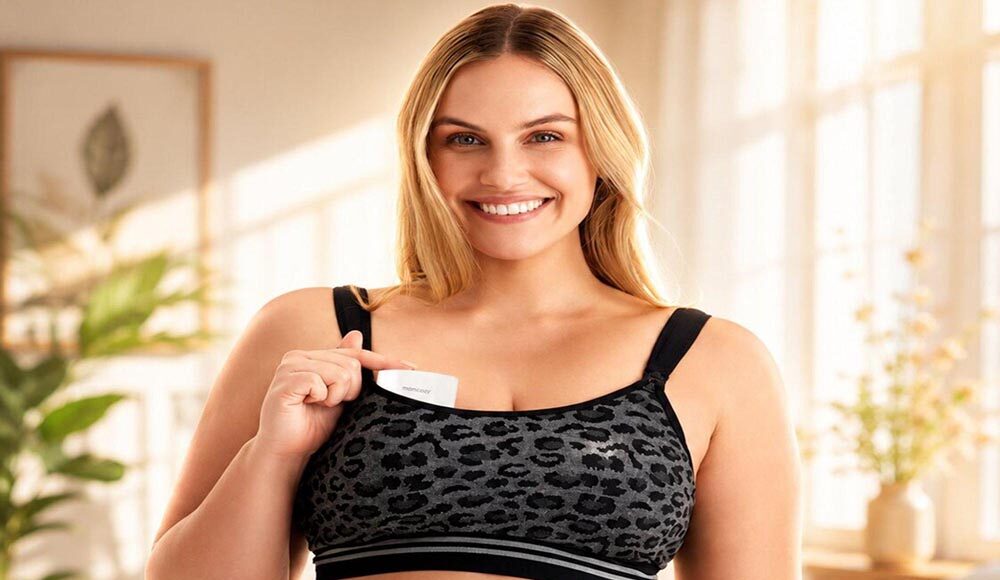
Having a bra that pairs the contours of late pregnancy with nursing can make life easier — especially if you’re a breastfeeding mum, a combo style, such as a hands-free pumping bra, is the best choice.
Supports you, provides nursing access, offers pumping assistance, and manages leaking without frequent bra changes.
Your normal bras dig in, and after milk comes in, they feel off again; you can feel like your body outgrows its closet more quickly than it’s able to replace those bras. Breast size may increase during pregnancy by 1 to 2 cup sizes, and when the milk starts to come in 2 to 5 days postpartum, it feels just as full.
A terrific multi-use bra makes it simple to get through those cycles without being uncomfortable, permitting you to feed, pump, and depart easily.
Why bra support changes so much from pregnancy to postpartum
Changes occur early in your breasts. The American Pregnancy Association and NCT report that swelling, tenderness and a “snug fit” start to become apparent as early as weeks 6 to 8 and a significant amount of it persists into the second and third trimesters when tube-shaped milk-producing tissue develops. In late pregnancy support is no longer just about how it looks; it’s about comfort, posture, and function.
NCT recommends women’ers to note that their comfort in the back, neck and shoulder area may be worsened by ill-fitting bras, and more comfortable bras can help them get used to wearing heavier, fuller breasts. If you are experiencing rib cage expansion, sensitive skin or leaking colostrum in the 3rd trimester even more so. However, the role of a bra changes after you have given birth.
Breasts may feel bolder, heavier and more unpredictable in size after milk comes in, which typically happens anywhere from 2-5 days after the baby’s birth. Many of the single-purpose bras are too limiting: the bra that worked well during pregnancy might not have enough room for nursing and a nursing bra might not have a secure connection for your pump flanges if you are a cumulative pump user.
What a 4-in-1 pumping bra actually solves
The combination bra is ideal because in reality, it is not easy to separate nursing, pumping, and wearing the bra. One feeding may be at the breast, another may be a pump session and maybe later a comfortable bra that can accommodate a milk pad and a nap on the couch. The 4-in-1 hands-free pumping bra features four essential features: hands-free pumping, nursing support, leak protection and strapless wear.
The usefulness isn’t in doing everything at once in an outrageous manner. It’s the case that it does not need to be like changing bras merely to get through the day. That’s important during the first weeks after giving birth, when you are getting used to breastfeeding your baby. Restorative nursing bra and a hands-free pump bra are among breast-friendly gifts for the 4th trimester, included here in Physician Guide to Breastfeeding.
For all of you nursing mamas who pump after feeds, are dealing with leakage, and attempt to leave the house, having a single bra that can do multiple purposes can take a lot of the hassle out of your assisted day.For those of you mamas who aren’t yet finished nursing, but are pumping after feeds, managing leakage, and attempting to get out of the house, one bra covers multiple jobs can take a lot of the friction out of your assisted day.
Why hands-free pumping makes such a difference
Hands-free pumping bra is the most simple advantage, it supplies you with your fingers back. You do not have to sit and wait for 15-20 minutes to hold flanges in place – you can eat, answer a message, put up the next bottle or simply sit in a more comfortable position and relax your shoulders!
Sitting at the small end of the pump with a pump is no small feat. The pumping guidelines are to pump 1-2 times a day to create a little “milk stash” or 1 patient pumping every 3 to 4 hours when away from the baby. Convenience is important in such a routine, as it is so easy to make little chores add up quickly.
Comfort also can be helped by a stable fit. Even if one size “off” it could still impact on pump alignment and seal- particularly at the band, Genuine Lactation notes. A fitted pumping bra will help keep the flanges in place, minimize shifting and can alleviate constant tugging that makes some sessions feel more difficult than they should.
How to choose a bra that works across stages
Fit comes first. A good supportive bra should fit comfortably without being overly tight or restricting breathing areas or compressing breast tissue. American Pregnancy Association, NCT and some lactation-friendly sources all agree that support is nature’s gift, but plenty of pressure can cause some moms discomfort and plugged ducts.
The timing also is important. When shopping for an easy bra to wear postpartum it is generally a good time in late pregnancy. While a nursing bra will probably change after delivery, a review of PubMed states that the optimum time to purchase nursing bras would be between about 36 to 38 weeks.
Think about how to accommodate features that will leave you with flexibility. Wide bands are in good taste, soft and stretchable fabrics are effective, adjustable straps work well, and easy nursing clips and secure pumping access, adjustable straps, soft and stretchy fabric, wide bands, easy nursing clips, and secure pumping access are the features that tend to last. If opting for one do it all, looking for a pitch-perfect fit is not its aim. It’s a versatile fit that will support your body as you go through your menstrual changes.
The everyday use cases where a multi-use bra earns its place
This type of bra can be used as a comfortable transition wear for late pregnancy. When the regular size and/or shape of your bras are too hard, or too tight, but you’re not planning to order multiple split-size bras until after the baby comes (when they are larger), you can use a soft combination until it’s time to welcome your baby.
The convenience is the primary cherry during the first postpartum weeks. If you are aiming to increase your breastmilk production or make a freezer stash, you can begin nursing then follow with pumping 30 minutes to an hour later.
Easily opened and able to keep the pump secured during feeding time makes the process a lot easier to adhere to. It can also be beneficial when resuming work or caring for more than one child. Hands-free pumping is particularly helpful if your pumping break is short or if you need to keep up your normal activities. The ability to pump both sides at home without needing to put everything on hold allows the day to be less overwhelming!
Common comfort problems and how to avoid them
However, a hurting pump doesn’t always mean it is the issue with the bra. There is also a consideration of the flange size and suction level, nipple alignment and abnormal wear of the pumps. The main causes of a pumping pain guide are pre-flange fit, friction and unfavorably high suction so before laying the fault at the door of the bra, check these first.
However, if the fit is wrong, it’s definitely possible that it makes a problem even worse. A loose band can cause flanges to move and lose the “suction” and a tight bra can cause pressure; both situations can lead to more irritation in and around the tender breasts. Loosen the fit if you are pinching or pulling on the pump or if you constantly have to adjust the pump.
Another common problem is leaks and skin irritation. A natural-feeling, breathable fabric, changing out of a wet bra quickly and new nursing pads can help. Also, the American Pregnancy Association suggests that you should keep your bras clean and wear something that wouldn’t leave the nipple area damp for too long, as this may contribute to irritation as well.
Practical Next Steps
If you’re looking to get simple, then consider the activity and don’t purchase multiple bras for different occasions. Best for when you want to nurse, pump and have to deal with the changing size of your boobs all in the same season of life, a multi-use item, such as a 4-in-1, hands-free pumping bra is the best option. Many moms prefer to rotate 2 to 3 well-supported outfits for their pregnancies with a minimum of one outfit that can work for nursing and pumping.
I wracked my brain to see if there was a better way to come up with enough room for leaks, laundry, and changing sizes, but not in advance, because no way of knowing how postpartum feeding will look for you.



