There is a quiet revolution happening in the way women relate to their wardrobes.
It is not about following trends or building the perfect capsule collection. It is something more personal — and more deliberate — than that. Across the United States, women are beginning to treat fashion not as an obligation or an aesthetic performance, but as a genuine creative hobby. One that builds confidence, supports emotional well-being, and offers a form of self-expression as rich and rewarding as painting, writing, or any other creative pursuit.
This shift is not trivial. Fashion has long occupied an uncomfortable space in conversations about women’s interests — simultaneously celebrated in industry and dismissed in everyday life as shallow or frivolous. But the women who have quietly built a genuine practice around personal style know something the dismissers do not: when you approach clothing with intention, curiosity, and creativity, it becomes something else entirely.
This article explores why fashion is earning its place as one of the most meaningful creative outlets available to women today. For women already exploring creative pursuits, resources like hobbies for women show just how naturally fashion fits alongside other fulfilling personal interests — and how to build that practice in a way that feels genuinely your own.
Fashion as a Creative Practice: More Than Getting Dressed
The distinction between getting dressed and practicing fashion as a hobby is the same as the one that separates cooking dinner from cooking as a creative pursuit. One is functional. The other is intentional, exploratory, and deeply personal.
When fashion becomes a hobby, the wardrobe becomes a studio. You start noticing things — the way a particular cut changes how you carry yourself, the way color affects your energy on a given morning, the way a vintage piece carries a history that makes wearing it feel like a conversation across time. These are not superficial observations. They are the same kind of attentive engagement that any creative practice requires.
Fashion historian and author Valerie Steele has noted that clothing is among the most intimate forms of self-presentation available to humans — we wear our identities before we speak them. When women approach that intimacy with creativity rather than anxiety, the results tend to be both more interesting and more personally meaningful than anything a trend guide could prescribe.
The Psychology Behind Intentional Dressing
The science behind fashion as a creative hobby is more substantive than most people realize. Researchers at Northwestern University coined the term “enclothed cognition” to describe the systematic influence clothing has on the wearer’s psychological processes. Their studies found that wearing specific garments — particularly those with symbolic meaning to the wearer — measurably affects attention, confidence, and cognitive performance.
More recently, the concept of dopamine dressing has moved from fashion editorial language into genuine psychological discussion. As Harper’s Bazaar explains, dopamine dressing blends psychology and fashion to create a combination of colors, patterns, and textures that actively elevates mood and emotional well-being. A 2012 study in the Journal of Experimental Social Psychology found that clothing choices affected wearers’ sense of power and capability in measurable ways.
What this means practically is that the woman who chooses her outfit with the same care and creativity a painter chooses her palette is not being vain. She is engaging in a legitimate form of self-care and creative expression that has documented psychological effects.
How Women Are Building Fashion Into a Genuine Hobby Practice
The women who have made fashion a genuine hobby tend to share a few common practices. They are not necessarily spending more money — in fact, many of the most interesting personal style practitioners are working with thrifted pieces, vintage finds, and a deliberately limited wardrobe. What they share is intentionality and curiosity.
Building a Style Identity
The foundation of fashion as a hobby is self-knowledge rather than trend awareness. Women who practice fashion deliberately typically spend time understanding what they actually respond to — not what they think they should wear or what the current season dictates. This might mean creating a visual reference archive of outfits and images that genuinely appeal to them, identifying the colors that consistently make them feel most themselves, or exploring the historical and cultural context of styles they are drawn to.
This process of building a style identity is not unlike developing a creative voice in writing or art. It requires paying attention, experimenting without pressure, and being willing to discard what does not fit — both literally and metaphorically.
Thrifting and Vintage as Creative Research
Thrift stores and vintage markets have become the studio spaces of fashion hobbyists. The hunt itself — moving through racks of unexpected pieces, spotting something remarkable in an unlikely place, understanding why a particular garment from a particular era appeals to you — is a form of creative and historical research that rewards curiosity.
Many women describe thrifting as the activity that transformed their relationship with fashion from passive consumption to active engagement. When you cannot simply buy the current season, you are forced to develop your own eye — to understand construction, fabric, fit, and proportion in ways that ready-to-wear shopping rarely requires.
Learning the Craft: Sewing, Tailoring, and Customization
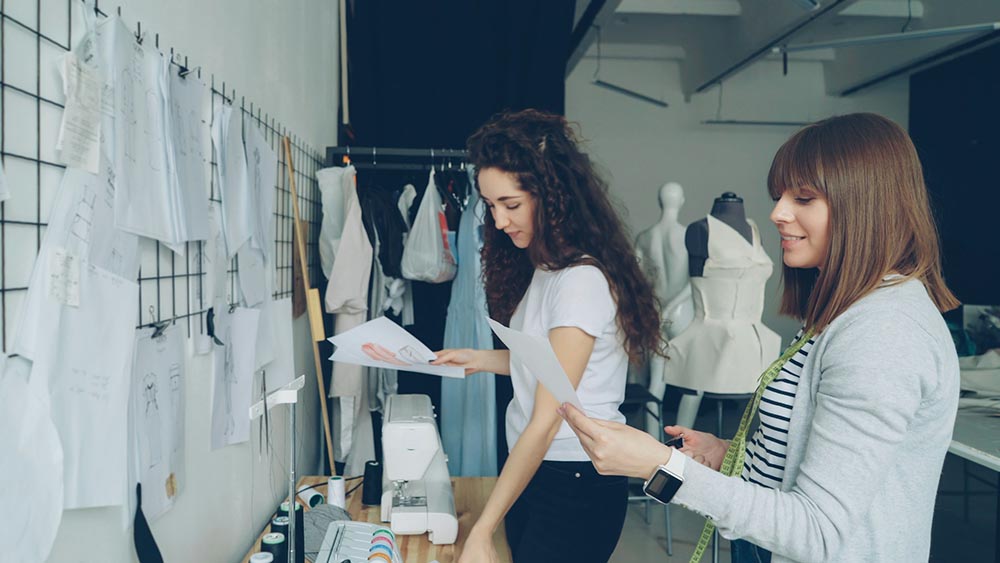
For women who want to take their fashion hobby further, learning the craft elements — basic sewing, garment tailoring, dyeing, embroidery, and customization — opens up a completely different relationship with clothing. When you understand how a garment is constructed, you see clothes differently. You notice quality. You can alter a thrifted piece to fit perfectly. You can take something ordinary and make it distinctly yours.
Online learning platforms have made these skills more accessible than at any previous point. YouTube alone has thousands of free tutorials covering everything from basic hem repairs to pattern drafting. Community colleges and local fabric stores regularly offer beginner sewing workshops. The entry point is lower than most people assume, and the creative return is significant.
Fashion Journaling and Visual Storytelling
One of the most reflective practices in fashion-as-hobby is keeping a style journal — a visual record of outfits, inspiration images, fabric swatches, and observations about what is and is not working. This practice creates a feedback loop that accelerates the development of personal style in the same way journaling accelerates self-understanding in other areas of life.
Some women keep physical journals. Others maintain private Pinterest boards or Instagram archives. The format matters less than the habit of reflection — asking yourself what you liked about a particular combination, what felt off about another, and why certain pieces continue to feel exactly right regardless of the season.
The Social Dimension: Fashion as Community and Connection
One of the underappreciated dimensions of fashion as a hobby is the community it builds. The vintage community, sustainable fashion circles, local swap events, and online style forums all represent what sociologists call interest-based communities — groups formed around shared passion rather than shared circumstance. Research consistently shows that these kinds of communities are among the most meaningful for adult women, offering genuine friendship built on mutual enthusiasm rather than proximity.
Clothing swaps have become particularly popular as a social hobby format — they combine the treasure-hunt quality of thrifting with the social warmth of gathering. Participants bring pieces they no longer wear and leave with someone else’s discarded treasure, but the real value is often the two hours of conversation about style, identity, and creativity that happen in between.
Fashion as a Hobby in the Age of Sustainability
The shift toward fashion as a thoughtful hobby rather than a consumption habit aligns naturally with growing awareness around sustainable style. When you develop a genuine relationship with your wardrobe — when you understand what you love, why you love it, and how clothes are made — the pull toward fast fashion weakens considerably. You become more interested in quality and less interested in novelty.
The secondhand market reflects this shift. According to ThredUp’s 2024 Resale Report, the secondhand clothing market is growing at three times the rate of the broader retail market. As Refinery29 notes, many women are now approaching their wardrobes with far greater intention — redefining what it means to dress authentically rather than chasing a relentless trend cycle. They are not buying secondhand because they cannot afford new — they are doing it because the search is part of the creative experience.
This development has implications beyond individual wardrobes. When fashion is practiced as a hobby rather than consumed as a product, the relationship with clothing becomes more considered, more personal, and ultimately more sustainable — not as a sacrifice but as a natural consequence of genuine engagement.
Getting Started: Building Your Fashion Practice
For women who want to begin approaching fashion as a genuine hobby rather than a chore or a performance, the starting point is simpler than most fashion content suggests.
Start with your existing wardrobe, not a shopping trip. Spend an hour with everything you own. Notice what you reach for consistently and what sits unworn. The patterns in those choices tell you more about your actual style than any quiz or trend guide.
Build a visual reference library. Save images — from runway archives, street style photography, film, art, anywhere — that genuinely appeal to you without filtering for what seems appropriate or achievable. Look for patterns in what you save. Those patterns are the beginning of a style identity.
Visit a vintage or thrift store with no agenda. Not to find something specific. Just to look, touch fabric, notice what attracts your attention and what does not. This builds the eye that intentional dressing requires.
Learn one craft element. Hemming. Basic alterations. Hand-stitching a repair. The moment you do something to a garment rather than simply wearing it, your relationship with clothing changes permanently.
Connect with a community. Whether online or local, finding other women who approach fashion with the same creative seriousness amplifies everything else. The conversations alone are worth it.
A Final Thought
Fashion has always been more than clothes. At its best — when it is practiced with intention, curiosity, and genuine self-knowledge — it is a form of autobiography. The women who approach it that way are not following trends. They are doing something older and more interesting: using the art of dress to understand and express who they are.
That is what makes it a hobby worth taking seriously. Not because fashion deserves more cultural status — though perhaps it does — but because any creative practice that builds self-knowledge, connects you with community, and makes you feel more fully yourself is worth the time and attention it asks for.
The runway and the wardrobe are closer than they appear. Both are stages for the same essential human desire: to be seen, understood, and expressed.