

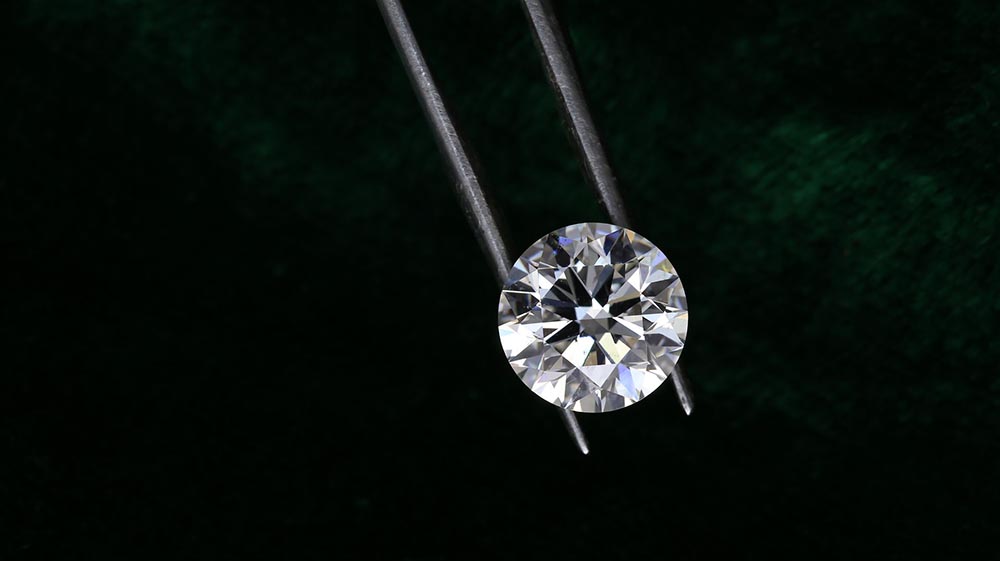
Most people picture a diamond as a flash of icy, colorless brilliance. Yet some of the most coveted diamonds on earth are anything but colorless.
They glow in soft rose, deep ocean blue, sunlit yellow, and hues so rare that a single stone can become the centrepiece of a museum collection. These are natural colored diamonds, and they occupy a world of their own, where rarity, beauty, and history converge in objects of astonishing value. For collectors and connoisseurs, they represent the very pinnacle of what nature can create.
Understanding what sets these stones apart, why they form, how they are graded, and what makes one more precious than another, is the first step into a truly fascinating realm. Here is a closer look at the qualities that make natural colored diamonds among the most extraordinary treasures in the world.
For those drawn to these remarkable stones, a curated collection such as Reuven Veksler’s diamonds offers a window into nature’s rarest creations, each chosen for its color, character, and provenance. To appreciate why such pieces command the reverence they do, it helps to understand what makes a colored diamond exceptional in the first place.
How Nature Paints a Diamond
A diamond’s color is the result of extraordinary natural circumstances unfolding over millions of years deep within the earth. Most diamonds form as colorless crystals of pure carbon, but on rare occasions, trace elements or structural quirks during formation introduce color. Tiny amounts of boron can lend a blue hue, nitrogen can produce yellows, and distortions in the crystal lattice can create pinks and reds.
Because these conditions are so uncommon and so specific, naturally colored diamonds are extraordinarily scarce. Each one is, in a very real sense, an accident of nature that took eons to occur. That natural origin is central to their allure: a colored diamond is not designed, it is discovered, the product of forces far beyond human control.
The Colors of the Spectrum
Natural colored diamonds occur across a remarkable spectrum. Yellows and browns are the most frequently encountered, while colors like pink, blue, green, orange, and the exceptionally rare red are far scarcer. Within each color, there are countless subtle variations of hue, tone, and saturation, so that no two stones are quite alike.
The rarest colors, deeply saturated pinks, blues, greens, and reds, are the most coveted of all, and the finest examples have achieved legendary status and record-setting prices at the world’s great auction houses. Part of the romance of colored diamonds is precisely this variety: each color tells a different story of how it came to be, and each carries its own distinct character.
Just How Rare Are They?
The scarcity of these stones is difficult to overstate. According to the Gemological Institute of America, only about one in every 10,000 carats of diamond displays fancy color, and the odds of a diamond showing intense color are rarer still, around one in 25,000. Numbers like these put the rarity in perspective: for every colored diamond that emerges, thousands upon thousands of ordinary stones are mined. This profound scarcity is a large part of what makes them so prized and so valuable.
Rarity, of course, is only meaningful alongside beauty, and colored diamonds possess both in abundance. It is the combination of being both breathtaking and almost impossibly scarce that elevates them above nearly every other gemstone. When you hold a fine natural colored diamond, you are holding something the earth produced only once in many millions of attempts.
How Colored Diamonds Are Graded
Colorless diamonds are graded on a familiar scale that rewards the absence of color. Colored diamonds work in the opposite way: here, color is the prize, and grading focuses on capturing it precisely. Reputable gemological laboratories assess a colored diamond’s hue, tone, and saturation, describing intensity with terms ranging from faint and light up through fancy, fancy intense, fancy deep, and fancy vivid.
The more vivid and saturated the color, the rarer and generally more valuable the stone. Even subtle differences in color can have a dramatic effect on value. A trusted laboratory report also confirms the crucial question of color origin, whether the color is natural or the result of treatment, which is fundamental to a stone’s worth and authenticity.
Why Natural and Untreated Matters
It is possible to alter or intensify a diamond’s color through artificial treatments such as high-pressure high-temperature processes or irradiation. While such treated stones exist in the market, they are considered far less valuable than diamonds whose color formed naturally over millions of years. The distinction is enormous, and it is one every serious buyer should understand.
This is why provenance and certification are so important in the world of colored diamonds. A reputable seller offers stones with proper gemological documentation confirming natural, untreated color, along with transparency about each stone’s characteristics. For collectors, the assurance that a diamond’s beauty is entirely nature’s work is part of what makes it a true treasure rather than merely a pretty object.
The Allure for Collectors
Beyond their beauty, natural colored diamonds hold a special fascination for collectors and connoisseurs. Each stone is genuinely one of a kind, an irreplaceable product of nature with its own unique combination of color and character. Owning one is a way of possessing a singular piece of the natural world, a treasure that cannot be duplicated.
There is also a deep sense of history and rarity that comes with these stones. They have captivated royalty, collectors, and admirers for generations, and the finest examples are regarded as some of the most desirable objects on earth. For those who appreciate the extraordinary, a natural colored diamond offers a combination of beauty, scarcity, and meaning that few possessions can rival.
The Takeaway
Natural colored diamonds are among nature’s rarest and most beautiful creations, born of extraordinary circumstances deep within the earth and emerging in a spectrum of mesmerizing hues. Their value rests on a foundation of profound rarity, graded color intensity, and the all-important assurance of natural, untreated origin confirmed by trusted certification. For collectors and admirers alike, they represent the meeting point of beauty and scarcity in its purest form. To explore them is to step into one of the most captivating corners of the natural world, where every stone is a singular treasure shaped over millions of years.