
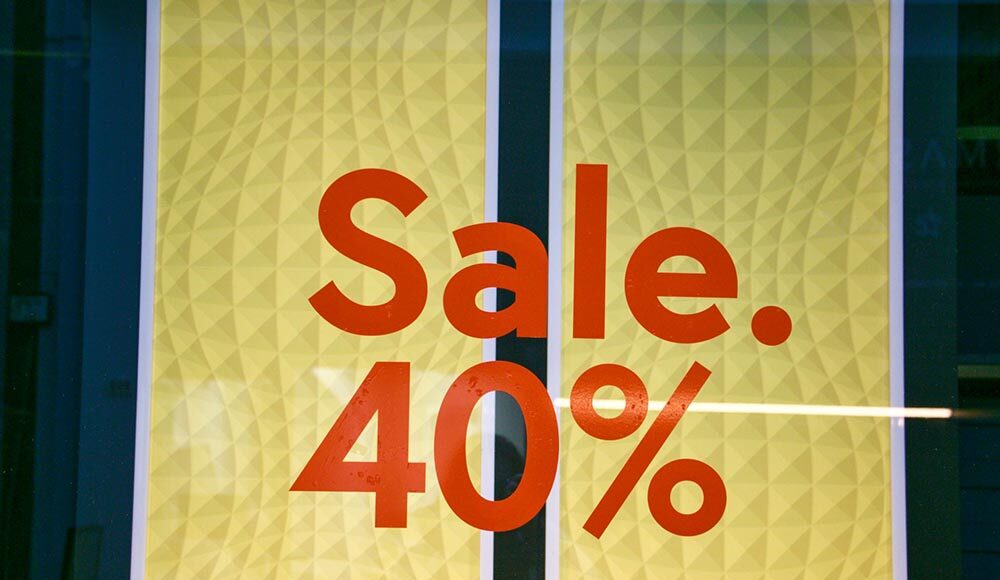
A Vince Camuto peasant blouse at Macy’s carries a 40 percent off badge.
Pull up its price history in the middle of September and the Macy’s line is flat. Not nearly flat. Flat at $65.40 for every one of the fourteen days on the chart. The badge is accurate in the narrow sense that $65.40 is less than the $109 list price. It is also useless, because $65.40 is simply what the blouse costs, and it has been nothing else for the whole window anyone can see.
Checking that line before buying is a small habit with an odd effect. It rarely talks a shopper out of a purchase. It changes which store the purchase happens at.
The two numbers on every tag
A department store price tag carries two numbers. The one on the right is what you pay. The one with the line through it is a claim about the past, and standing at the rail there is no way to test it.
A price tracker tests it. AskPrice re-checks prices at Macy’s, Bloomingdale’s, JCPenney, Nordstrom, Nordstrom Rack and Kohl’s once a day and keeps the last fourteen days on every product page. When its catalog was counted on September 15, 2026, it was following 791,727 Macy’s products, 524,579 of them in stock, and 224,013 of those carried a sale badge on that single day. Roughly two in five in-stock items were discounted at the same moment. At that density the badge stops carrying information about the item under it and starts working as wallpaper.
A flat line under a sale badge
Back to the blouse, because the chart tells a second story that the badge hides completely.
Bloomingdale’s sat at $109 for the first week, dropped to $87.20, then settled at $81.75. That is a markdown happening in public, in two steps, the way markdowns are supposed to look. The Macy’s line never moves.
Two stores, one blouse, two completely different kinds of price. The store that is actively discounting is still the more expensive of the pair. The store that has been parked at its floor the entire time is the one wearing the large red badge.
What a real markdown looks like
Compare that with a pair of Sam Edelman Poppy lace-up sneakers.
The Macy’s line holds at $120 for the first half of the window, drops to $84 around September 10, and stays down. Bloomingdale’s was still quoting the full $120 a week after that step happened, and the Nordstrom Rack row sat far below both at $39.97.
This is the shape worth waiting for. A price that steps down and then holds is a merchandising decision, not a weekend promotion. The gap between the old level and the new one is the discount, and a shopper can measure it rather than accept the number printed on the tag.
It is also the shape that makes the badge on the blouse look thin. One chart shows a price that moved. The other shows a price that has been still for two weeks with a sticker on it. The tag copy on both would read much the same.
The same shoe, four prices
The more useful consequence of watching several stores at once is that identical merchandise turns up at all of them, often under slightly different names.
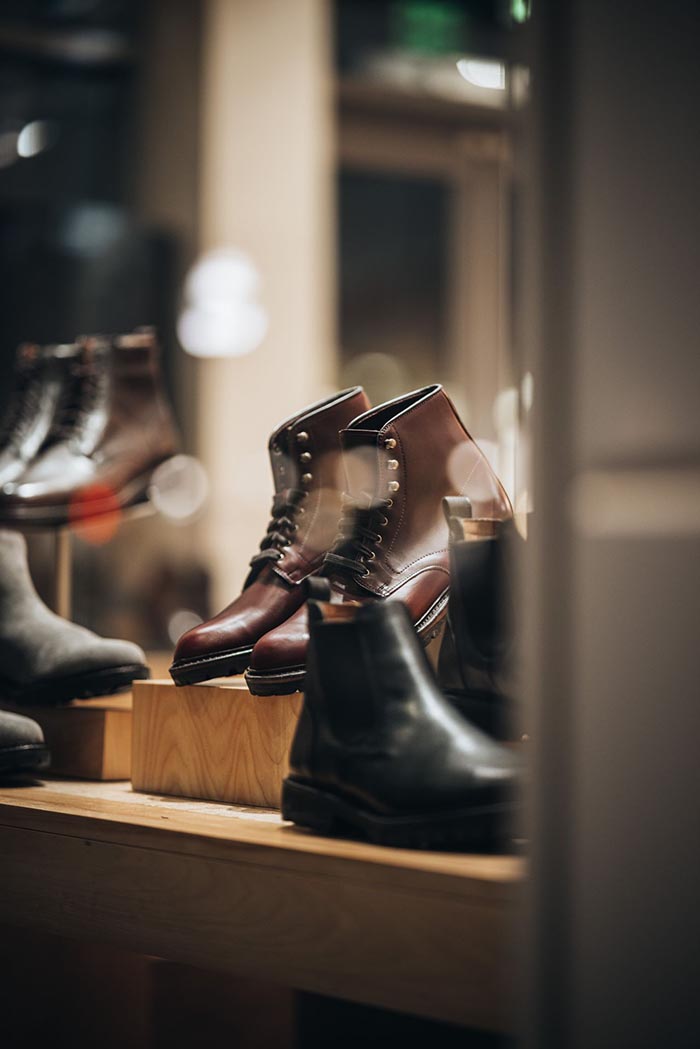
The Sam Edelman Hazel pump is tracked at four stores against the same $150 list price, and the spread between them is the whole story. Bloomingdale’s is asking the full $150. Macy’s is at $105, a thirty percent difference that nobody browsing the Bloomingdale’s shoe department has any way of seeing. The two Nordstrom banners sit lower again. No sale event explains this. It is four shelves quoting four prices for one shoe on the same afternoon.
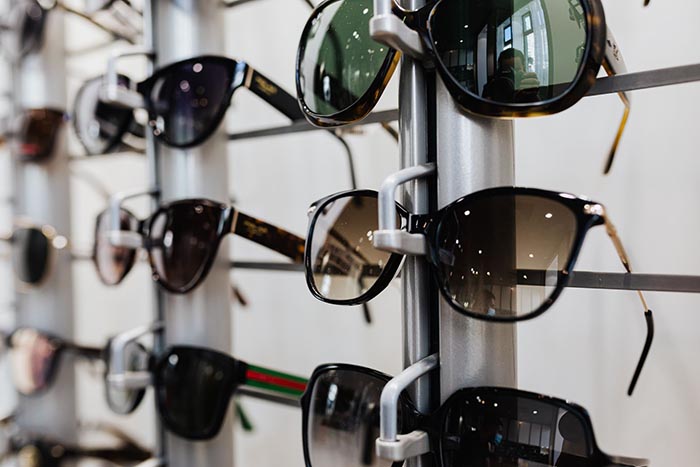
Tory Burch square sunglasses, model TY9075U, tell the same story with fewer rows. Macy’s dropped to $147.99 on September 14 and has held there. Bloomingdale’s and Nordstrom were both quoting $247 on the same day.
Nobody announced a ninety-nine dollar spread on a pair of sunglasses. It is simply where the item sat at three retailers at the same moment, and it is only visible to someone looking at all three.
Why the word exclusive matters
The blouse from the opening is listed at Macy’s as an exclusive. Bloomingdale’s sells what appears to be the same garment under a different neckline name. The tracker pairs the two on the barcode rather than the title, which is the only reason those rows ever appear side by side.
Exclusive naming is what makes price matching hard at the counter. A store cannot match a competitor on an item the competitor supposedly does not carry. The barcode does not care what the product page calls it.
Fourteen days is not a year
The limit is worth stating plainly. Two weeks of history is a short memory. It will not say whether a coat is cheaper in January than in September, and it cannot show last year’s Black Friday level.
What it does cover is the period in which the games get played. A sale that ends on Sunday and restarts on Tuesday fits inside two weeks with room to spare, and so does a badge glued to the same unchanged number since the start of the month. For the wider view on one retailer, the Macy’s price history pages show what is actually moving across the catalog instead of one item at a time.
Before you check out
- Open the item’s price chart and look at the line for the store you are standing in.
- A flat line for fourteen days means the badge is decoration, so buy on fit or do not buy.
- A step down that holds is a real markdown, and the size of the step is the actual discount.
- Read the other store rows before paying, because the cheapest row is frequently not the one running the promotion.
- If the item is listed as an exclusive, look for the barcode match rather than the product name.
None of this is an argument against buying the blouse. It is an argument for buying it the way a buyer would: knowing that waiting for a better week on that particular rack would have bought nothing, which is a different position from being hurried along by a red sticker.