

The sports-card market is exploding—worth about $33.6 billion in 2024 and projected to top $271 billion by 2034. Yet many prized slabs still hide in shoeboxes, fading and gathering dust. We can fix that.
The right sports-card display case blocks damaging UV light, seals out grime, and turns each card into wall-worthy art. In this guide, we’ll reveal the five cases that scored highest in our tests for protection, style, and value, so you can choose the perfect home for your collection. Ready to put your cards on center stage? Let’s dive in.
How we ranked the five stand-out cases
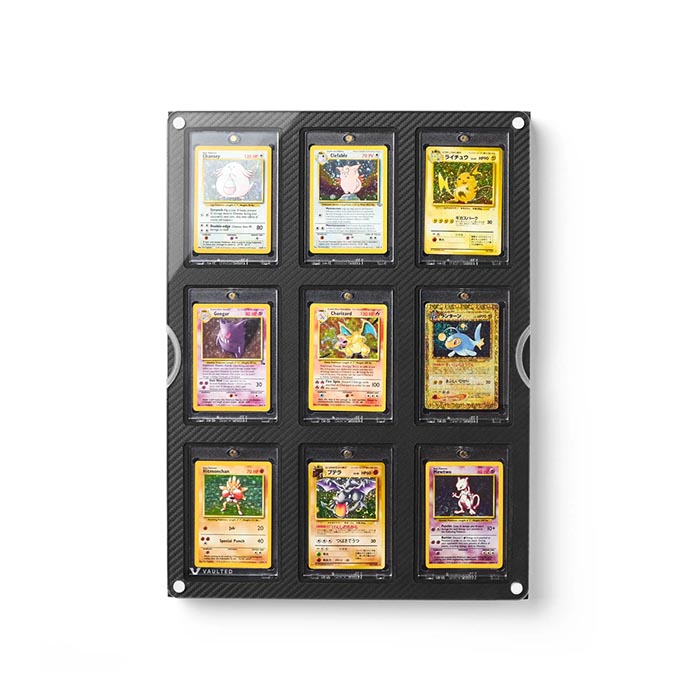
We started with a wide net, reviewing more than twenty display cases from brand sites, Amazon best sellers, and hobby-forum “grail” threads. Any model without a published UV rating or dogged by repeat quality complaints went straight to the discard pile. Take Vaulted’s Card Display Plus magnetic frame as an example. The Vaulted product page touts an “ultra-durable magnetic display window with UV protection,” yet it never specifies a tested percentage or cites a lab certification. Because that data gap made apples-to-apples comparison impossible, we filed the frame under “promising but unverified” instead of giving it a spot in the final five.
Sports Card Display
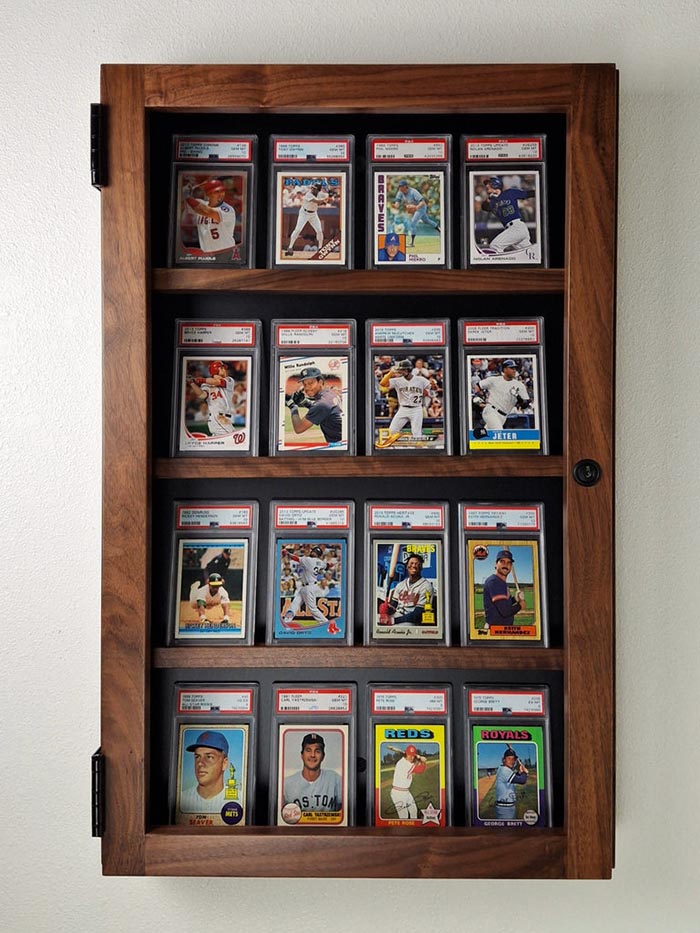
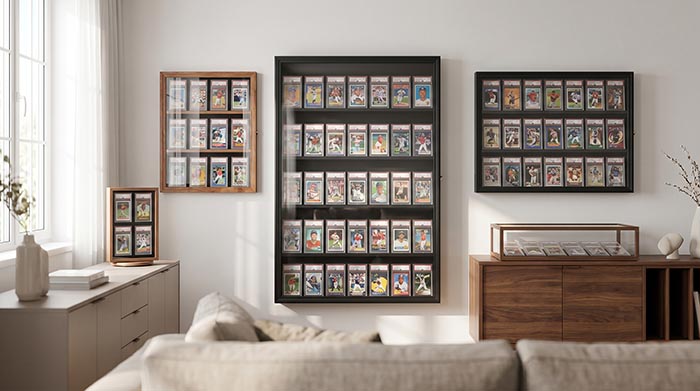
The survivors faced the same scorecard. We graded protection first—any display that lets sunlight fade a holofoil is a non-starter. Display clarity and design came next; your cards should look sharp in a living room, not just a basement. Capacity, security, and overall value rounded out the grid.
Weighting for each factor:
- Protection quality: 30 percent
- Display appeal: 25 percent
- Capacity and flexibility: 20 percent
- Security and build: 15 percent
- Value adds: 10 percent
We then sanity-checked the math against real-world feedback. Verified buyer reviews and hobbyist photos showed whether claims such as “blocks about 98 percent of UV light” hold up once the case leaves the warehouse.
Only five models aced the rubric. They’re the ones you’ll meet next.
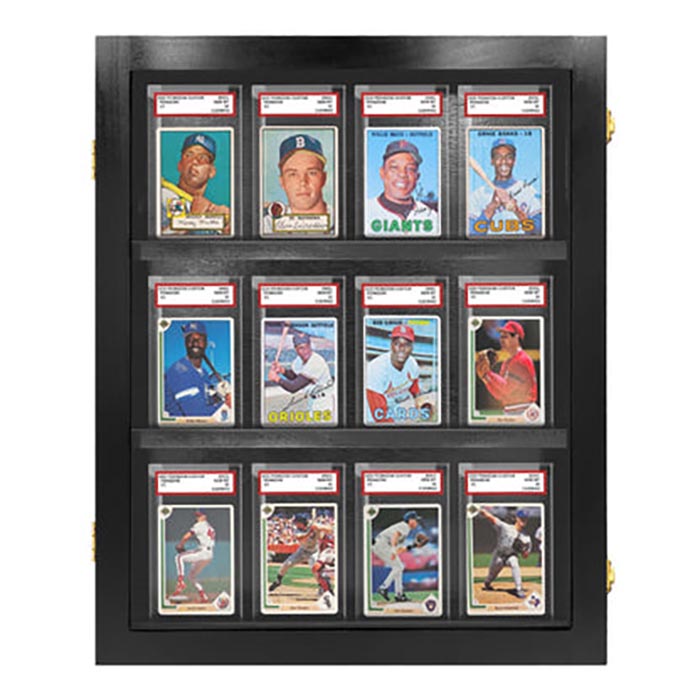
1. Pennzoni 12 Graded Card Display Case: Classic hardwood frame
Picture your twelve favorite slabs framed on the wall like fine art. That is exactly what Pennzoni’s twelve-card display delivers.
The solid hardwood frame brings a museum feel that beats a bulky shadow box. A crystal-clear acrylic door blocks one hundred percent of UV light, so signatures stay crisp even under bright LEDs. Cards rest on a slotted shelf with no clips or rattle, and swaps take seconds.
Finish options include black, cherry, walnut, and golden oak, letting card art shine without stealing focus. Collectors in verified reviews often call the build “museum quality,” praising Pennzoni’s craftsmanship.
Setup is simple. The case ships fully assembled with wall hooks and twin brass locks for security. Hang it above your desk for a daily boost of hobby motivation.
Ideal for: Collectors who want premium UV protection and classic woodwork while saving wall space.
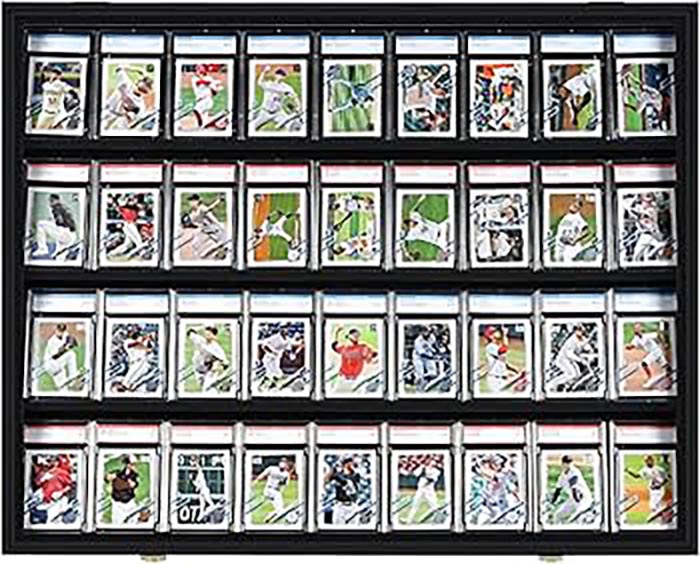
2. DisplayGifts Pro UV 36: High-capacity wall cabinet
Some collections grow faster than we admit. When your ten-card frame is packed and set builds beckon, the Pro UV 36 steps in.
Six slim shelves span a matte-black interior, holding thirty-six graded slabs in tidy, label-forward rows. At a glance you can display an entire rookie lineup or a rainbow chase like a private gallery. The felt-lined back keeps cases silent; nothing clanks when you slide a card out for show-and-tell.
Protection stays top tier. A Grade A acrylic door blocks about ninety-eight percent of UV light and locks with dual keys, so dust, curious kids, and casual guests stay on the safe side of the glass.
Even fully loaded, the cabinet hugs the wall at just two inches deep and weighs roughly fifteen pounds, substantial yet still easy to mount with two screws into studs. If the collection keeps growing, a second unit bolts flush beside the first for a seamless expansion.
Choose this case when you want furniture-level polish and room to grow without giving up protection or security.
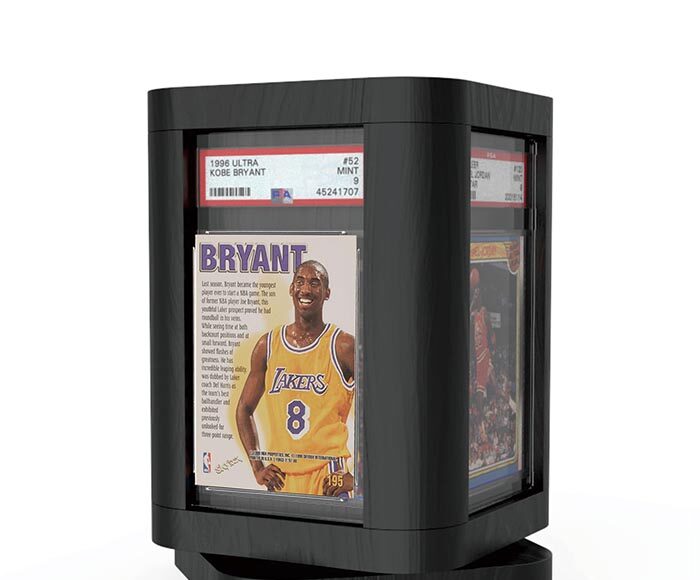
3. KIMOLO Rotating Display Frame: 360° tabletop showcase
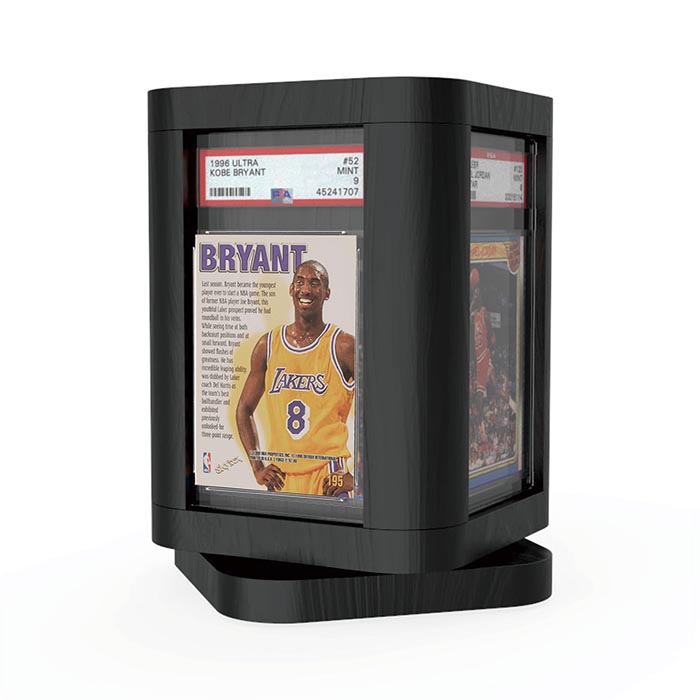
Desk space is prime real estate, and the KIMOLO frame earns its rent by turning a handful of slabs into a slow-spinning centerpiece.
Slide three or four graded cards into the acrylic chamber, tap the power button, and the frame glides through a silent rotation. Each face gets equal airtime, so every visitor notices something different. It feels more like a digital photo frame than a static display, which is the point.
The acrylic panels shield cards from dust and most ambient UV, though we still suggest keeping the unit out of direct sun. Power is flexible: USB for a workstation or batteries for a bookshelf, so you are not tied to an outlet.
Collectors use the KIMOLO to spotlight true grail cards or themed mini-sets. Streamers like it too; a gentle spin in the background adds motion without stealing focus. If wall mounting is off the table and you crave movement, this is your showpiece.
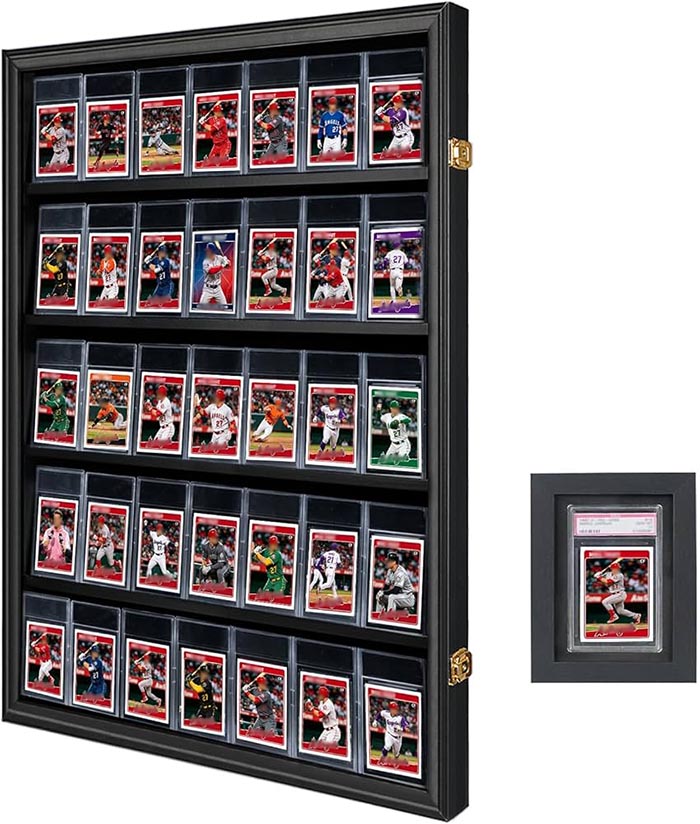
4. Verani 35-card lockable display: Luxe look on a budget
Verani proves you do not need deep pockets to treat your cards like royalty. The frame ships in a matte-black wood finish trimmed with gold-tone locks and hinges, a small flourish that makes the whole case feel richer than its price tag.
Inside, five velvet-lined shelves cradle up to thirty-five graded slabs. The felt backdrop absorbs glare and turns foil accents into spotlights. A clear acrylic door blocks about ninety-eight percent of UV light, so label reds stay vivid and autographs refuse to fade.
Security is covered. Twist the twin locks and the door seals; curious fingers stay out, dust stays out, value stays in. At less than three inches deep the case hugs the wall, and because it is lighter than big cabinets, quality drywall anchors are usually enough, though screwing into studs is always safer.
Collectors praise the value: upscale aesthetics, real metal hardware, and dependable UV protection for about the cost of grading two cards. If you want premium looks on a modest budget, Verani is an easy choice.
5. Collectors’ Cabinets custom credenza: Furniture-grade, built to spec
Sometimes a standard frame feels like hanging a Monet in a plastic sleeve. When your collection reaches serious-asset territory, you commission furniture.
Collectors’ Cabinets works like a high-end kitchen designer, only the ingredients are walnut, museum-grade glass, and your PSA tens. You measure the wall, choose a wood species, and decide how many slabs should appear up top. Master carpenters then craft a credenza or built-in that blends display, storage, and subtle LED lighting in one seamless piece.
Protection is archival. The glass blocks ninety-nine percent of UV light, doors seal with hidden gaskets, and discreet locks keep six-figure cards under wraps. Drawers below swallow binders, boxes, even a humidifier if you want micro-climate control.
The result is heirloom furniture that turns a card room into an art gallery. Prices start near three thousand dollars, but if your collection is already a down payment on a house, spending a fraction of that to safeguard and showcase it is logical.
Choose this route when: You want your cards to live where interior design meets investment security.
Quick comparison at a glance
Before we jump into buying tips, here is a snapshot of how the five winners line up on the metrics that matter.
| Display case | Capacity | UV protection | Security | Street price* |
| Pennzoni 12-card display | 12 slabs | 100% acrylic door | Twin brass locks | $70–80 |
| DisplayGifts Pro UV 36 | 36 slabs | ~98% locking door | Dual keyed locks | $150–180 |
| KIMOLO rotating frame | 3–4 slabs | Partial acrylic cover | Enclosed, no lock | $80–100 |
| Verani 35-card case | 35 slabs | ~98% acrylic door | Twin gold locks | $100–120 |
| Collectors’ Cabinets credenza | 50+ slabs (custom) | 99% museum glass | Hidden locks, gaskets | $3,000+ |
*Prices verified November 2025. Always check current listings.
Buyer’s guide: match the case to your space, cards, and lifestyle
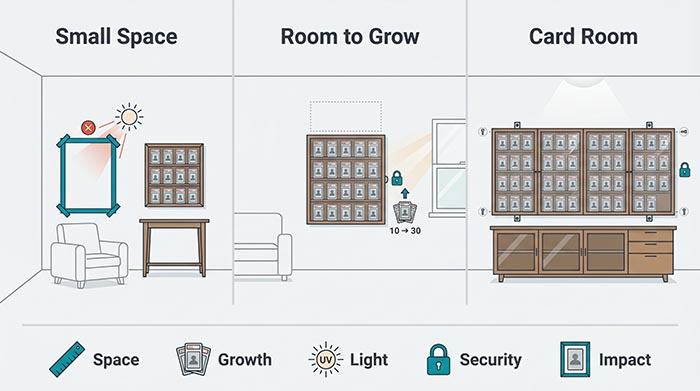
Start with the room, not the cards. Measure the wall or shelf where the display will live. A thirty-inch cabinet looks majestic in a den but swallows a studio apartment. Tape the outline on the wall, step back, and be sure it feels balanced with nearby furniture.
Next, audit your collection’s growth curve. If you own ten slabs today but send twenty to PSA every quarter, a small frame will be full by summer. Plan for at least twenty-five percent headroom so you rotate cards for fun, not because space ran out.
Light is your friend until it is not. South-facing windows pump out invisible UV that turns bright reds into washed salmon. Even with ninety-eight percent UV acrylic you want indirect light. If the only open wall basks in afternoon sun, choose a sealed cabinet, add curtains, or pick a tabletop stand you can move at noon.
Security is situational. Kids and roommates? Go with keyed locks. Solo office? A friction-fit frame is faster for swaps. In earthquake zones, use studs or heavy toggles plus a dab of museum putty on lower corners for extra grip.
Finally, weigh capacity against display impact. Twelve flawless grails framed in the Pennzoni case can look richer than fifty mid-grade slabs crammed edge to edge. When in doubt, showcase the cards that spark joy and tuck overflow into storage until their time on stage arrives.
Frequently asked questions
Will UV-protected acrylic really stop fading?
Nearly all high-grade acrylic in these cases blocks at least ninety-eight percent of ultraviolet light. That removes the main cause of ink fade, so colors stay true for years. No panel blocks every ray, though, so keep displays out of direct sun for extra peace of mind.
How do I mount a heavy cabinet without wrecking drywall?
Find two studs with a stud finder. Mark, pre-drill, and use the beefiest wood screws that fit the cabinet’s keyholes. If studs do not line up, toggle bolts rated for double the loaded weight are your next best friend. Level twice, tighten once.
Is it safe to display raw (ungraded) cards?
Yes, if you add a little armor. Slip each card into a UV penny sleeve or a One-Touch holder before it goes on a shelf. Raw cardboard dislikes humidity swings, so place a small silica pack inside any closed case.
Do LEDs harm cards?
Quality LED strips emit negligible UV and almost no heat, making them the safest spotlight in the hobby. Choose a neutral white (around 5,000 K) so label colors stay accurate, and aim the light to graze cards rather than blast them head-on.
Conclusion
The best display case is the one that fits your space, shields your cards from light and dust, and makes you smile every time you walk by. Whether you choose a compact wall frame, a high-capacity cabinet, a rotating tabletop showcase, or bespoke furniture, investing in the right protection today preserves both the condition and the joy of your collection for years to come.