

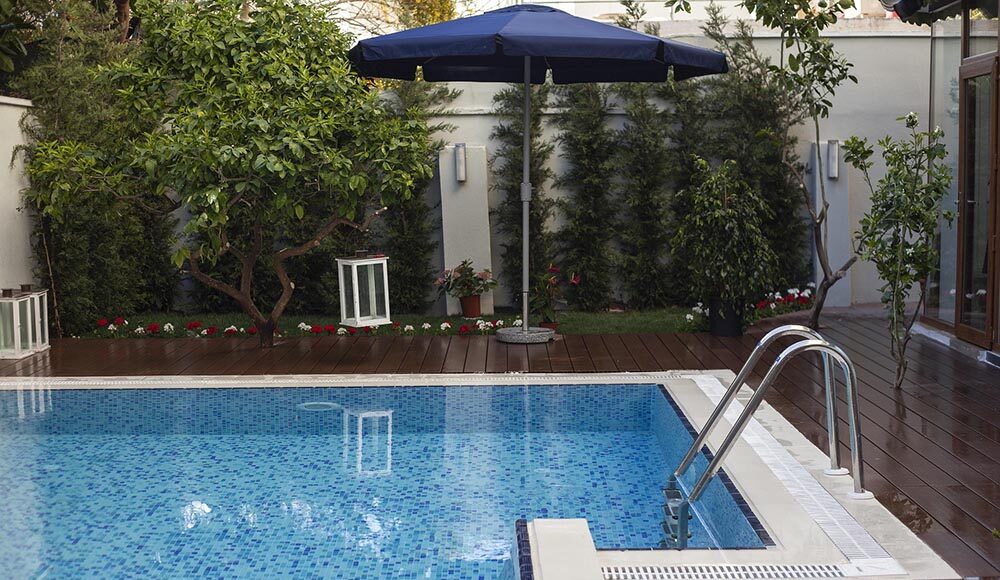
Opening a pool after winter is rarely a one-step job. The cover may be full of leaves and dirty water. The pool level may be low. Walls and steps may need brushing. Equipment may be disconnected, and the water may be cloudy or unbalanced.
That is why pool opening works best when it is handled in order. Start by clearing and removing the cover, then inspect the equipment, clean the pool, restart circulation, test the water, add chlorine carefully, and finish with safety checks before anyone swims.
It is smart to begin a few days before the first planned swim day. If the water is cloudy, the filter needs cleaning, or the pump shows a leak, you will have time to fix the problem instead of rushing through the opening.
Clear The Cover And Clean The Pool Area First
Remove Cover Debris Carefully
The first job is to clean the winter cover before removing it. Use a cover pump to remove standing water, then clear leaves, branches, dirt, and other debris with a soft broom or leaf net.
Take your time here. If dirty cover water spills into the pool, the rest of the opening becomes harder. A few extra minutes on the cover can save hours of skimming, vacuuming, and chemical correction later.
Once the cover is off, rinse it, let it dry, and store it properly. A damp, dirty cover can grow mildew or become damaged before next season.
Clean The Deck, Skimmers, and Visible Debris
After the cover is removed, clean the pool area. Sweep the deck so dirt and leaves do not blow straight back into the water. Skim large debris from the pool surface and empty the skimmer baskets.
If winter plugs, accessories, or returns were removed or covered, reinstall them according to your pool setup. Keep tools, loose branches, and outdoor clutter away from the pool edge while you work.
Inspect Equipment Before Turning The System On
Before starting the pump, check the equipment pad. Look at the pump, filter, hoses, valves, heater, chlorinator, salt system, returns, lights, ladders, handrails, and drain plugs. Watch for cracks, loose fittings, worn O-rings, missing parts, damaged cords, leaks, or broken pressure gauges.
Fill the pool to the correct water level before running the system. The pump should prime properly and run without strange noises, air leaks, or water dripping from fittings. If something sounds wrong, shut it down and inspect it before continuing.
A careful equipment check helps prevent small opening problems from turning into expensive repairs.
Brush, Vacuum, And Run Circulation Before Adding More Chemicals
Physical Cleaning Helps Chemicals Work Better
Chlorine works better when the pool is not full of leaves, dirt, and organic debris. Before adding more chemicals, brush the walls, steps, corners, ladders, and waterline. Vacuum settled debris from the floor or clean in stages if the pool is very dirty.
If large debris is everywhere, remove it first with a net. Trying to fix a dirty pool only with chemicals usually wastes time and product. Physical cleaning gives the water a better starting point.
Let The Pump And Filter Run Long Enough
Once the pool is brushed and visible debris is reduced, start circulation. Check the filter pressure and clean or backwash the filter if needed. Let the water move before retesting or making major chemical changes.
Circulation helps mix the water so your test results are more reliable. It also lets the filter begin removing suspended dirt and small particles.
Test Water Before Adjusting Chlorine
Pool owners should test the water before adding chlorine or shock. Guessing can lead to wasted chemicals, cloudy water, or levels that are not comfortable for swimming.
Check the main readings first: pH, total alkalinity, sanitizer level, calcium hardness, cyanuric acid, and salt level if you use a saltwater system. Balancing pH and alkalinity helps chlorine work more effectively, so do not treat chlorine as the only opening step.
If you are unsure about pool opening chlorine dose, base the decision on your test kit, pool volume, current sanitizer level, water condition, and product label. A clear pool with low chlorine may need a different approach from a cloudy pool with heavy organic debris. Add chemicals carefully, and follow local pool professional guidance when the water is hard to correct.
Add Chlorine Or Shock Safely And Retest
Chlorine helps sanitize water after months of low circulation. If the pool is cloudy, green, or filled with organic debris, a shock treatment may be needed. The exact amount depends on the product, pool size, current water readings, and opening condition.
Add chemicals with the pump running, and never mix pool chemicals together. Wear basic protection, keep children and pets away from the area, and store chemical containers safely after use.
After adding chlorine or shock, let the water circulate. Then retest before swimming. If the pool uses stabilizer, check whether cyanuric acid is already present or included in the chlorine product. Too little stabilizer may let sunlight break down chlorine quickly, while too much can make balancing harder.
Use A Cordless Pool Cleaner To Support Spring Cleanup
A cordless pool cleaner can make spring opening easier once the largest debris has been removed and the water is circulating. During opening, dirt often settles again after brushing, and pollen, fine dust, and small leaves may collect on the floor or around the waterline. Beatbot models can help reduce this physical cleanup by collecting visible debris from pool surfaces, depending on the model’s coverage. AquaSense 2 Ultra and AquaSense 2 Pro are stronger choices for larger pools or tougher spring cleanups because they are designed for broader cleaning coverage and more advanced navigation. For lighter opening work or simpler pools, Sora models can be matched by pool size, debris level, and budget. A practical routine is simple: brush the walls, start circulation, let the robot collect settled debris, then rinse the cleaner basket while checking equipment and retesting the water. The cleaner reduces vacuuming and brushing work, but it does not replace chlorine, filtration, water testing, or equipment inspection.
| Opening step | Why it matters | Practical tip |
| Clean the cover first | Keeps dirty water from falling in | Pump off cover water before removal |
| Inspect equipment | Prevents startup leaks and damage | Check O-rings, plugs, hoses, and gauges |
| Brush surfaces | Loosens winter buildup | Focus on steps, corners, and waterline |
| Run circulation | Mixes water and supports filtration | Watch pressure and clean filter if needed |
| Test before dosing | Prevents random chemical use | Check pH, alkalinity, chlorine, CYA, and salt |
| Retest before swimming | Confirms water is ready | Wait for circulation after adding chemicals |
Final Safety Checks Before Swimming
Before the first swim, make sure the water is clear enough to see the bottom, drains, steps, and any toys. Check that chlorine and pH are within the range recommended by your test kit or pool product labels.
Inspect ladders, handrails, gates, alarms, pool covers, lights, and deck surfaces. Remove tools, chemical containers, cords, and loose debris from the pool area. If chemicals were recently added, give the pump and filter enough time to circulate the water, then test again.
The pool should look ready, test ready, and feel safe before anyone gets in.
Keep the Pool Opening Routine Mana
A good pool opening follows a clear order: remove cover debris, inspect equipment, clean the pool, start circulation, test the water, add chlorine carefully, and finish with safety checks.
Keep notes from the process. Record chemical readings, equipment issues, filter pressure, and anything that needs repair or replacement. Those notes can make next year’s opening easier.
Opening the pool carefully sets up the rest of the season. Clean surfaces, working equipment, balanced water, and safe surroundings make the first swim more enjoyable and weekly care easier to keep under control.



