

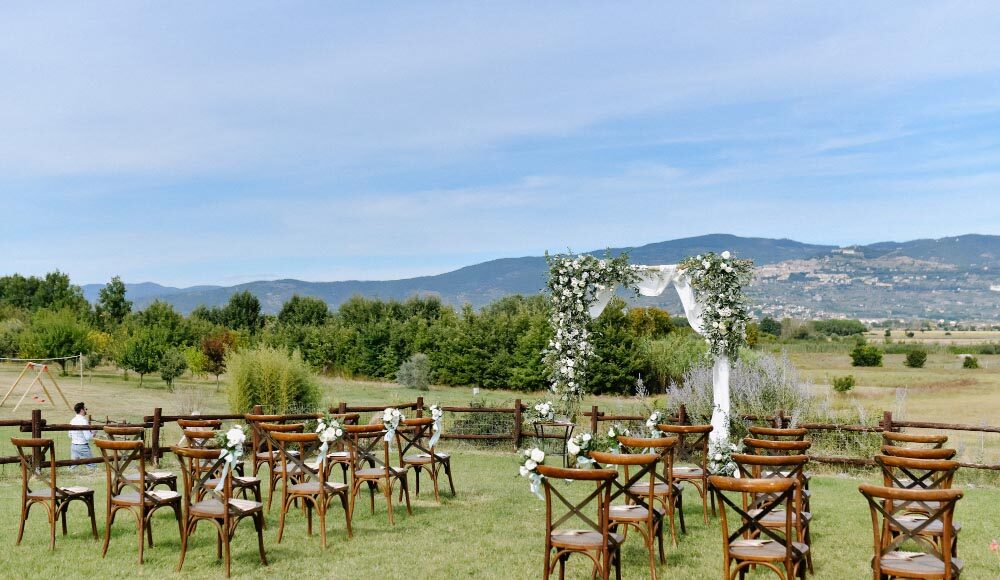
Outdoor weddings have never been more popular.
The Knot’s 2025 Real Weddings Study, which surveyed nearly 17,000 couples married in 2024, confirms that more couples are choosing outdoor and open-air venues over traditional places of worship. The average wedding now costs $36,000, up from $33,000 in 2024, and the stakes for getting it right have never been higher.
Yet even the most beautifully designed outdoor weddings can fall apart when the basics are overlooked. And the basics are rarely the flowers. They are the logistics.
Here are ten outdoor wedding planning mistakes that consistently ruin the guest experience, and what to do instead.
1. Ignoring a Weather Contingency Plan
No outdoor wedding plan is complete without a Plan B. Venues offering hybrid options, weather-adaptable solutions, and indoor-outdoor transitions are now among the most sought-after by couples precisely because weather unpredictability is a recognized top-tier risk.
A solid contingency plan means securing a confirmed indoor backup location before the wedding date, arranging a tent option with removable sides, establishing a clear communication protocol for notifying guests and vendors, and setting a firm decision deadline, typically 48 hours before the event. If your venue doesn’t offer a built-in weather backup, address it explicitly in the contract before signing.
2. Underestimating Heat and Sun Exposure
An outdoor ceremony done well requires serious forethought. Guests are seated for up to 30 minutes, unable to move, find shade, or get a drink. When couples overlook shade and hydration, the discomfort shows on every face in the wedding photos.
Zola’s 2025 First Look Report, which surveyed more than 6,000 couples, found that 95% said the investment in their wedding was worth every penny. Protecting that investment means protecting guests from the elements first. Positioning the ceremony in shaded areas, scheduling it in the late afternoon to avoid peak heat, and setting up hydration stations with cold beverages are all low-cost moves that guests genuinely notice. Handheld fans, parasols, and a discreet sunscreen station near the entrance go a long way, especially for elderly attendees or those traveling from cooler climates.
3. Inadequate or Poorly Placed Restrooms
This is one of the most overlooked logistics issues in outdoor wedding planning, and one of the most damaging to guest experience. Long lines, poor conditions, and facilities that don’t match the formality of the event leave guests frustrated and ready to leave early.
The sanitation industry standard is one restroom unit per 25 guests, and for events serving alcohol, that ratio needs to increase accordingly.
“Couples obsess over the flowers and the menu but often forget the bathrooms until the last minute,” said Justine Fisher, owner of Sierra Sanitation. “Guests arriving in formal wear expect a consistent level of comfort throughout the celebration. Thoughtfully planned restroom accommodations help preserve the atmosphere and ensure the experience feels seamless from start to finish.”
Placement matters just as much as quantity. Restroom units should be:
- Accessible but discreet, ideally screened from ceremony and dining views
- Well-signed with clear directional markers from key areas
- Positioned away from food stations and the dance floor
- Serviced throughout the event for receptions lasting several hours
4. Poor Acoustic Planning
Outdoor venues have no natural sound containment. Wind, open fields, and sheer distance can make a ceremony inaudible to guests sitting just a few rows back.
Couples worked with an average of 14 vendors in 2024. Audio professionals are among them, yet sound is frequently treated as an afterthought until the day itself reveals the problem. A professional sound system with wireless microphones, strategically placed speakers, and an experienced audio technician is non-negotiable for outdoor events. A sound check at the actual venue, at the same time of day as the ceremony, is essential since ambient noise levels shift significantly by hour.
5. No Backup for Mud and Uneven Terrain
Grass venues look stunning in photos but create real accessibility challenges on the day. Elderly guests, those with mobility limitations, and anyone in heeled footwear struggle with soft, uneven, or wet ground.
The U.S. Bureau of Labor Statistics notes that professional event planners are specifically trained to manage physical site logistics, which is why terrain planning matters far more than most couples anticipate. Temporary walkways, rubber matting near ceremony seating, and clear pathways from parking to the ceremony, bar, and restrooms are straightforward fixes.
Communicating terrain conditions to guests in advance so they can dress appropriately costs nothing and eliminates a lot of avoidable frustration.
6. Underinvesting in Lighting
As daylight fades, an outdoor venue can go from breathtaking to disorienting within an hour. Lighting rarely gets the same budget consideration as flowers or catering, yet it directly affects both safety and atmosphere.
Couples consistently underallocate for add-ons like lighting when building their initial budgets. Beyond ambiance, this is a safety issue. The following areas require adequate illumination without exception:
- All guest pathways and walkways
- Steps and level changes
- Restroom locations and directional signage
- Parking areas and entry points
A venue that looks beautiful at 5 PM can feel unsafe and confusing by 8 PM without proper lighting in place.
7. Failing to Communicate Guest Logistics in Advance
When guests arrive without knowing the terrain, appropriate footwear, parking arrangements, or weather contingency plans, confusion compounds quickly. This is an easy problem to prevent and a costly one to ignore.
A striking 48% of couples report struggling with the gap between their wedding vision and practical reality. That gap widens dramatically when guests are left uninformed. A wedding website or pre-event communication should cover footwear recommendations, the distance between the ceremony and reception areas, parking and shuttle details, weather contingency information, and an approximate schedule for the day. Small details communicated in advance prevent large-scale confusion on the day itself.
8. Insufficient Seating for the Ceremony
Standing-room ceremonies seem informal and relaxed until guests are on their feet for 20 minutes in formal attire. The discomfort is immediate for elderly guests, pregnant attendees, and anyone with physical limitations.
The average U.S. wedding hosts around 130 guests. Every one of them needs a proper seat. That means ADA-accessible options with clear sightlines, chairs stable enough for grass or gravel surfaces, extra seats beyond the confirmed guest count, and clearly marked reserved rows for immediate family. None of this is complicated. It just requires thinking it through in advance.
9. Overlooking Pest and Insect Management
Warm-weather outdoor venues attract insects, and almost no one plans for it. Mosquitoes, gnats, and flies near food stations can overshadow an otherwise perfect evening. This is among the most preventable guest experience failures at outdoor receptions.
Effective and unobtrusive options include:
- Citronella candles are placed around dining and lounge areas
- Strategically positioned fans to disrupt insect flight near food
- Insect repellent available at a discreet station, ideally near restrooms
- Covered food stations during cocktail hour
For evening receptions in wooded or lakeside settings, skipping this step can define the guest experience more than anything else on the day.
10. Skipping a Day-of Coordinator
37% of couples hire a day-of coordinator, making it the single most sought-after planning service. The reason is straightforward: outdoor weddings introduce variables that an indoor venue handles automatically.
Temperature, terrain, lighting, sound, restroom access, and weather contingencies all require real-time management. A day-of coordinator handles vendor logistics, makes weather calls, and resolves issues as they arise so the couple can actually be present on their wedding day rather than managing it. With an average of 14 vendors involved, without someone coordinating those relationships on the day itself, the margin for error multiplies significantly.
The Takeaway for Couples
The details that most often derail outdoor weddings are not the flowers, the centerpieces, or the cake. They are the unglamorous logistics: clean and adequate restrooms, shade and hydration, sound that reaches the back row, terrain guests can actually navigate, and lighting that keeps everyone safe after sunset. 95% of couples who invested in their wedding said it was worth every penny. That satisfaction doesn’t come from perfect tablescapes. It comes from comfortable guests who heard every word and never had to wait in line for a restroom. Getting the fundamentals right creates the conditions for everything else to shine.



