

The Stress-Free Relocation Guide Nobody Talks About
Moving has a way of turning simple things into stressful ones. Shoes disappear. Boxes end up in the wrong room.
And somehow, the clothes you folded so carefully arrive wrinkled, stretched, or smelling like the inside of a moving truck.
It’s frustrating. Most moving advice focuses on furniture and fragile items. Clothes usually get treated as an afterthought. Just toss them in bags and deal with it later. But anyone who has opened a box to find crushed sweaters or bent hangers knows that approach rarely works.
Why do we always assume clothes will be fine?
Your clothes matter. They cost money. They take time to replace. And they’re part of how you show up every day. Moving them well isn’t about perfection. It’s about protecting what you already own and making the transition easier on yourself.
This guide walks through practical ways to move your clothes without ruining them. No gimmicks. No overcomplication. Just a calm, thoughtful approach that actually helps.
Start With a Clothing Reality Check
Before you pack anything, take a moment to look at what you really have. Moving is one of the few times you get a built-in reset. Clothes you never wear still take up space, and they quietly add weight, cost, and effort to your move.
So pause here. Pull everything out if you can: closets, dressers, storage bins. Sort items into simple categories. Keep, donate, toss.
Try to be honest with yourself. If something doesn’t fit, is damaged, or hasn’t been worn in years, it probably doesn’t need to come along. Do you really want to unpack clothes you already avoid wearing?
Fewer clothes mean fewer boxes, less stress, and a much easier unpacking process.
This step alone can change how the entire move feels.
Choose the Right Packing Method for Each Type of Clothing
Not all clothes should be packed the same way. What works for t-shirts can easily ruin a structured jacket or a delicate dress.
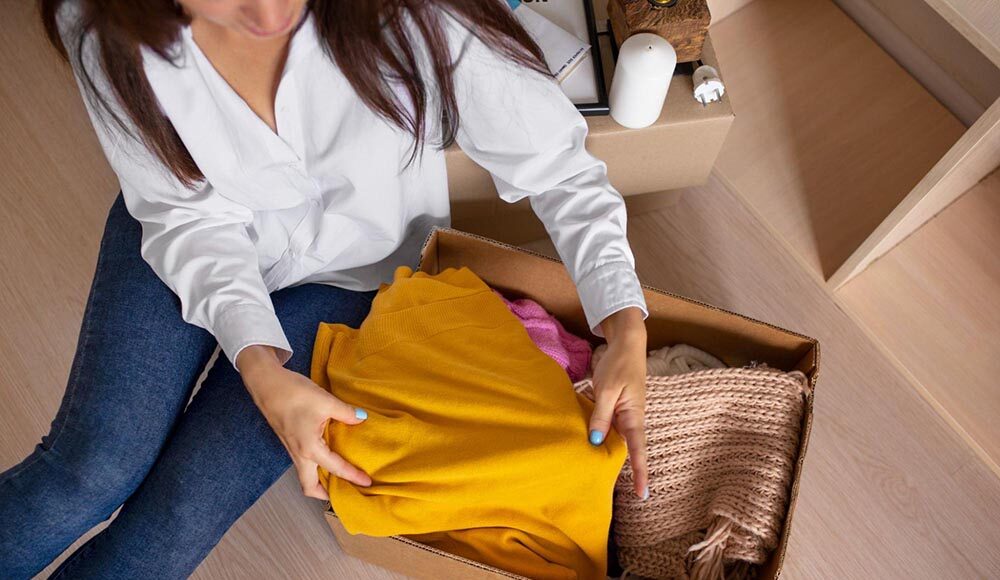
Everyday clothes like jeans, sweaters, and casual tops usually fold well. Use medium-sized boxes so they don’t get too heavy. Lining the box with packing paper or even a clean towel adds a little extra protection.
For items that wrinkle easily, keeping them on hangers is worth the effort. Wardrobe boxes are ideal if you have access to them.
But if you don’t, there’s still a workaround.
Group hanging clothes together, slide a large garbage bag over them from the bottom, and tie it securely around the hangers. It’s not fancy, but it works.
Delicates need more care. Use tissue paper between folds. Avoid plastic bags that trap moisture. Place these items near the top of boxes so they don’t get crushed.
Shoes should always be packed separately from clothing. Clean them first. Wrap them individually when possible, especially leather or light colored pairs.
It takes a little longer, but it’s worth it.
Don’t Skip the Moving Strategy
This is the part nobody really talks about. And it might be the most crucial part.
A moving strategy is simply a plan for how your clothes will move from one home to the next without chaos, even when you’re coordinating with moving companies that are handling dozens of boxes at once. Without one, everything becomes reactive. Boxes get mixed up. Essentials go missing. Stress builds quickly.
Have you ever arrived at a new place and had no idea where your pajamas were?
Start by identifying a first-week wardrobe. These are the clothes you’ll need right away. Work outfits. Sleepwear. Underwear. A jacket. Comfortable shoes.
Pack them in a clearly labeled suitcase or bin that stays with you, not in the moving truck.
Next, decide how clothes will be grouped. Organizing by season works well. Grouping by person is also helpful if you live with others.
And be consistent.
Timing matters too. If you’re moving during extreme heat or cold, try not to leave clothing in a truck overnight. Big temperature swings can damage fabrics more than people realize.
A little planning here saves you from a lot of frustration later.
Protect Against Moisture, Dirt, and Odors
Moving environments are unpredictable. Rain happens. Trucks get dusty. Boxes sometimes sit longer than planned.
So build in protection.
Use clean boxes only. Never reuse boxes that held food or chemicals. Add silica packets or a small bag of baking soda to boxes meant for longer storage to help absorb moisture and odors.
Avoid sealing clothes in plastic for extended periods. Fabrics need to breathe. If plastic is your only option, make sure everything is completely dry before packing.
And yes, laundry matters.
Doing laundry shortly before you pack helps prevent stains from setting and smells from spreading to everything nearby.
Pack Drawers and Dressers the Smart Way
Dressers can either save time or create a mess during a move. The difference comes down to how they’re handled.
Light clothing can usually be stored in drawers. Remove the drawers, wrap them with stretch wrap or blankets, and secure them so nothing shifts.
Simple. Heavier items should be packed separately. Overloaded drawers are more likely to warp or break while being moved.
It’s always a good idea to check with your movers about what they prefer. A quick conversation can prevent last-minute repacking when everyone’s already exhausted.
Label With Intention
Labeling isn’t just about writing “clothes” on a box and moving on.
Details matter here.
Include the room, the season, and any notes about priority. For example, “Bedroom. Winter coats. Open first.” This helps movers place boxes correctly and helps you find what you need without digging through everything.
Stick to the same labeling style across all boxes.
When everything feels overwhelming, consistency becomes a quiet form of relief.
Unpack With Care, Not Panic
Once you arrive, resist the urge to open every box at once. Start with the first week’s wardrobe. Hang items as soon as possible so wrinkles can release naturally.
If something smells musty, let it air out before washing. Heat can lock odors in if you rush it.
And give yourself permission to slow down.
Moving is exhausting. Clothes can wait a day or two. A calmer unpacking process helps you settle in without burning out.
The Bigger Picture
Moving your clothes well is about more than fabric. It’s about reducing friction during a major life transition.
When small things go smoothly, the whole experience feels lighter.
You don’t need fancy supplies or a perfect system. You need intention, a bit of planning, and respect for the things you use every day.
That’s the difference.