
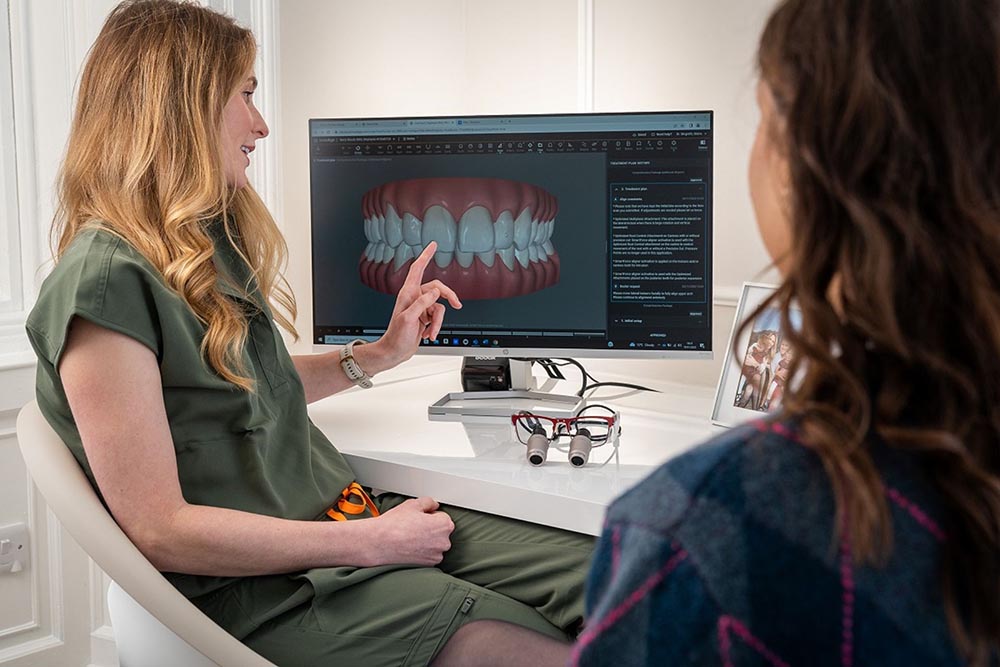
Your smile gets read fast.
People notice alignment, spacing, bite, and even whether you look comfortable using your teeth when you talk or laugh. That doesn’t make orthodontics a beauty trend alone. It sits at the intersection of health, confidence, and daily function. If you’ve ever wondered when crooked teeth are a cosmetic issue and when they become a practical one, you need a clearer picture of what orthodontic treatment actually changes.
Choosing a provider means looking at training, planning, and communication
Not every smile concern needs the same level of expertise, and not every provider approaches treatment with the same diagnostic depth. You should pay attention to how a practice explains bite issues, imaging, retention, and long-term stability.
Look up Dr. Walter orthodontist and you’ll find Dr. Ryan Walter at Marble Hill Orthodontics, who provides personalized orthodontic care, including braces and clear aligners, for children, teens, and adults in Phillipsburg and Annandale, New Jersey.
In a smaller community like Marble Hill, patients often want local access without giving up a detailed, modern treatment approach. That includes understanding whether a provider treats children, teens, and adults, and how they tailor plans instead of offering a one-size-fits-all fix.
Clear communication matters just as much as credentials when you’ll be in treatment for months.
Your bite affects more than appearance
A lot of people think braces or aligners are mostly about straight teeth in photos. In real life, your occlusion matters just as much. Occlusion means how your upper and lower teeth meet when you bite down.
If your bite is off, you might deal with uneven enamel wear, jaw tension, speech issues, or trouble chewing certain foods. A deep bite can push extra force onto front teeth. A crossbite can change how your jaw tracks over time. Crowding also creates tight spaces that are harder to clean well, which can raise your risk of plaque buildup and gingival inflammation.
Orthodontic treatment often starts with function. The cosmetic improvement tends to be the part everyone sees first.
The teenage years are common, but not the only window
You probably picture middle school or high school when you think about orthodontics. That’s common because the jaw is still developing, and it can be easier to guide tooth movement during growth.
Still, adults now make up a major part of orthodontic patients. Many want to correct relapse after skipping retainers. Others never had treatment at all. You can also see adults seeking help after years of compensating for crowding, overjet, or spacing that started to affect comfort or oral hygiene.
What matters most is not whether you’re 14 or 34. It’s whether your bone and gum health support safe tooth movement, and whether the treatment plan matches your bite mechanics, lifestyle, and goals.
Early screening can prevent more complicated treatment later
An orthodontic screening does not always mean braces right away. In many cases, it means watching growth patterns and timing treatment well. That timing can make a big difference.
For example, a child with a severe crossbite or a narrow upper arch may benefit from interceptive treatment before all adult teeth erupt. Some spacing and crowding issues become more complex if they’re ignored while the jaws continue developing. Habits like thumb sucking or tongue thrust can also shape the dental arches and affect speech.
A qualified orthodontist looks beyond teeth that appear crooked from the front. They assess eruption patterns, facial symmetry, skeletal relationship, airway clues, and how the jaw functions over time.
Braces and clear aligners solve similar problems in different ways
Patients often ask which option is better, but the smarter question is which option works best for your case. Traditional braces offer precise control, especially for complex rotations, vertical movement, and difficult bite correction.
Clear aligners can be highly effective too, especially when the patient wears them as directed. Compliance matters a lot. If aligners spend half the day out of your mouth, the biology won’t cooperate with the plan.
Your orthodontist may also use auxiliaries such as elastics, expanders, temporary anchorage devices, or retainers as part of the bigger strategy. The appliance you notice most is only one piece of treatment. The real work lies in diagnosis, biomechanics, and sequencing each movement safely.
Social media made smile design more visible, but also more confusing
You’ve probably seen before-and-after transformations all over TikTok and Instagram. They’re engaging, but they flatten a complicated medical process into a quick visual reveal. Most posts don’t show root positioning, periodontal limits, compliance problems, or how retention works after treatment ends.
That creates unrealistic expectations. People start to think every gap can be closed quickly, every bite can be corrected with trays alone, or every treatment plan should look identical. Orthodontics does not work like trend-based beauty content.
A healthy result depends on bone support, facial proportions, tooth anatomy, and the way your jaws fit together. Fast treatment is not always better treatment. Stability and function are what keep a result looking good after the novelty wears off.
Retainers do the long-term work most people ignore
A finished smile is not a permanent smile unless you maintain it. Teeth have memory. Periodontal fibers can pull them back toward old positions, especially in the first phase after active treatment ends.
That’s where retainers come in. Fixed retainers can help hold certain teeth steady, often on the lower front teeth. Removable retainers can preserve broader alignment, but only if you actually wear them on schedule. Losing a retainer and waiting six months to replace it can undo a lot of expensive progress.
This is the part many people underestimate. Orthodontic treatment is not done the day your braces come off or your final aligner fits. Retention is part of treatment, not an optional add-on for people who are extra disciplined.
A better smile plan starts with better questions
If you’re thinking about orthodontic care, don’t stop at asking how long treatment will take or whether braces will hurt. Ask what problem is being corrected. Ask whether the issue is dental, skeletal, or both. Ask how retention will work and what happens if you miss wear time with aligners.
You should also ask how treatment may affect chewing comfort, cleaning routines, sports, speech, and follow-up visits. Those details shape your day-to-day experience far more than polished before-and-after photos.
The strongest orthodontic decisions usually come from a mix of aesthetics, function, and realistic planning. A smile matters visually, but what matters more is whether it works well, feels stable, and holds up years after treatment ends.