

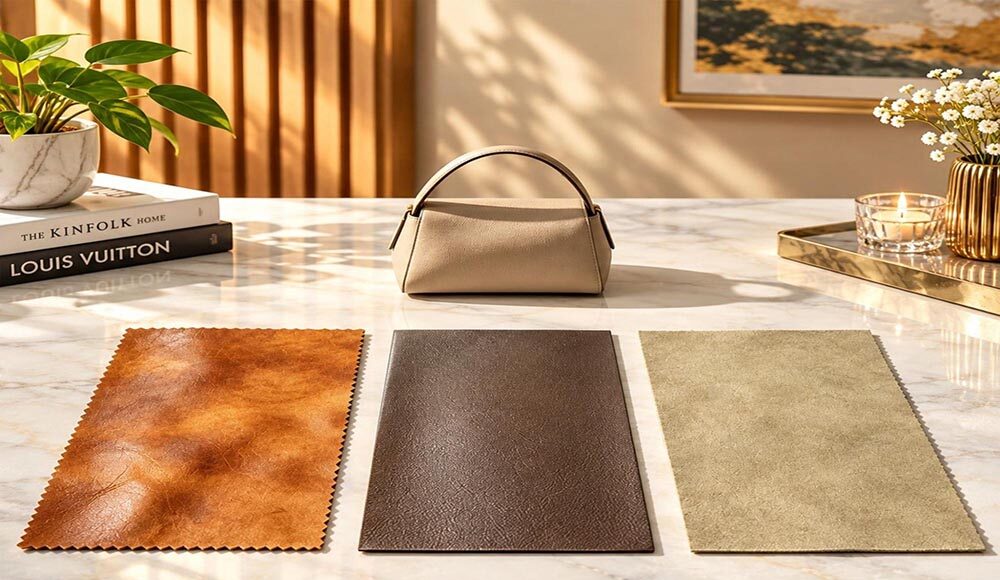
A good leather handbag is more than just an appealing leather item.
The two most important things are materials and construction and craftsmanship: hardware, finishes, and consistency of production. The knowledge of these details is crucial for fashion brands and buyers creating premium, functional and brand image boosting handbag collections. Leather handbags are still popular today, and their practical design and timeless fashion are what’s kept them in vogue. As far as handbags go, the trends come and go each season, but the quality of leather, the arts of craftsmanship, and the ingenious art of design still influence the impression people form of a handbag. In addition to helping the brands understand the Manufacturing Process of Leather Handbags, knowing this detail can also offer valuable insight into transforming design ideas into commercially viable leather handbags.
Why Leather Still Matters in Fashion
Leather has a special role in the handbag industry. Natural leather is a material that matures over time, as opposed to many other synthetic leathers. Each bag of this is unique because of its grain, softness, texture and subtle variations.
Meanwhile, leather is out of the box of traditional luxury handbags. Modern fashion brands are nerding out with the differing fabric softer textures, minimalistic styles, over-sized totes, small shoulder bags, East-West geometric shapes, and modern cross-body styles.
This provides the buyer with an increased choice, but means that material choice becomes more critical. On the other hand, soft leather might work well for a casual bag that is meant to be slipped on or off the shoulder, but it might not give the support necessary for a formal top-handle bag.
Harder leather can give a more polished, architectural look, but might not be as comfortable for everyday wear. Each type of leather, therefore, has its best qualities. The right selection will depend on design, target customer, pricing and usage.
1. Start With Leather Quality
The initial one that buyers should take their scrutiny is the leather. The characteristics of full-grain leather end up being close to a typical leather and are typically linked with high quality items.
As it becomes used, it takes on a unique ‘patina’ which can be ideal for handbags in vintage design, structured purses, briefcases etc and products that will last the long haul. The leather looks more uniform as it is produced as either top-grain or corrected-grain leather. It’s helpful for fashion brands which require uniformity in color and surface quality for large-scale production.
Leather and coated leather are more economically available and have a greater variety of designs. In the meantime, the use of PU and other leather alternatives has taken on greater significance for brands with specific price ranges, uniformity or placement of leather materials.
Buyers want to know more than “Is it real leather? The better question is: “Is it material suitable for product and brand?
2. Leather Thickness Affects More Than Appearance
Another dimension of importance is the thickness which is also a factor that is often overlooked. The thickness of the leather will impact how much structural support there is to keep a handbag in place and to give it shape. Ideal for structured totes, business bags and designs that feature solid lines.
Thinner leather, on the other hand, can make softer, lighter products. For handbags that are loose or casual, shoulder bags and for styles that use natural drape, this is ideal. But the thickness of leather is another significant factor in leather making.
The leather needs to be capable of cutting, folding, skiving, stitching, edge finishing, installing hardware and assembling the various pieces.
This is why a leather sample that passes inspection as a good product could ultimately not be the right product to use once it’s made into a fashionable purse.
3. Construction Is Where Quality Shows
Workmanship is most important, even the best leather doesn’t help if it is poorly made. Neat, even stitching, correctly aligned panels, secure stitching points and a structurally sound wrap will all make it a decent handbag. When buying a house, one should look out for parts exposed to frequent use:
- Handle attachments
- Strap connections
- Corners
- Bottom panels
- Pocket openings
- Zipper areas
- Flap edges
- Hardware attachment points
These are also places that can show you guys if a handbag just appears fine in pictures or it will hold up throughout the actual usage. In the fashion industry, quality is also a concern for consistency of products. Collection will be unsuccessful if a single perfect sample is required. During the bulk production process, these same factors must remain consistent, including proportions, stitching, shape and finish of the design.
4. Edge Finishing Is a Small Detail With a Big Impact
Edge finishing is one thing that is often forgotten. Cut edges of leather must be treated appropriately. Depending upon the design, it may be finished by edge painting, folding, binding, burnishing or other methods.
Edges on an expensive handbag must be smooth, tidy and aligned with the handbag’s design. Edge work defects can cause off-color, rough edges, cracking or peeling. Those imperfections can greatly diminish the luxurious quality of a usually extravagant handbag.
In a B2B procurement scenario, where the customer is a company assessing a supplier, requesting samples or close-up photos of the edge finishing may be a useful aspect of a factory visit.
This is especially crucial if there are a lot of leather edges that are exposed in the handbag design, or it has features that are easy to see, such as large handles.
5. Hardware Should Match the Handbag
Small pieces of hardware like zippers, buckles, rings, clasps, logo plates, feet, and more can all make a big impact on the overall look of the item. In a minimalist leather handbag, for instance, you might need hardware that’s subtle and proportioned with great consideration.
Instead of this, a design inspired by fashion may choose to implement a large metal element in the design to act as its “face” or identity. It’s not just important for hardware to be functional, it must also be functional.
The zippers should slide easily. Clasps must be firm when closed. Rings and connectors should be appropriately attached. Finish should continue along the lines of positioning the product.
This leather and hardware connection takes it to another level for premium bags. If it has a nice looking leather case and quality but poor hardware or hardware that doesn’t match up appropriately, that automatically detracts from the value of the product.
6. The Lining and Interior Matter Too
The outside is important, but the inside of a purse is not to be neglected by consumers. The lining influences the weight, durability and usability of the product, and impacts how the product feels when the player is interacting.
Brands can purchase polyesters, nylon, cotton, microfiber, suede-like materials, or other lining options depending on the design and what they are looking for to target their intended audience.
Lining should be properly fitted with no more than wrinkles and no loose areas. Internal pockets must be placed in the proper place and seams must be kept clean. The sense of care and attention needed by a high-quality handbag is important both interior and exterior.
7. Fashion Trends Should Influence Design, Not Dictate Quality
There is much more of a trend in the handbag market. Designers and brands are still delving into the same balancing acts in 2026, such as balancing soft and structured shapes, oversized and compact silhouettes, minimalism and statement details, and old and new proportions and references.
Different shoulder bags, such as East-West, relaxed, compact backpack bags, large totes, and formative bags all make bold looks. However there are limits to trends. Brands may want to take a different approach by pairing with something that is not only a lot more here-and-now, but it’s one they also can live with past the season.
Here’s where material and construction come back into play. A great look, designed from the wrong material, might soon lose its attraction if the presence of cracks on the surface, a collapsed structure or hardware deterioration compromises it.
By contrast, a well-made handbag can incorporate the latest fashion trends and still retain the traditional level of quality that one would expect from a brand that will last for the long term.
8. Consistency Is Critical for B2B Buyers
As one individual consumer, you may be satisfied with purchasing one really great hand bag. The challenge is quite different for a fashion brand. The direct buyer might require hundreds or even thousands of handbags, which look and function at the same time.
Quality control becomes one of the most crucial aspects during the handbag production process. When mass manufacturing, professional manufacturers often must manage the quality of material thickness, color, surface quality, stitching, and size, etc., as well as hardware quality, edge processing quality, and final appearance during the manufacturing process.
Inspecting the materials is of great importance. When manufacturing is scaled up, the difference in surface, colour, thickness and grain of the leather, may be more conspicuous in the manufactured product. If the dress is to be produced successfully, the process begins beforehand while the sewing is being done.
For a brand, the following should be part of the supplier evaluations:
- How are incoming materials inspected?
- How is color consistency controlled?
- How are production samples approved?
- How are hardware components tested?
- How are stitching and dimensions checked?
- How is final inspection performed?
- Can the supplier maintain consistency from sample to bulk production?
These questions will give you more insight into what a manufacturer can do than a visit to the factory.
9. The Right Manufacturer Can Protect the Design
A handbag design enters into life as a concept, sketch, tech pack, or prototype design. Getting from the concept to the final product begins with coordination between design, pattern making and cutting, the sewing together of the various parts, hardware, finishing and quality control.
Especially relevant for brands who are creating a customised version of their collections. If a choice of leather is made it will be good to know from an experienced leather bag manufacturer whether a particular leather is suitable for the structure, whether a hardware design will work in the chosen leather or whether a specific leather edge treatment will give the desired appearance prior to mass producing the leather bag.
In B2B, this type of technical input can decrease development issues and make the development process more predictable.
10. A Simple Buyer’s Checklist
There are a few simple guidelines that buyers can follow before selecting a leather handbag for mass production:
- Material: Does the leather suit the function and desired positioning of the product, and its price market?
- Structure: Does the handbag have the shape that it is supposed to have?
- Stitching: Do the stitches run straight, clean and even?
- Edges: Is there a smooth finish on the exposed edges and are they properly finished off?
- Hardware: Do the zippers, clasps, rings, and other components work properly and look consistent?
- Lining: Is the inside surface clean, hard wearing and well made?
- Function: Is the bag comfortable to use in real-life situations?
- Consistency: Can the same quality be maintained across bulk production?
Conclusion: Quality Is a System, Not a Single Feature
Creating a good leather messenger bag is something that is the result of many functions working together. The base is leather and the durability is dependent on how well it’s crafted. Edge finishing brings a touch of refinement. Function and appearance, both, from hardware.
Lining gives the user its experience. Quality control means that the product produced in the end conforms to the original design. That’s the reason why, for fashion brands, the selection of production partners must be regarded as a product development process instead of a purchasing process.
The top handbag collections are a mix of fashion savvy, fabric intelligence and fine workmanship and durability. It doesn’t matter if the brand is making a leather tote that will stand the test of time, a fashion accessory, a structured business handbag or any other season model, the thing is that if good design merits good execution.
Hiring a custom leather handbag manufacturer may also serve as a solution to assist custom handbag brands to switch their fashion concepts to leather, handbag production, OEM/ODM handbag takers and excellent solution quality management.
One of the least adaptable competitive forces is quality – in a marketplace where fashions shift at the speed of light, it’s one of the best methods a handbag brand can build long-lasting value.