

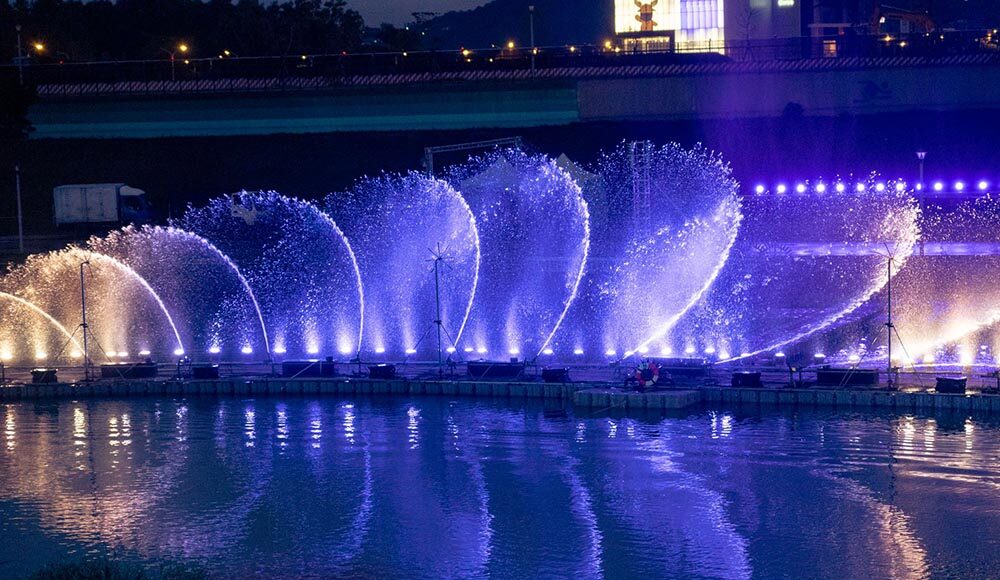
A water screen performance brings about a fleeting projection surface with liquid water.
In fashion, it can serve as a living backdrop, reveal tool, divide or stretch scenography and more. The outcome is not a plain video projection nor a regular fountain effect; it is the combination of fabric, light, image and water, as they play together in real time on a stage that is a hybrid of a language.
The importance of a Water screen is that it presents an image in a physical manner without adding weight to a set, especially for luxury houses, product launches and runway shows. A logo can be used within a mist curtain. The dress can appear from a luminous veil. A model can step through a set of projected textures that appear in the air.A model can step in front of a set of projected textures which appear in the air.
I have never witnessed water-based projection work to be best when it’s part of the performance and not a decoration device. The best results can be achieved with early coordination with the creative director, lighting designer, projection team, choreography lead and technical crew.
What is a water screen in a fashion show?
A sheet or curtain of water droplets, controlled to act as a projection surface, is called a water screen. Images, videos, animation or brand visuals are thrown on the moving water, resulting in a floating visual effect.
In a fashion context, the technology is usually used for three purposes:
- creating a spectacular opening or finale;
- supporting the visual identity of a collection;
- adding depth, movement and emotion to the runway environment.
Water is unstable, reflective and alive, unlike a rigid LED wall. This is why it is perfect for fashion. It mellows out the digital content and adds a quality of poetry and atmosphere to projected images. But the same instability also applies to the requirement to take into consideration technical considerations like wind, humidity, angle of projection, distance of audience and the light level.
Why fashion brands use water as a projection surface
The essence of a fashion show is to create controlled surprise. The designer wants to make clothes visible, but also to create an atmosphere that supports the collection. A water projection effect can help fill both needs.
It can be particularly effective if the collection is a theme of fluidity, reflection, transformation, nature, futurism or sensuality. Water can imply motion prior to the initial model. It also can add depth (stage) in situations where the physical set needs to be kept to a minimum.
The format is also beneficial from a brand point of view as it generates high-quality visual content. The short videos of the models passing through light veils are easily shareable. This is a matter of luxury: not only is it viewed by the audience in the room when it happens, but it is also viewed by the editors, buyers and any online viewers who view it.
What’s important is keeping things under control. The water effect should not be the focus, it should complement the clothes. When the projection is too bright, too fast or too detailed, it can detract from the silhouettes, fabrics and craftsmanship.
How projection, water and runway choreography interact
Timing is the key to a successful show. The projected image should be in sync with the rhythm of the runway, and the water effect should complement the models’ movement, not hinder it.
In practice, three layers must be aligned:
- The physical layer: pumps, nozzles, basin, water curtain, mist or jet system.
- The visual layer: video mapping, logos, textures, color gradients, animated sequences.
- The human layer: model entrances, pauses, crossings, poses and exits.
These layers when coordinated is the choreography and the water becomes a part of it. A model will show up immediately after a projection fades. A vertical curtain can be used to frame a silhouette.
May utilize a brighter sequence at the end of the finale, after the last look. If they aren’t organized, the impact may leave them feeling uncoordinated. It’s more of a technical installation than a single performance, viewed by an audience.
Technical choices that affect the final result
Not every water projection system will give you the same viewing experience. Depending on the event, the venue, the layout, the image quality and the extent of interaction with the performer, the correct selection will be made.
| Creative need | Suitable water effect | What it achieves for the audience | Main technical caution |
| Dramatic brand reveal | Large water curtain with projection | Floating logo or visual identity moment | Requires strong projection control and low wind |
| Poetic runway atmosphere | Fine mist or soft water veil | Diffused, dreamlike background | Image sharpness is lower |
| Immersive finale | Wide aquatic projection surface | Large-scale emotional impact | Needs space, water management and safety planning |
| Model entrance effect | Split curtain or timed water opening | Sense of emergence or transformation | Timing must be rehearsed precisely |
| Product-focused show | Subtle projected textures | Supports garments without dominating them | Brightness must not alter fabric perception |
The table gives a clue to something important: there is no standard configuration. These technical decisions will vary depending on the type of event you are hosting, whether it be a fashion show in an indoor hall or a museum courtyard or an outdoor waterfront fashion event.
What works best on a water screen?
Simple, high-contrast visuals tend to work better than complex images. Fine detail may be lost due to water breaking and scattering light. Items that are large, slow motion, abstract, silhouettes, and strong typography are more reliable.
The following are most effective types of content for fashion performances:
- flowing fabric simulations;
- monochrome patterns;
- reflections and liquid textures;
- slow gradients matching the collection palette;
- short brand signatures;
- architectural lines that extend the runway.
Images that are very detailed can work but must be tested. The image may still be legible to the viewer if they are viewing it from far away. The same image can be too chaotic when people are near the water. It is where a Water screen is different from a typical projection screen. It does have character but the character needs to be expected in the creative direction.
Experience from the field: the lesson of rehearsal
One of the most prevalent faults committed in the terrain, is that the idea is approved as an illustration on a computer screen. Digital previews are good but can’t replace the effect of water on air movement, stage lighting and views.
I’ve seen as part of this procedure – the final 20 percent comes from rehearsal changes such as reducing the intensity of the projections, taking the animators’ tempo down a notch, altering the position of the front lights, moving a model mark one meter closer to or away from the light.
In one real-life scenario, the creative team was thinking of a pattern that would be seen through pale clothes in projection. The design of the pattern worked well when rehearsed as the individual design, but it flattered the clothes flat during rehearsal. No, it wasn’t about removing the water effect, that wasn’t the solution.
The idea was to dilute the contrast in the ‘model passages’ and to save the most contrast for the end. The end products were a more elegant and a more useful photo photography. The point of the lesson? Aquatic projection must be tried on actual costumes, actual lighting and actual movement.
Human testimony: production reality behind the spectacle
Laura, who worked as event production manager on the brand show, says the difficulty during the premium showcase in Milan was not about how to make the water look nice; it was to make the water reliable when they’d bring the models of the gowns up on the models.
After adjusting the timing between fading the image and the first walk, “photographers got a better view, and the artistic director managed to keep the dramatic reveal they envisioned.” Her thoughts also follow a lesson I was taught in fashion almost thirty years ago, and that’s that beauty is repeatable.
In live performance, the magic moments must turn into a magic moment every time, with no performers at risk or audience confusion.
Safety, comfort and operational limits
There is a need for discipline in planning out Water-based Staging. A safe floor for models particularly for heels and fast change, or long garments is necessary. Electrical equipment, projection tower, pumps and controls are to be separated and protected per venue requirements.
Humidity also matters. In some cases, fabrics, hairstyles and makeup can be adversely affected by over-hydration. This does not negate the fact that water projection is also very suitable for fashion, but that requires a smart design of the installation.
The main limits to evaluate are:
- wind exposure for outdoor shows;
- distance between water and garments;
- drainage or water recovery;
- sound level of pumps;
- projection brightness versus runway lighting;
- audience sightlines;
- emergency access and performer circulation.
The professional approach isn’t “It’s possible to be host to any venue the same way.A professional approach isn’t “It’s possible to host any venue the same way. To make the artistic vision work with the location, the timeline and the safety restrictions.
Indoor versus outdoor fashion performances
The interior provides greater wind, light, and sound control. They are frequently better for showing images exactly as they should be, and beauty shows where a small detail can really make a big difference.
However, careful water containment, and care in protecting floors and controlling humidity is required. Scale and drama are achieved in outdoor spaces. In proximity of a pool, lake, waterfront or a large architectural facade, a water projection can be monumental.
The side effect is windy, shifting light. Twilight and night favour the works more than the day. The technical team should establish a threshold for the wind at which the effect will be made less potent or discontinued in the case of an outdoor show. This is very conservative, but it’s the difference between a controlled luxury moment and an un-controlled visual outcome.
How to brief a water screen performance for fashion
Don’t waste time—and avoid costly confusion—by having a clear brief. The creative and production team should decide on the place of water in the show before discussing the equipments.
Useful questions include:
- Is the water effect a reveal, a backdrop, a transition or a finale?
- Should models interact with it or stay clearly separated?
- Is image sharpness essential, or is atmosphere more important?
- Will photographers need clean front-facing shots?
- What colors and light levels must respect the garments?
- How long does the effect need to run?
- What are the venue limits for water, electricity and rigging?
The “show intention” versus the “technology” is a thought that generally runs through my mind as an expert in the field. A small water veil can be more impactful than a big installation if it’s put on at the right place and the right time for the right reason.
How does a water screen improve a fashion show?
The water screen enhances a fashion show scene by creating depth, movement and emotion in the fashion scene. It can add to a more immersive scene on a runway without concealing the clothing. It has its best effect when the content of the projections, lighting and choreography are coordinated.
Can models walk through a water projection?
It is sometimes possible for models to be brought in close to and/or through the water-based effect but depends on the water treatment design, floor safety and costume needs. During a lot of fashion shows, it’s far better to maintain a distance handled with control to guard garments and to prevent falling. All interactions must be rehearsed in a show environment.
Is a water screen suitable for luxury brand events?
Yes, it is very appropriate in luxury brand events if it is used carefully, and accurately. This effect will transmit fluidity, exclusivity and visual surprise. But it needs to complement the collection or brand story and not overpower it.
What content should be projected onto water?
Simple, slow and high contrast is usually the best content. Pictures with heavy text or graphic branding may lack effectiveness, unless they are abstract or the silhouette is simple, the gradient is not distracting or the brand image is short. Water testing is very crucial as water has changed how light and detail is perceived.
What are the main risks of using water in a runway show?
The risks here are slippery surfaces, wind distortion, too much humidity, poor vision and technical timing errors. Site assessment, rehearsal, safe flooring and control of water flow, as well as collaboration between the creative and technical teams can help minimise these risks.
When technology is behind emotion on the water-based runway performance succeeds. The aim is to not make the viewers think “yeah it could actually happen to water,” but rather “well, this collection could not have happened any other way.”
In the end, it is best to consider the effect as part of the scenography, as defined in the first creative brief, and to work it out with a layer of testing, rehearsal and extremely comprehensive technical arbitration in order to make it a hit with the fashion brand.