

Runway trends move in weeks now. A silhouette that felt fresh at Fashion Week in September looks dated by the time it reaches a store rail, and by the following season it’s been replaced twice over.
Fashion has fully embraced velocity — collections drop faster, cycles compress, and the idea of an accessory that stays relevant for decades feels almost countercultural.
Style That Doesn’t Compete With the Outfit
The best accessory choices in editorial work rarely fight for attention with the clothing. A statement bag or a directional shoe can anchor a look; a watch, worn correctly, does something different — it adds credibility without adding noise.
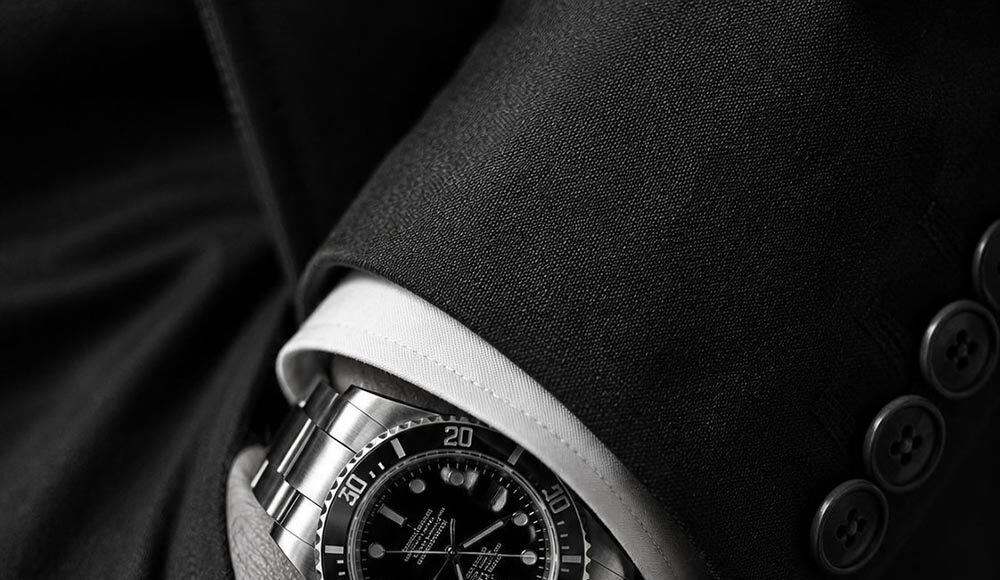
A steel Submariner under a tailored cuff reads as competence, not accessorizing. A gold Day-Date on a wrist beneath a formal sleeve signals occasion without shouting about it. The Rolex vocabulary is quiet in a way that makes it useful across radically different aesthetics — the same watch works with minimalist tailoring, with maximalist eveningwear, with streetwear layered under a blazer. Few accessories cross that many style languages without looking out of place in at least one of them.
The Vintage Angle Stylists Are Leaning Into
As vintage sourcing has become central to editorial styling — pulling archive pieces, working with vintage dealers, building looks around one-of-a-kind garments — vintage watches have followed the same trajectory. A 1970s Rolex with a faded bezel and honest case wear has the same appeal as a vintage Halston or an archival Chanel piece: it carries visible history that nothing new can replicate.
This is where the watch and the garment start to speak the same language. Both communicate that the wearer values things that were made to last, at a moment when most of the industry is optimized for the opposite.
What Makes It Work as a Long-Term Investment Piece
Unlike almost every other accessory category, a well-chosen Rolex doesn’t depreciate the way fashion pieces do — even genuinely important ones. A ready-to-wear piece from a landmark collection can become a collector’s item, but the market for it is thin and unpredictable. The market for the right pre-owned Rolex reference is deep, liquid, and has held value consistently for decades.
That distinction matters for anyone thinking about accessories as more than seasonal purchases. A steel Rolex Submariner bought today functions the same way in ten years — worn, useful, and worth roughly what was paid for it, sometimes more. Very few other objects in a fashion-adjacent wardrobe can make that claim with a straight face.
The Watches That Actually Show Up in Editorial
The Submariner remains the default for a reason — it photographs cleanly, works under any sleeve length, and reads correctly in black-and-white as well as color. The Daytona shows up when a shoot wants something with more visual complexity in the dial without moving into precious metal. Gold pieces — the Day-Date specifically — appear when the styling calls for old-money signaling rather than sport-luxury.
None of these choices are accidental. A watch selected for a shoot is doing the same work a well-chosen accessory always does: telling the viewer something about the wearer before the rest of the outfit finishes the sentence.
Ermitage Jewelers has specialized in authenticated pre-owned Rolex watches since 2000.