

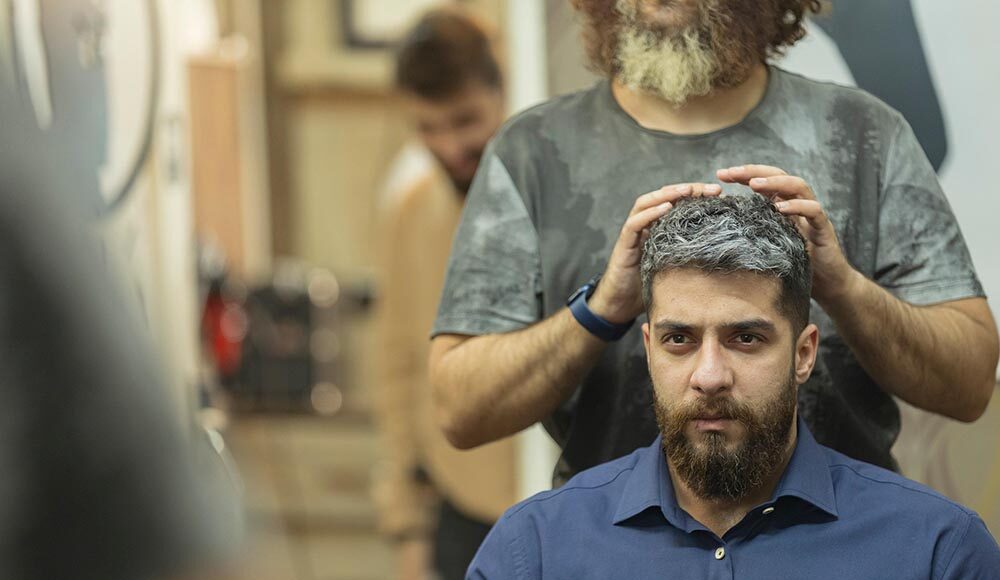
Ask any barber about home dye jobs and watch their expression change.
They see the aftermath every week, and the wreckage walks in wearing a hat. The frustrating part, most of them will tell you, is that the same five or six predictable errors account for nearly all of it, which means a few minutes of reading can spare you the chair-side lecture entirely. Here are the mistakes barbers see most, and how to stay off their list of cautionary tales.
Choosing the Color You Had at Twenty-Five
The most common mistake happens before the box is even open. Men shopping for hair dye kits reach for the shade they remember, and memory runs dark. Our hair lightens gradually with age even before the gray arrives, so the deep brown of your twenties can sit two full shades below what’s growing out of your head today. Dyeing with a stark dark color over salt-and-pepper hair results, and it’ll look like a uniform, flat helmet with hard edges that fools no one at close range.
Barbers recommend holding the box swatch against your hair in daylight near a window, then buying one shade lighter than your honest match. Softer color blends more naturally into what’s there. You may find that the slightly too-light result blends so well that no one can name what changed, which is the goal of a good dye job.
Treating the Timer as a Suggestion
The instructions say ten minutes, and somewhere around minute eight the average man wanders off to answer a text. Hair dye keeps working the whole time, and coarse or porous hair drinks pigment fast. Five extra minutes can push a natural medium brown into an inky, monochrome black that will take weeks to fade. Barbers set timers for a living, and they check progress early on a hidden section near the crown, because the box’s stated time is a maximum for the most resistant hair. Yours may finish well before the bell.
Skipping the Two Tests That Take No Skill
Every kit includes instructions for a patch test and a strand test, and most guys skip both. The patch test will tell you whether you have an allergic reaction to PPD before it happens across your entire scalp (yikes). Beyond a full-blown allergic reaction, you may also realize you have sensitive skin and decide you need a semi-permanent or more natural product, depending on how the patch test turns out. With the strand test, you’re able to see the finished color on your hair, with your porosity and your percentage of gray, before you commit your whole head to it.
Together they take five minutes of effort spread over two days. Barbers hear the same story from guys who end up in their chair for color correction, and it commonly begins with the tests they didn’t run.
Dyeing Squeaky-Clean Hair
It feels logical to shampoo right before coloring, but that will actually work against you in multiple ways. Freshly washed hair is stripped of the natural oils that shield your scalp from irritation; the chemicals land on bare skin and can feel intense! The oils also help the color deposit evenly, which is why colorists work on hair that’s a day or two past its last wash. Arrive at your own bathroom sink the way you’d arrive at a salon, slightly lived-in, and both your scalp and your final color will show the difference.
Piling New Dye Over Old
When a dye job disappoints, the instinct is to fix it with another round, and fresh roots trigger the same reflex, sending men back to recolor everything from scalp to tip. Both moves stack pigment on hair that has already absorbed a full dose, which is how the ends of a repeatedly dyed head turn darker and duller than the fresh growth up top. Barbers call the striped result banding, and stripping it out costs far more than the boxes that caused it. Touch-ups belong on new growth only. And the length that’s already holding color needs nothing but conditioner and patience.
The Chair Is Cheaper Than the Correction
Barbers will be the first to say that plenty of guys handle home color well, and the ones who do treat it like the small chemistry project it is. They test, they time, they buy lighter than instinct suggests, and they leave old color alone. If that list sounds like more attention than you want to give your hair on a Sunday night, one professional appointment costs less than the corrective visit after a rushed job, and you get to watch the process done right before trying it yourself. Either way, the barbers would just like to stop meeting men in hats.