

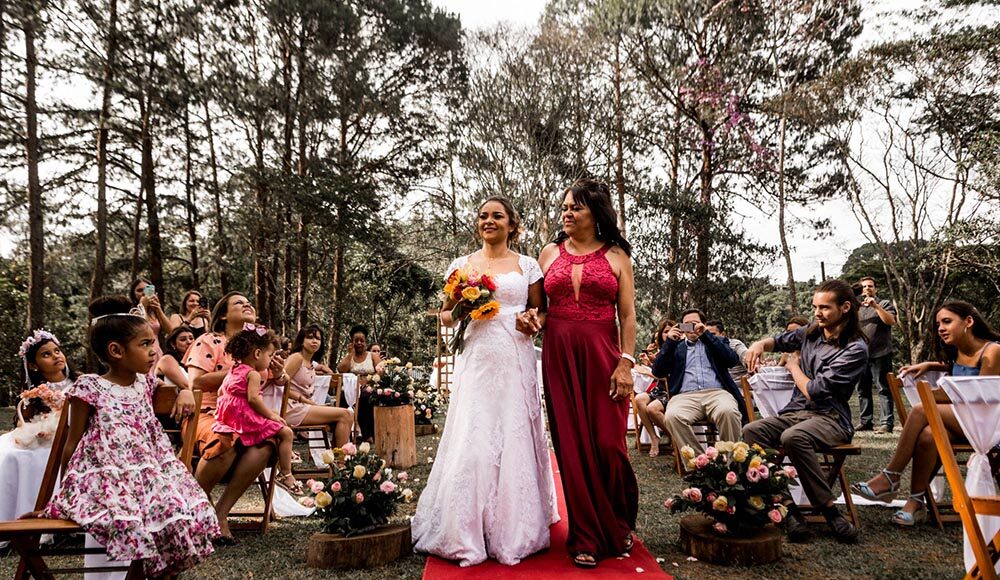
Wedding guest fashion has entered a far more interesting era than the predictable cocktail dress and neutral heels combination.
Today’s most polished guests are embracing saturated color, unusual textures, confident tailoring, and accessories that feel collected rather than simply coordinated. Luxury fashion has also loosened some of its old rules. A dress does not need to look conservative to look sophisticated, and an outfit does not need to disappear into the background to respect the couple getting married. The best wedding guest looks balance personality with occasion, giving women plenty of room to dress beautifully without looking as though they are headed to the office or trying to join the bridal party.
Color Takes Center Stage
One of the biggest changes in formal dressing is the willingness to use color without apology. Deep cherry, emerald, cobalt, saffron, plum, and rich chocolate tones can make even relatively simple silhouettes look expensive. Prints have become equally adventurous, particularly oversized florals, abstract patterns, and watercolor-inspired designs that work beautifully at garden weddings and destination celebrations.
Women shopping for wedding guest dresses in bold prints and colors and details like lace or embroidery can also look beyond traditional occasionwear collections. Many luxury ready-to-wear dresses translate beautifully to weddings when styled with refined shoes, jewelry, and an evening bag. The trick is choosing a piece with enough polish for the setting. Excellent fabric, precise construction, and a flattering silhouette matter more than whether the retailer officially labels a dress as wedding guest attire.
Texture Makes Simple Dresses Interesting
A single-color dress can still command attention when texture does the heavy lifting. Lace, velvet, jacquard, silk, chiffon, organza, and subtle beading bring depth to an outfit without requiring complicated styling. This approach works particularly well for women who love luxurious clothing but have little interest in loud patterns.
Season should influence fabric choices, too. Airy silk and chiffon feel natural at spring and summer celebrations, while velvet, heavier satin, and embellished fabrics make sense during colder months. Lace remains remarkably adaptable, especially when designers use it in unexpected colors rather than predictable black or cream.
Texture also offers an easy way to make a familiar silhouette feel current. A straightforward column dress rendered in embroidered organza has an entirely different personality from the same shape in plain crepe. When the fabric already provides visual interest, accessories can remain restrained.
Tailoring Moves Beyond the Dress
Not every memorable wedding guest outfit needs to involve a dress. Beautifully cut suits, wide-leg trousers, sculptural jackets, and coordinated separates have become sophisticated alternatives, particularly for city weddings and evening receptions. The strongest versions look intentionally formal rather than borrowed from a weekday wardrobe.
Fabric makes much of the difference. Silk suiting, satin lapels, brocade jackets, and fluid trousers immediately push separates toward evening territory. A sharply tailored suit in burgundy, forest green, or midnight blue can look every bit as celebratory as a gown when paired with elegant jewelry and heels.
Jumpsuits remain another useful option, although proportion matters. Look for defined waists, architectural necklines, dramatic sleeves, or beautifully draped trousers. A good jumpsuit should feel like a complete fashion statement, not merely the practical alternative to wearing a dress.
Statement Dressing Feels Grown-Up
There was a time when wedding guest advice seemed focused on avoiding attention at all costs. Etiquette still matters, of course, but dressing respectfully does not require becoming visually anonymous. Modern luxury style leaves room for bold fashion choices, from sculptural sleeves and asymmetric necklines to metallic fabrics and unexpected color combinations.
The distinction is between expressive dressing and bridal imitation. Guests should generally steer clear of looks that could reasonably be mistaken for wedding attire, particularly predominantly white gowns. Beyond that, there is considerable freedom.
This is also where personal style deserves some authority. Someone who wears minimalist tailoring every day does not suddenly need ruffles because she received a wedding invitation. Likewise, a woman who loves maximalist fashion does not need to abandon prints, dramatic jewelry, or strong color. Formalwear looks most convincing when it still resembles the person wearing it.
Accessories Finish the Look
Accessories can turn a beautiful outfit into an exceptional one, but piling on every statement piece usually works against the clothes. If the dress features embroidery, dramatic sleeves, or a strong print, simpler jewelry often provides the better finish. With a restrained gown or suit, however, oversized earrings, a jeweled clutch, or an architectural shoe can provide a welcome personality.
Shoes deserve practical consideration alongside aesthetics. Outdoor ceremonies, cobblestone venues, and receptions involving hours of dancing are rarely friendly to delicate stilettos. Block heels, refined flats, slingbacks, and lower sculptural heels can look luxurious without turning the final hour of the reception into an endurance test. A wedding invitation is an excellent reason to dress beautifully, and modern fashion gives women far more interesting ways to do it.