
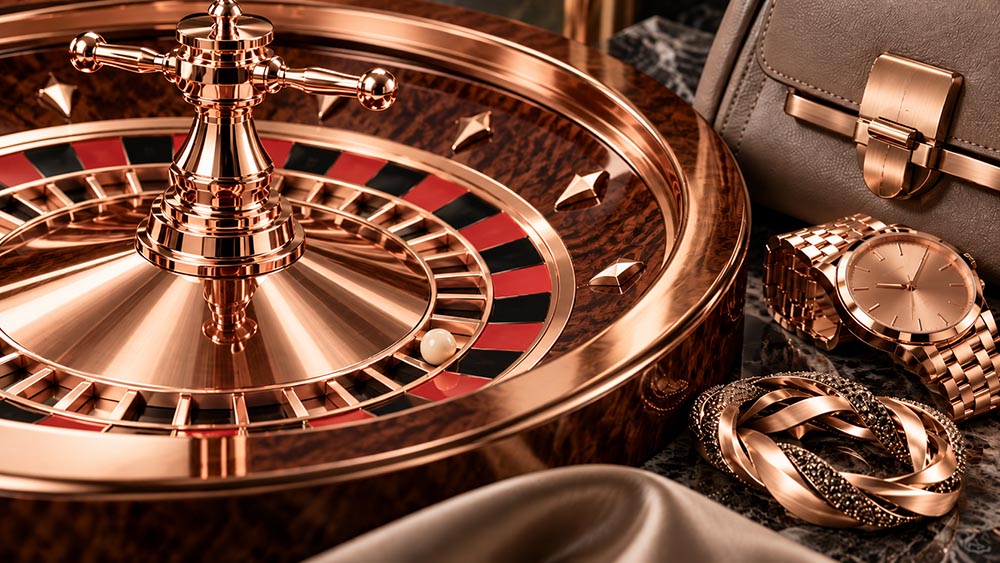
A rose-gold watch bracelet and a brushed nickel handbag clasp have something in common: their appearance depends on what happens to the surface during manufacture.
The same choices extend to the roulette wheel, where nickel, brass, gold and rose-gold finishes are available for individual metal parts. The raised centrepiece and smaller fittings carry the colour, while their shape, texture and underlying material determine how the finish looks. Looking at those details through the familiar language of accessories helps explain how this piece of hardware is made.
The Metal Finishes We Already Know
Watchmakers provide a starting point because their specifications often separate the case material from its coating. Tissot’s PR516, for example, combines a stainless-steel case and bracelet with rose-gold PVD coating. The colour comes from a surface treatment applied to the steel, a pairing that also runs through current luxury watch trends.
Similar choices appear in accessories. Coach’s Tabby Shoulder Bag 26 pairs brass-coloured hardware with polished pebble leather. Georg Jensen’s Moonlight Grapes necklace uses oxidised, hand-polished sterling silver to enhance the shape of its beads and give the design depth.
The metal has a relationship with the material beside it, just as a bag’s clasp sits against leather. Its surface treatment also works with its shape, emphasising curves or adding a fine grain.
Where the Colour Goes on a Wheel
The raised central turret is the most prominent piece of metalwork. Around the bowl, smaller components called ball stops repeat its finish across a series of shaped forms.
Cammegh offers nickel, gold, brass and rose-gold finishes for these parts. Abbiati’s PVD options include champagne, copper, chrome, gun metal and bronze, in polished or satin versions. Abbiati’s Contemporary STD model pairs a polished nickel turret with 12 matching ball stops, showing how a single finish can be carried through the assembly.
Wood veneers and single-colour bodies provide the surrounding background. Against these larger surfaces, the metalwork introduces a different texture and level of reflection. For the Contemporary STD, Abbiati specifies lace wood for the top rim and six sections of lace wood inside the bowl and cone. The polished nickel components sit within that wood construction.
Plating, Brushing and the Thinness of PVD
Plating adds a thin layer of metal or metal alloy to a part. Nickel finishes can provide a bright appearance and may improve wear and corrosion resistance, depending on the base material, coating process and intended use.
Nickel is also used beneath other coatings, including chromium. Adjustments to plating chemistry allow manufacturers to produce bright or satin nickel surfaces.
PVD stands for physical vapour deposition. Inside a vacuum chamber, material is deposited from vapour to form a thin coating on the component. As an example of the scale involved, specialist Ionbond specifies a thickness of 0.4 to 1.0 micrometres for its decorative Decobond Chrome coating.
Brushing gives the surface its grain. Abrasive brushes and belts leave fine lines running in a controlled direction. Polishing produces a more reflective appearance, with highlights following the contours of the part.
Texture and coating can then be combined. According to Ionbond, its decorative PVD coatings follow the existing surface texture. A brushed grain can remain visible beneath the coating, just as a polished surface can retain its reflective character. That gives designers separate control over colour and texture.
Preparation matters here. Ionbond identifies cleaning as essential to adhesion, the coating’s ability to hold to the surface. Oils, grease and other foreign material must be removed before coating.
Shape Comes First
Before a component receives its finish, it must be shaped precisely so that the coating appears even across its curves and edges. A finish only looks even when the surface beneath it has been made precisely.
Reading the Finished Surface
A description such as rose gold or brushed nickel gives the first part of an object’s construction. The fuller account includes the base material, the way it has been shaped and the treatment applied to its surface.
That is as useful when examining wheel hardware as it is when looking at a watch or a piece of jewellery. The accessory provides a familiar reference; the wheel’s own components supply the detail, from the finished turret to the texture preserved beneath a thin coating.