

Choose a Chain for the Week You Actually Have
You find a silver chain you like, then start wondering: will it look too heavy with a work shirt? Too fine over a T-shirt? Will you wear it often enough to justify buying it?
If you want one chain for most occasions, start with the clothes you wear in an ordinary week. Pull out your favorite tee, a shirt you wear to work, and something you’d choose for dinner out. These give you a useful reference when comparing chains, especially if product photos show them on bare skin.
For a wardrobe built around T-shirts, jeans, and jackets, a medium-width Cuban link chain is a good place to start. Its links have enough definition to show against fabric. If you mostly wear polos and button-downs and prefer a small detail at the collar, a slim box chain may feel more natural. A modest rope chain offers another option when you want some texture and shine against simple clothes.
These are starting points, and the dimensions matter as much as the design. A narrow Cuban link can look quite restrained; a thick box chain can be prominent. The aim is to find a sterling silver chain that works with your usual outfits and feels comfortable enough to become part of getting dressed.
Mostly T-Shirts, Jeans, and Jackets? Start with a 4–5 mm Cuban Link Chain
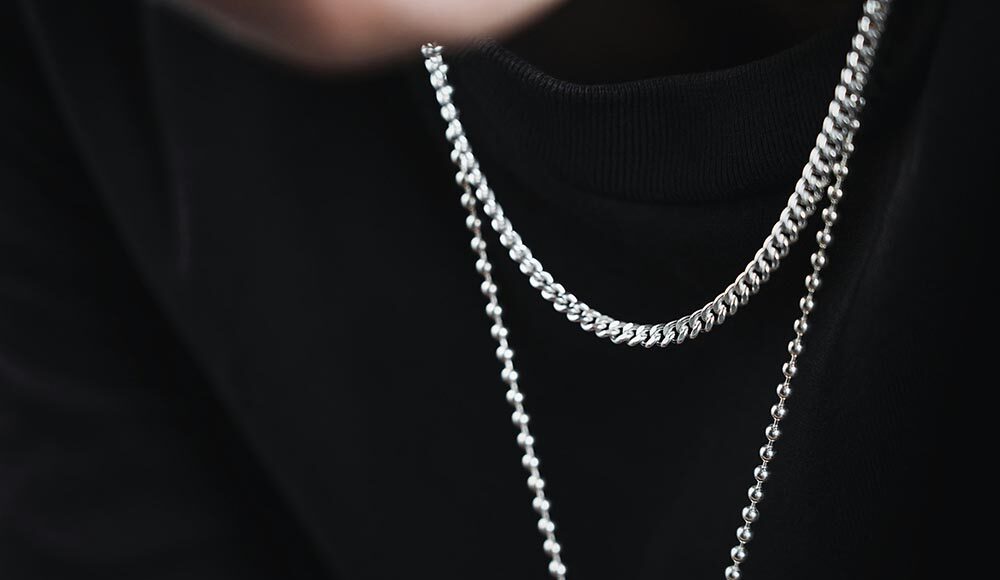
If a plain tee and jeans are your usual starting point, a Cuban link chain is worth trying first. Its interlocking links create a clear line against the fabric, adding enough detail that you don’t need a pendant to make the outfit feel finished.
When comparing men’s silver chains, look at Cuban link designs around 4–5 mm wide as a starting point. At roughly 4 mm, the chain is a useful option if you want the silver to show without becoming the first thing people notice. Going toward 5 mm gives the links more presence, which you may prefer with heavier tees, loose fits, or denim jackets. The difference is worth checking in worn photos.
Picture it with three outfits you already own:
- White tee and blue jeans: wear it over the tee, sitting below the neckline. The links supply a little texture against the plain cotton.
- Dark tee and an open overshirt: let the chain show within the opening. Silver stands out against dark fabric, so you may find a narrower version gives you enough contrast.
- An open-neck shirt for dinner: wear it against the skin, with part of the chain visible at the collar. You can adjust how much shows by how you button the shirt.
Pay attention to the shape of the links as well as the listed width. Some Cuban link chains have a flatter profile, while others have thicker, rounded links that give them a fuller appearance. Two chains with the same width can therefore look quite different when worn. For a versatile first chain, choose the version you like with both your most casual tee and your smarter shirt.
Mostly Polos, Button-Downs, and Clean Basics? Try a 2–3 mm Box Chain
If you usually wear a polo or button-down and want just a little silver at the collar, a box chain is a good option. Its small, square links form a regular pattern that looks neat up close. At around 2–3 mm wide, it can add detail without taking over the outfit.
Start near 2 mm if you prefer a fine line of silver against the skin. Consider 3 mm if you also want to wear the chain over a T-shirt, where a thinner version might not have enough presence for your taste. Check the product photos carefully: box chains come in different profiles, with some looking more angular and others more rounded.
Here are three ways to work one into your wardrobe:
- A polo with the top button open: let a short section show at the neck. This is an easy starting point if you’re still getting used to wearing jewelry.
- A plain fitted T-shirt: wear the chain outside the collar for a small detail against the fabric. Try it with both light and dark tees to see how much contrast you prefer.
- A button-down under a fine-knit sweater: wear it beneath the layers, allowing a glimpse at the open shirt collar if the neckline permits.
A slim box chain may feel too fine if most of your clothes are oversized or you like substantial watches and rings. Look at it with the whole outfit before deciding. And treat the slim profile as a styling choice: it doesn’t tell you how sturdy the chain is. Link construction and thickness still matter when choosing a piece for regular wear.
Prefer Some Texture and Shine? Consider a 3–4 mm Rope Chain
A rope chain is worth a look if your clothes are simple but you want your jewelry to have a little character. Its twisted pattern catches the light as you move, making it an interesting detail against a plain shirt. You don’t need to add a pendant; the chain already has plenty going on.
Around 3–4 mm is a useful range to compare. Start near 3 mm if you want a modest accent at the neckline. A 4 mm version gives the twisted pattern more definition, particularly when worn over fabric. Finish matters too: sharply cut, polished surfaces can create more sparkle, so check a short video if one is available. A still photo won’t always show how bright the chain looks in motion.
Try it with these combinations:
- A black T-shirt and jeans: the dark background brings out the rope pattern. Keep the shirt plain if you want the chain to be the main detail.
- A knit polo: wear it against the skin within the open neckline. Showing just part of the chain keeps the effect restrained.
- A casual jacket over a tee: let it sit within the jacket opening. Check it alongside the zippers and snaps to see whether the overall amount of shine suits you.
Before buying, confirm whether the links are solid or hollow. “Sterling silver” describes the metal’s purity; it doesn’t establish how the chain is constructed. Ask about construction if the listing is unclear, and read the care guidance. A rope chain’s textured appearance alone cannot tell you how well it will handle regular wear.
Choose Between Two Lengths Using Your Own Shirts
Once you’ve picked a design, length can make the difference between a chain you wear daily and one you keep adjusting. For a first comparison, try 20 and 22 inches. These are starting points: your neck size and build will affect where each one sits.
The shorter option will sit higher, which may suit you if you want some silver visible inside an open collar. The longer option gives the chain more room to fall below a T-shirt neckline. Neither guarantees a particular position, so check on yourself rather than relying on a model’s photo.
You can do a quick fitting at home:
- Measure a piece of string to each proposed length. Bring the ends together around your neck without pulling it tight.
- Try your usual crew-neck T-shirt. Does the string sit clearly above or below the collar, or right along its edge? A chain resting on that edge may move in and out of the shirt.
- Change into a button-down or polo. Open the collar as you normally would and check how much would show.
- Add your everyday jacket. Step back and judge the position with the whole outfit.
String only approximates the fit; a chain’s thickness and structure affect how it hangs. If you already own a necklace that sits where you like, lay it straight and measure it from end to end, including the clasp. That gives you a better reference.
Check the seller’s exact measurements before ordering, too. A chain listed as 20 inches may actually measure 50 cm, or about 19.7 inches. The difference is small, but worth knowing when you’re choosing a length to sit just below a particular collar.
Same Chain, Different Plans: Change How Much You Show
You don’t need a different chain for every change of clothes. Once you’ve found a design and length you like, how much you leave visible can change its effect.
For everyday errands, wear it over a plain tee. With jeans and sneakers, the chain can be the only extra detail you add. If you put on a hoodie or jacket later, let it sit naturally within the opening rather than repeatedly pulling it out to keep it on display.
For work, start with a small section at the collar. Try your chain beneath a polo or button-down, with the top button open if that suits your workplace. Check how it looks when you sit down and lean forward, too. If your job has a strict dress code or safety rules around jewelry, those should guide whether you wear it.
For dinner, give it a little more room. An open-neck shirt or knit polo can show the chain against your skin. Before adding a bracelet or rings, look at the chain alongside your usual watch—you may already have enough detail.
For a wedding or formal event, follow the dress code. With a fully buttoned shirt and tie, keeping the chain underneath is a straightforward choice. At a more relaxed event where an open collar is appropriate, a glimpse of silver may fit comfortably with the outfit.
This is where choosing one versatile chain pays off. You can enjoy it fully visible with casual clothes and keep it more discreet when the occasion calls for it.
Make the Final Choice in One Minute
If you’re still deciding, think about what you’ll wear tomorrow. Which of these sounds most like you?
- “Usually a T-shirt and jeans, sometimes a jacket.” Start with a 4–5 mm Cuban link chain. It has enough presence over fabric and can also work inside an open shirt collar.
- “Mostly polos and button-downs. I like small details.” Compare 2–3 mm box chains. This is a useful starting point when you want a little silver showing without drawing much attention.
- “My clothes are simple, but I’d like something with texture.” Look at 3–4 mm rope chains. The twisted pattern adds interest on its own, particularly against a plain tee.
Use those suggestions to narrow the choice, then check the specific chain. Confirm that the material is sterling silver, read the actual width and length, and ask whether the construction is solid or hollow if the listing doesn’t say. Look closely at the clasp and check the return terms so you know your options if the fit disappoints.
There’s no need to find a design that wins every comparison. A silver chain for men can look appealing in a dozen product photos, but the useful question is whether you’d put it on with your own clothes. Choose the one you can picture wearing tomorrow morning—and again later in the week when your plans change.