
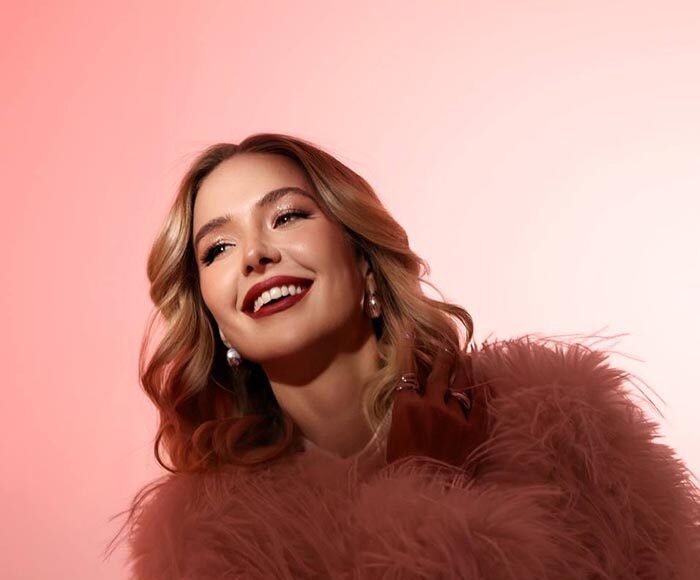
Anna Kustova is a fashion and commercial model with international experience across Russia, the UAE, and Oman.
Her work spans campaigns for L’Oréal Dubai, a video project for Louvre Abu Dhabi’s National Day, a cover for L’AMOUR Fashion and Beauty Magazine, and a billboard for WOW JBR. In 2023, she was named Miss Universe Dubai Elegance Ambassador. Now, she is based in the US, where she studies and continues developing her presence in the international creative industry.
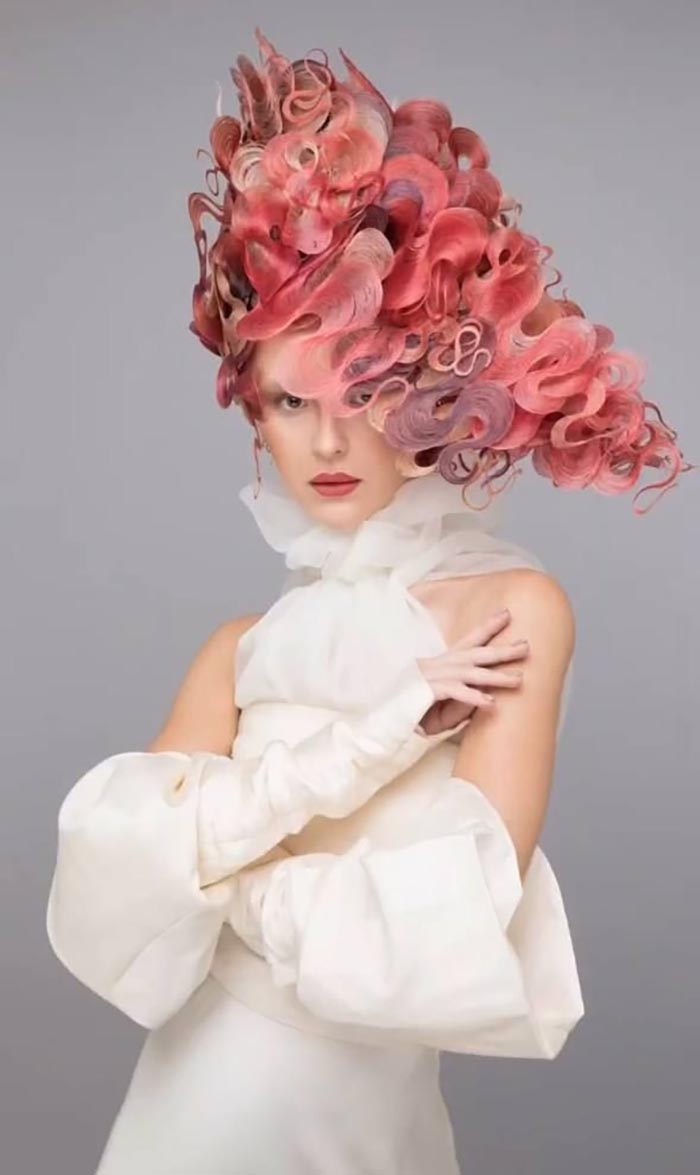
Images courtesy Anna Kustova
Q: Hi Anna, thank you for joining us. Let’s start from the beginning — what was your childhood like, and how did you first find your way to performing?
It started without a plan, honestly. Around six, I had heart surgery to correct a condition I was born with, and I think that experience like being small and already learning that your body isn’t something you can take for granted stayed with me in a quiet way. On a lighter note, performing came into my life through Sunday school. I sang, I took part in little productions, and we did charity concerts, some of them at orphanages and homes for the elderly. I remember standing in front of people who had so little, and feeling like a performance could actually mean something to someone. That’s really where the stage and the emotional side of it both started for me, at the same time.
Q: A few years later, you enrolled in an acting and directing program. What drew you to that, and how did it shape you as a model afterward?
I wanted to be on a stage, that was the simple version. It became the place where I first started exploring performance, movement, and how to work with emotion in front of an audience. I didn’t finish that path in the traditional sense, because modeling pulled me in a different direction. However, the training stayed with me. When I later started modeling seriously, I wasn’t learning for the first time how to hold an expression or read a room. I’d already spent real time doing that on a different kind of stage.
Q: Before your international career took off, you competed in local beauty contests. How did that period shape you?
That was between 2010 and 2012, and I had no agency, no one guiding me, I just entered contests because I wanted to try. By 2015, I’d walked for Estel and for Vlad Lisovets, and that’s when it stopped feeling like something I was just trying out. I understood this wasn’t a phase, and I knew that staying in one place, doing the same small circuit, wasn’t going to get me anywhere close to what I wanted.
Q: Your career has taken you across Russia, the UAE, and Oman, often without an established network to rely on. What did that actually require of you?
Early independence, mostly. I didn’t grow up with the resources or the connections that make this industry easier to enter, so I learned early to take responsibility for my own decisions and my own risks. Every relocation, every time I had to adapt to a new country or start over on social media after stepping away from a bigger following, I did that because I chose to keep going.
Q: In 2022, you went through a serious injury. Can you tell us what happened, and how it changed you?
I had an accident that resulted in fractures to my facial bones, and I needed surgery and a titanium plate placed in my face. It left scars and some lasting visual impairment in one eye. The recovery wasn’t only physical. My work has always been tied closely to my face, my expression, my confidence in front of a camera, so I had to sit with the fact that my appearance had changed, and with the fear that I might not be seen (or see myself) the same way again.
What actually shifted was my understanding of beauty. I realized it was never about the absence of scars or asymmetry, and that strength doesn’t mean staying untouched by life. What mattered was whether I could keep creating, keep expressing something, and keep moving forward without letting a physical change erase who I was.
Q: You’ve said your strength isn’t just being in front of the camera, but understanding the visual process behind it. What does that mean in practice?
It means I try to really understand the atmosphere of a set: the brand’s concept, the mood the team is building, and I adjust my posing, my expression, my energy to serve that direction. Part of that comes from my acting background: you learn how a body holds attention on its own, how a single pause or a change in posture can say more than any expression, how someone decides in seconds whether to believe what they’re looking at. When you understand why a shot works, you can shift with it in real time and support the vision the director and photographer already have, instead of just executing instructions one by one.
Q: After recovering, you returned to modeling. One of the first bigger projects was L’Oréal Dubai in 2023. What set that shoot apart from smaller commercial work, and what would you tell a model stepping into a project like that for the first time?
The difference is preparation before you even walk on set. With a brand at that level, there’s no room to figure things out in the moment, you need to already understand the concept, the mood they’re building, how your posing and expression serve that specific story.
My advice to anyone stepping into a project like this: come in prepared, already reading the room and thinking about how you fit into what the brand is trying to say, while staying attentive to the director’s lead rather than guessing on your own. That’s what makes a client trust you with bigger work again.
Q: You also took part in an official video project for Louvre Abu Dhabi, published on their platform for National Day. How was that different from a commercial shoot?
It carried more responsibility. A commercial shoot answers to a brand. This answered to an institution with an international reputation, and it was published on their own official channels, not mine. I couldn’t treat it like a regular booking. I had to think about how my presence in that video reflected on something much bigger than a single campaign.
Q: Beyond those two projects, how did that period in Dubai continue to develop?
I kept building from there — Dubai Jewelry Fashion Week, Fashion Factor, work with Ida Beauty and the clothing brand Mooei. It felt like proof to myself that I could keep going, project by project, after everything that had happened.
Q: Your work also includes a magazine cover, a billboard, and a fashion shoot for a luxury brand. What did those mean for you at this point in your career?
Those came a little later — a cover for L’AMOUR Fashion and Beauty Magazine in 2024, a billboard at WOW JBR in 2025, and a shoot for a luxury abaya brand. What I’d say about all of it is that it wasn’t about chasing something bigger for its own sake. It was the natural next step of a portfolio I’d kept building since Dubai, and it told me the work I was doing was actually landing with the people I wanted to reach.
Q: You’re currently based in the US. What are you focused on there?
Right now it’s studying and sharpening my English, and paying close attention to where the creative industry is heading globally. I’m using this time to build the foundation for what comes next professionally, rather than treating it as a pause.
Q: What’s the message you’d want to leave with someone reading your story?
That not having connections or ideal conditions when you start doesn’t mean you don’t have a future. Mistakes and uncertain periods don’t cancel out talent, you know. After something difficult changes you, you don’t have to hide, your individuality is stronger than any attempt to fit a standard. Confidence is built by acting anyway, even while the fear is still there. For me, my own story became a source of strength, and eventually, a language I could create from.