Being a fashion editor, you deal with so many things on a daily basis that you’re able to count them.
It’s about looking at photos to pick out which ones are best from the model and putting up the runways, editing lookbooks, and working with designers, as well as arranging the moods themselves and writing the content.
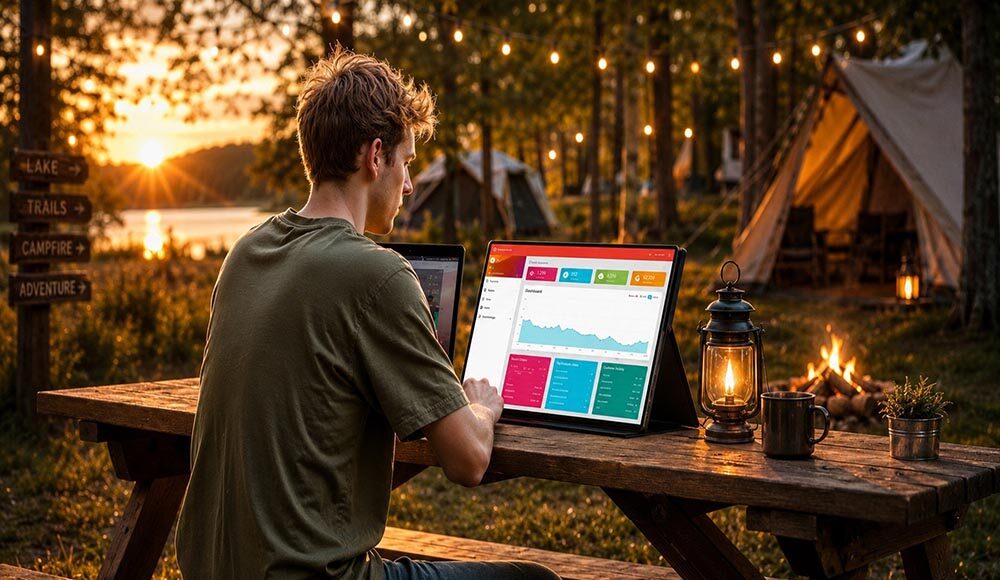
Many fashion professionals are limited in the number of screens and have problems switching between the different tabs, reference images, and design files fast. A portable monitor comes in handy here; after all, it’s a practical device that is now essential to any fashion media setup.
Portable screens transform fashion-editing workflows, are lightweight and flexible, and won’t weigh heavily on your shoulders when you’re on location or traveling. A number of top manufacturers have developed an acceptable reputation of making highly visual and transportable displays with the needs of the working creatives in mind.
Busy Workflows of Modern Fashion Editors
Fashion editors rarely stay at a fixed desk all day. Their work spans indoor offices, bustling fashion show venues, outdoor shooting locations and remote workspaces. A typical workday involves comparing high-resolution garment shots, adjusting layout drafts, checking color palettes, replying to client messages and arranging shoot schedules. When all these tasks crowd onto one laptop display, workflow slows down noticeably. Editors have to repeatedly minimize and reopen windows, which breaks their creative flow and wastes valuable time.
Traditional large desktop monitors are not a solution here, since they are too heavy to move around. For roles that require frequent travel and on-site work, mobility is just as important as screen performance. This makes compact external displays an ideal upgrade. Many fashion teams now choose a mini monitor for secondary viewing needs, as its small size never gets in the way while offering enough extra space for quick references and notes.
Why a Portable Monitor Boosts Productivity for Fashion Teams
Split-screen seems to be the greatest benefit of a monitor surround, as it transforms multitasking for fashion editors. Their two independent displays allow them to view high-resolution fashion graphics and photo galleries on one screen, and create layouts and communications or draft their documents on another screen.
No need to toggle between the various windows now, and each task proceeds much more smoothly. Another important aspect of fashion work which will not be compromising for visual accuracy either. Imported textile fabrics, colors of clothes, or cosmetics ought to reflect reality. Bad screens will give illusive colors, possibly causing errors in dealing with final publications or the choice of products.
The color output from a trusted brand’s display is excellent, and its image quality is clear, meeting the stringent visual requirements of the fashion industry. If they’re editing pics or merely organizing seasonal styling piles, editors can have confidence in what they see on screen.
The secret that continues to smooth the way for fashion editors is portability. The majority of the portable screens weigh less than a hundred grams and have a thin body, which makes them easy to put away in a laptop bag or business tote. Editors can (as noted) rush from the office to a fashion show, shoot, or temporary workspace and be able to set up a full dual-screen workstation in no time. Plug and play connectivity – even for non-tech-savvy users – with no complex installation or driver setup.
Mini Monitor: Compact Helper for On-the-Go Fashion Work
If optical component editing is your focus, and you are looking for an ultra-portable option, then a mini monitor comes in very handy. Outside of these, they typically come in sizes from 7 to 12 inches and work well as extra displays for a laptop computer on narrow tables backstage or at temporary workspaces.
These are great for having reference materials, mood boards, style guides, or real-time team chat windows open. Often, time is scarce during the hectic times of fashion shooting or a fashion event. While it can get a bit heavy if you’re in a small space, a mini monitor doesn’t take up much room at all. Editors can review raw footage from the main laptop even as they track trends via the small screen.
Additionally, editors can preview trends on the small screen and then get their video requirements on the main screen. It’s also useful for making on-the-spot revisions. The mini monitor can be used as a side-by-side display when designers and editors are interested in making minor adjustments to outfits or photo styles and require immediate seeing each other’s edits.
Quality Display Brands: Trusted Choice for Creative Fashion Professionals
In this market, there are some well-known brands of displays that are known for their durability and high performance level when it comes to picking the right portable screens. They make a range of both portable monitors and compact mini monitors, suitable for different fashion editors’ working conditions.
Most editors will prefer to use the traditional portable screen for everyday work in the office and while traveling. The screens come with wide viewing angles, making it very important to view fashion content with a group of members of the staff comfortable. The robust, built-in stand supports users in relocating the screen angle as needed for viewing convenience, regardless of their work hours.
Shell design is an important aspect of the mobile phone for an editor who needs to use the phone the majority of the time, moving between various cities to attend fashion shows. Durability of the shell protects the screen on a phone during its transport between any city where the editor travels in order to attend fashion shows. The mini monitor versions are also popular with field workers.
The displays are not only lightweight and power efficient, operating on a reliable power source for hours on the job, but also come in a wide variety of sizes and configurations for either permanent installation or mounting on a tripod or other support. The sharp picture quality and proper color rendering mean there’s no chance of any loss of fashion information on a smaller screen. It could be away from work casually or to perform temporary tests backstage, or a temporary team project, quality display devices can still keep running.
Practical Tips to Use Portable Screens in Fashion Editing Work
A basic plan of the area can help maximize the operation of your setup. Store large images, lookbooks, and design software on the main screen and schedules, contacts, or reference pictures on the secondary display. Set up a mini monitor and slot real-time messages, trend notes, or short video clips to it for easy access.
For fashion work, always use a portable monitor that accurately displays color, as the rest of the editing process will be impacted if the color is off. For visual creative work, the quality is optimized for daily editing, and reviews can fully meet the requirements. Then again, take along a multi-pronged set of short cables, which helps keep things neat and tidy, particularly in hypermodern fashion houses.
Final Thoughts
As a high-speed, high-turnaround industry, even the smallest improvement in workflow can make a big difference in the world of fashion. A portable screen is no longer a “luxury accessory” for fashion editors, but an indispensable working auxiliary that can boost the efficiency of everyday work. It makes switching between windows a thing of the past, ensures proper color representation, and fits in seamlessly with your work mobile lifestyle.
Portable display products provide 16.4-in mini and full-size screens and deliver solid performance and great portability, meeting a variety of job demands and applications. For fashion editors, who just need to find something creative and efficient for their workflow, it is a no-brainer when it comes to supporting your work with a portable screen—it makes any hectic workday a breeze.