

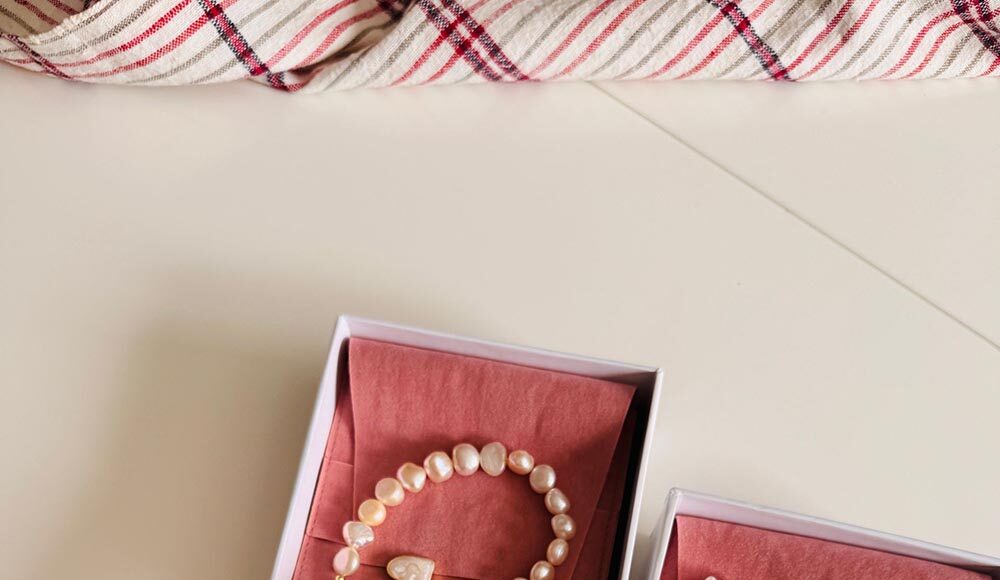
Fashion has always been a conversation between what individuals want to say and what the wider culture is listening to.
And right now, a lot of people seem to want to say something specific. Not through a logo or a designer label, but through something quieter and more personal. A date only they’d recognise. A symbol that means something to them. An initial that belongs to someone they love.
Customised accessories have been building momentum for a while, but what’s interesting is how far they’ve travelled. What used to feel like a niche, slightly craft-fair adjacent corner of jewellery has found its way onto runways, into editorial spreads, and onto the wrists and necks of people who take fashion seriously. The category of personalised jewellery in particular has grown into something that feels genuinely relevant rather than sentimental, which is a harder thing to pull off than it sounds.
Where it started, and why the street got there first
Street style has always been a better laboratory for what people actually want to wear than anything that happens on a runway. And for years, if you paid attention to how people were styling themselves in cities, you’d have noticed a consistent thread running through it. Layered necklaces. Stacked rings that looked collected rather than coordinated. Bracelets that each seemed to have a different origin story.
None of that was accidental. These were deliberate choices about what to carry close to the body, what to make visible, what to communicate to people who might look closely enough to notice. Customised pieces fit naturally into that approach because they reward attention without demanding it. A small engraved pendant doesn’t announce itself. It just sits there, carrying its meaning quietly, available to anyone curious enough to ask about it.
That quality, of being personal without being loud, is exactly what makes customised accessories work so well as everyday pieces. They don’t compete with an outfit. They add a layer to it.
Why the runway started paying attention
Fashion at the higher end has a complicated relationship with personalisation. The instinct at that level has traditionally been towards the universal, towards pieces that communicate taste and craftsmanship without being too specific to any one person’s story. But that’s been shifting.
Designers have been watching what people actually reach for, and what they’ve noticed is that the jewellery people wear most consistently, the pieces they never take off, are almost always the ones that mean something. So custom elements have been appearing in collections. Engraved charms, zodiac medallions, rings with tiny inscriptions. Not as gimmicks, but as acknowledgements that people want to feel personally connected to what they wear.
The effect on the runway is interesting. Jewellery that looks like it could belong to a real person, with a real history, makes everything around it feel more human. It softens the artificiality that high fashion can sometimes slide into, and it makes the whole presentation feel more like an invitation and less like a display.
The emotional weight of carrying something meaningful
It’s worth being honest about why personalised pieces actually matter to people, because it’s not really about fashion at all. It’s about memory and connection and the human desire to make the intangible physical.
A ring engraved with a date, a necklace with a stone tied to a particular person’s birth month, a charm that references something private between two people. These objects hold things. They become associated with moments and relationships in a way that a beautiful but impersonal piece of jewellery simply can’t. Brands like Posh Totty Designs have understood this for a long time, building collections around the idea that jewellery works best when it carries genuine personal significance alongside its aesthetic appeal.
There’s also something to be said for the privacy of it. A personalised piece can be deeply meaningful while appearing, to most people, like a nice piece of jewellery. The meaning is yours to share or keep. That’s quite a rare quality in an object.
Why they work across so many different contexts
One of the practical reasons customised accessories have become so popular is how well they travel across different situations. A delicate engraved necklace works with a work outfit on a Tuesday and with something more dressed up on a Friday evening. Stacked rings with personal significance don’t need a particular occasion to feel appropriate. The personalisation actually makes the pieces more versatile, not less, because they’re connected to the wearer rather than to a specific context.
This adaptability has helped move personalised jewellery out of the “special occasion gift” category and into genuine everyday wear. People aren’t saving these pieces for birthdays or anniversaries. They’re wearing them to the supermarket and on the school run and everywhere else, because they fit into life rather than requiring life to arrange itself around them.
What the trend is actually pointing towards
The rise of customised accessories probably says something broader about where people are with fashion right now. There’s a fairly widespread tiredness with the cycle of trends, with buying things that feel relevant for six months and disposable after that. Personalised pieces sit outside that cycle almost by definition. They don’t go out of fashion because their value isn’t really about fashion in the first place.
What they offer is permanence in a category that doesn’t usually provide it. A piece of jewellery that carries real personal meaning gets worn for years, gets handed down, gets looked at differently as time passes and the associations attached to it deepen.
That’s not nothing. In fact, for a lot of people, it turns out to be exactly what they were looking for.