

The curl is one of the oldest deliberate acts of grooming, recorded on Assyrian reliefs and Roman busts, yet the tool most people picture, a metal rod that heats and shapes the hair in a single pass, is barely 150 years old.
Its story runs from a Parisian salon of the 1870s to a category of electric wands that hold a single temperature and ask almost nothing of the person using them. Along the way the curling iron shaped more than hair. It moved in step with the hats women wore and the length they were prepared to cut, so that the history of the tool doubles as a history of the fashionable head.
The Marcel Wave Turned a Hot Iron Into an Industry
The modern curling iron begins with François Marcel Grateau, a French hairdresser who around 1872 found that a pair of heated tongs, rotated in a particular rhythm, could press a soft continuous wave into the hair rather than the hard ringlet that older pinching irons produced. The Marcel wave, as it became known, was gentler on the eye than the tight corkscrew curls of earlier decades, and it suited the upswept arrangements and wide hats of the Belle Époque, where a wave at the temple did the visible work beneath a brim.
The craft, though, lived entirely in the hand. Tongs were heated on a stove or over a gas flame, and their readiness was judged by eye or by testing the metal against paper, since nothing on the iron measured its own heat. A wave was only ever as good as the operator’s timing. Too cool, and it dropped out by the evening; too hot, and the hair scorched or broke. This is why Marcel waving remained a salon skill for decades rather than a thing most women attempted at home, and why a good “Marcelling” hand could charge accordingly.
Charles Nestle Made the Curl Permanent
The next shift came from Charles Nestle, born Karl Nessler in Germany and working in London, who in 1906 demonstrated a machine that could hold a wave for months instead of until the next wash. His apparatus wound sections of hair onto brass rollers coated in a borax paste, then heated them with electric current suspended from a stand above the client’s head. The first public demonstration ran for hours, and the process carried a genuine risk of scalp burns, a hazard Nessler knew from experimenting on his wife, Katharina Laible, whose hair he damaged more than once during development.
Crude as it was, the permanent wave answered a real appetite. As the First World War drew women into offices and factories, styles that survived a working day without daily attention became practical rather than merely fashionable. The heavy overhead machines of the 1910s and 1920s were the direct ancestors of every salon perm that followed, and they made the curl, for the first time, something a woman could buy and keep.
Finger Waves Softened the Hard Metal Curl
The bob changed everything again. When women cut their hair short in the 1920s, the elaborate pinned-up wave lost its purpose, and attention moved to the flat, sculpted lines that sat close to the skull. Finger waving shaped S-curves against the head using a comb and setting lotion, sometimes without any heat at all, while the Marcel iron produced the same close-fitting look with tongs. The result matched the cloche hat, which sat low on the forehead and left only a sliver of waved hair visible at the cheek.
By the 1930s the mood loosened. Hollywood softened the rigid finger wave into longer, more fluid curls, worn by screen actresses whose glossy waves became the decade’s reference point. That look asked more of the stylist than a flat wave did, since building soft, even movement along the length of the hair with a heated iron took patience and a steady judgement of temperature that no dial yet provided.
From Heated Tongs to the Fixed-Temperature Wand
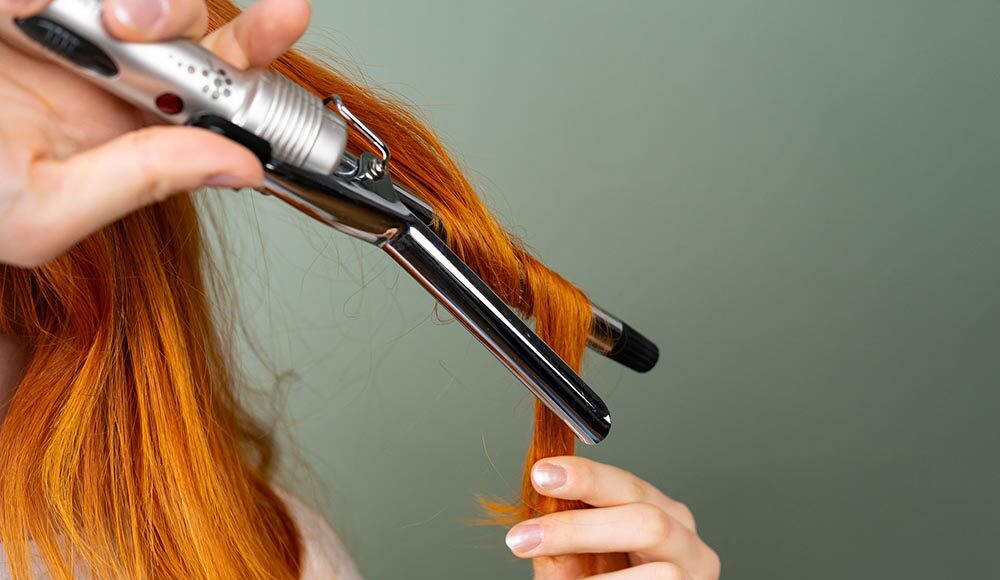
The Marcel iron demanded a skilled hand and a hot stove, and a curl was only ever as reliable as the person heating the tongs. Electric curling irons, which spread through the 20th century as home wiring reached ordinary households, removed the stove but not the guesswork, since early models still ran hotter or cooler with the mains and the minutes left clamped on the hair. Modern electric wands removed that guesswork by holding a single set styling temperature, so the same barrel produces the same curl each time. Today that lineage runs into tools like ghd’s curling wands and tongs collection, a New Zealand range where every clipless wand and clamp tong holds a fixed 185°C, so barrel size rather than a heat dial decides whether the result is a tight ringlet or a loose wave. A narrow 14mm barrel still sets ringlets much as the old thin tongs did, while a 38mm barrel produces the soft Hollywood waves that took a 1930s stylist far longer to build by hand.
ghd’s range covers six barrel sizes across clipless wands and clamp tongs, and it adds a triple-barrel Wave waver. None of them has an adjustable setting. That fixed temperature is a deliberate design choice. It removes the variable that ruined so many stove-heated curls, but it gives no room to those who would prefer a lower heat for very fine or bleached hair, where control still matters more than convenience. A century and a half after Marcel judged his tongs against a scrap of paper, the curl has become a matter of choosing a barrel and letting the tool hold the heat.