
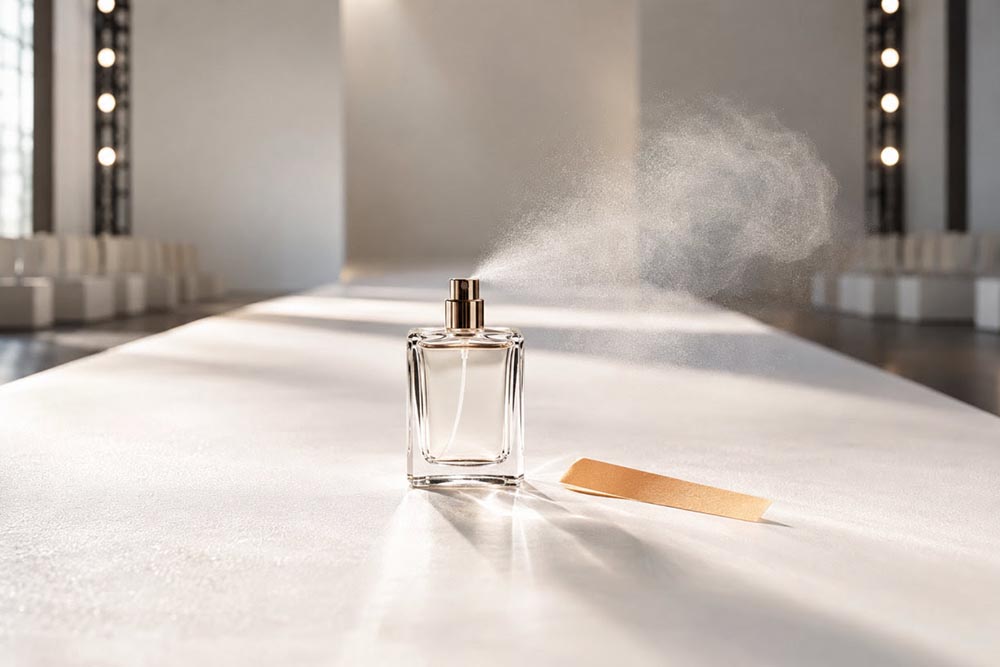
Fragrance has emerged as the runway’s invisible accessory, shaping mood, reinforcing storylines, and deepening the sensory drama of a fashion show.
As designers look beyond what audiences see, the strategic use of scent helps define collections and influence how they are remembered, long after the lights dim.
Every detail on the runway, from textured fabrics to sculptural lighting, guides your experience of a collection. Yet, scent often works quietly in the background, altering perception in ways as bold as a color palette or soundtrack. Whether inspired by the idea of a high-luxury perfume or a minimalist clean musk, designers can treat fragrance as part of the storytelling toolkit. This multi-sensorial approach can encourage guests to feel immersed in a world and create a lasting impression that endures beyond the final walk.
Fragrant atmospheres: Crafting mood without distraction
When you step into a major fashion venue, the air is sometimes subtly scented to set an immediate tone. Scented environments on the runway act as atmospheric cues, guiding guests emotionally before the first model appears. For instance, a show themed around coastal nostalgia might employ scents of driftwood, sea mist, or salty rain, while a futurist collection might use cool metallic or synthetic ozonic notes. For eveningwear presentations, amber, dark woods, or powdery florals can signal opulence or mystery.
Producers must exercise restraint. Unlike visual or sound elements, scent can become overpowering or mask the clothes’ effect if used heavily. Effective fragrance blends into the background: for example, using HVAC-timed diffusion or micro-diffusers positioned near runways to provide a gentle, consistent layer. Sometimes designers incorporate scented cards on each seat, letting guests sample the core note directly. Custom compositions are blended by perfumers to match the narrative, and the distribution is carefully managed to avoid olfactory fatigue or distraction.
Scent behind the scenes and throughout the venue
Fragrance use often starts backstage. Some design teams spray calming scents such as lavender or subtle green tea in dressing areas to help models center themselves before the show. Backstage spaces might also feature low-level diffusers or scented stones for a discreet atmosphere that matches the creative brief (for example, smoky leather for a punk-inspired show or orange blossom for spring collections). In front-of-house areas, fragrance can be presented at entrances or in corridors, or used to accent pop-up fabric installations for thematic effect.
To accommodate guests with scent sensitivities, some shows use low-dose diffusion and provide advance notice to attendees about the presence of fragrance. It is also becoming more common for designers to establish fragrance-free zones or offer unscented seating options, balancing signature impact with guests’ comfort and accessibility considerations.
Supporting the narrative: Translating design into fragrance
Transforming design into scent involves interpreting materials and shapes as olfactive textures. A crisp green or grassy note might convey the sharpness of tailored daywear, while creamy white florals can evoke a flowing, ethereal gown. For a collection focused on velvet and dark suiting, perfumers might choose notes like black tea, wood smoke, or orris root. Eveningwear collections often mirror the richness of the fabrics with ambergris, incense, or spicy resins. Distinctive scents, sometimes inspired by famous perfumes or their accessible alternatives, are selected to connect guests to a recognizable idea. In these instances, the reference to a Louis Vuitton Symphony dupe can clarify the designer’s creative intention and make the chosen fragrance direction understandable to the audience.
What makes a runway scent work?
Crafting a runway fragrance requires careful balance between sillage, duration, and subtlety. The scent should diffuse gently, lasting just long enough to accompany each model’s walk without overwhelming the space. Producers might use a venue’s ventilation system programmed to disperse fragrance in short, timed bursts before and during the show or turn to portable micro-diffusers to localize scent along the catwalk. Scented cards may be placed at each seat, allowing guests to interact with the fragrance on their own terms.
Flexibility is key. A show’s scent is chosen not only for projection but also to interact appropriately with attendees’ personal fragrances, which can shift the communal impression. This is why runway profiles usually steer clear of polarizing ingredients—for example, heavy patchouli or marine notes—and instead favor subtle woods, musk, or gentle florals that blend into a shared environment. The needs of guests with fragrance sensitivities also warrant consideration when planning fragrance-free options.
Translating runway scent ideas to personal style
The runway’s approach to fragrance inspires day-to-day style. Rather than matching a perfume by color or season alone, consider how the scent’s mood and texture complements your clothing. A clean musky scent can highlight the simplicity of a fine wool suit or a tailored monochrome look. For sheer linen or summer dresses, fresh citrus is a vibrant pairing. Dramatic eveningwear, such as velvet or sequined gowns, is enhanced by deep, spiced or resinous accords selected for warmth and impact.
You do not need to track down exact runway formulas or luxury exclusives to incorporate this layered method; accessible alternatives to luxury fragrances are another option. Instead, focus on how a chosen scent harmonizes with your look and environment. Try pairing earthy, woody notes with chunky knits for autumn settings or selecting a light green aromatic to echo the feel of a freshly pressed linen shirt in spring.
Integrating fragrance in modern showcraft
Today, scent is considered alongside set design, lighting, and music as a core tool of production. Designers and producers plan the orchestration of each sensory element to ensure that the collection resonates and the audience’s memory of the show is complete. The choreography of fragrances, from backstage to front-of-house, is as deliberate as the arrangement of the physical runway.
For style-conscious individuals, runway lessons demonstrate that fragrance can be treated not as an afterthought but as a versatile component of identity. Just as designers complete their vision with a carefully chosen scent, anyone can experiment and refine their own signature by thoughtfully pairing fragrance with wardrobe choices.