

A day at the water can involve steady laps, a paddleboard lesson, a beach walk, and several hours beside the pool.
The swimsuit that feels comfortable while standing still may behave differently when you reach, climb, or dive. Start with the activities on your calendar, then judge each suit by how securely and comfortably it moves with you.
A tankini pairs a longer swim top with separate bottoms, while a one-piece joins the top and bottom into one garment. Both can cover the torso, but their construction changes how they fit and how often you may need to adjust them. Fabric, straps, and cut matter as much as the style name.
Match Water Movement
Think about the strongest movement your suit must handle, rather than the amount of time you expect to spend in the water. Pushing off a pool wall or tumbling through a wave puts a different demand on a neckline and waistband than standing in shallow water. A secure suit lets you focus on the activity instead of checking its position.
Laps and Repeated Submersion
For continuous swimming, a close-fitting one-piece often offers a simpler shape through the water. A secure back and straps that stay on the shoulders can be especially useful when your arms repeatedly reach overhead. The suit should feel snug without restricting a full stroke or pulling hard at the shoulders.
A tankini can also work for pool exercise when the top stays near the body and the bottoms remain secure through kicking and turns. A loose, floating hem may drift upward in the water. Before relying on a two-piece for laps, check the hem and waistband during a few practice strokes rather than assuming that dry-land coverage will stay in place.
Waves and Paddleboards
Waves and boards add sudden changes of position. You may bend to lift a board, climb back on after a fall, or raise both arms to regain balance. An athletic one-piece with stable straps can reduce the number of separate edges to monitor. Even so, a low neckline or loose leg opening can shift, so a one-piece still needs a movement check.
If you prefer a tankini for these outings, look closely at the top’s underbust support, hem, and strap design, then check the bottoms independently. A longer top does not hold a loose waistband in place. For rougher water, a snug rash guard or other activity-appropriate layer may add coverage, but it should be tested over the suit before the trip.
Plan Between Swims
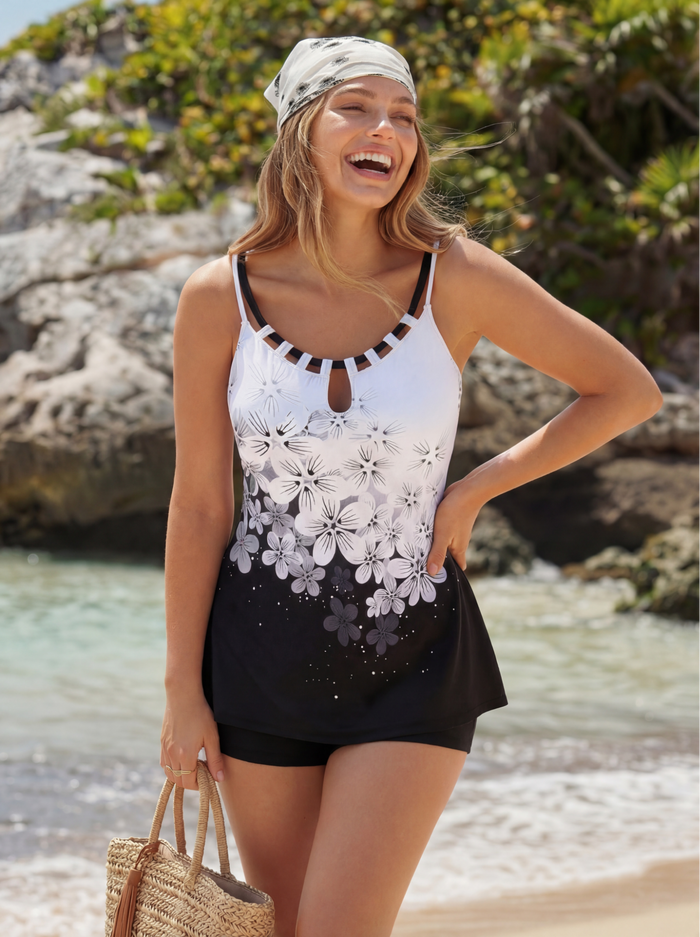
Many water days involve more walking, sitting, and changing locations than swimming. A separate top and bottom can make bathroom breaks and changing easier, especially when the fabric is wet. If that rhythm describes your day, browsing tankinis can help you compare top lengths and bottom styles as parts of a complete outfit.
Separate pieces can also help when your upper and lower body fit different sizes. The useful question is whether each piece stays comfortable through the whole day. A top that looks smooth in a mirror may bunch when you sit; bottoms that feel secure while standing may pinch during a long walk. Check both positions before choosing a set.
A one-piece has its own advantages between swims. It can sit smoothly under shorts or a cover-up, and there is no top hem to straighten after getting out of the pool. If a single garment suits your routine, compare one piece swimwear by back coverage, strap placement, and the ease of pulling it on when damp.
Neither silhouette replaces a plan for sun exposure. The amount of skin covered varies by neckline, leg cut, and back design, and uncovered areas still need attention. A swim shirt, cover-up, hat, and shade may suit a long afternoon outdoors. Choose layers for the setting, then make sure they remain comfortable over a wet suit.
Let Fit Decide
Fit can reverse an easy assumption about either style. Someone with a long torso may feel a one-piece tug at the shoulders when reaching, while another person may find a well-cut one-piece more stable than a tankini top. Adjustable straps, supportive cups, and a secure band can change the result. Compare actual garments, not just category names.
Try the suit as you expect to wear it, including any swim shorts or outer layer. Use a mirror to check the back as well as the front, and notice whether the neckline stays comfortable when you breathe deeply. A suit should hold its position without requiring you to pull fabric back into place after every movement.
A short movement test can expose issues that a standing fitting misses:
- Reach both arms overhead and rotate your shoulders as though swimming.
- Bend, squat, and stand to see whether the neckline or waistband shifts.
- Sit down, rise, and mimic climbing onto a pool ladder or board.
Watch for a top hem that rides up, a shoulder strap that slides, or a leg opening that digs in. These are reasons to try another cut or size, not reasons to rule out a whole category. If possible, repeat the movements after the suit is wet, when fabric weight and stretch may feel different.
Choose for Your Day
For a day centered on laps or repeated falls into the water, give stability the first vote. For a relaxed day with short swims and frequent time on shore, separate pieces may offer useful flexibility. A mixed itinerary calls for both: test the suit against its most demanding activity and consider how it feels during the quieter hours.
Coverage is personal, and comfort is practical. Notice which areas you want covered, how much support you need, and whether adjusting the suit interrupts your plans. The answer may change from a quiet pool day to a boat excursion, so one swimsuit does not have to serve every outing in exactly the same way.
The right choice is the suit that passes your movement test and lets you enjoy the day without constant adjustments. Once fit and activity are settled, color and print can be the enjoyable final decision.