
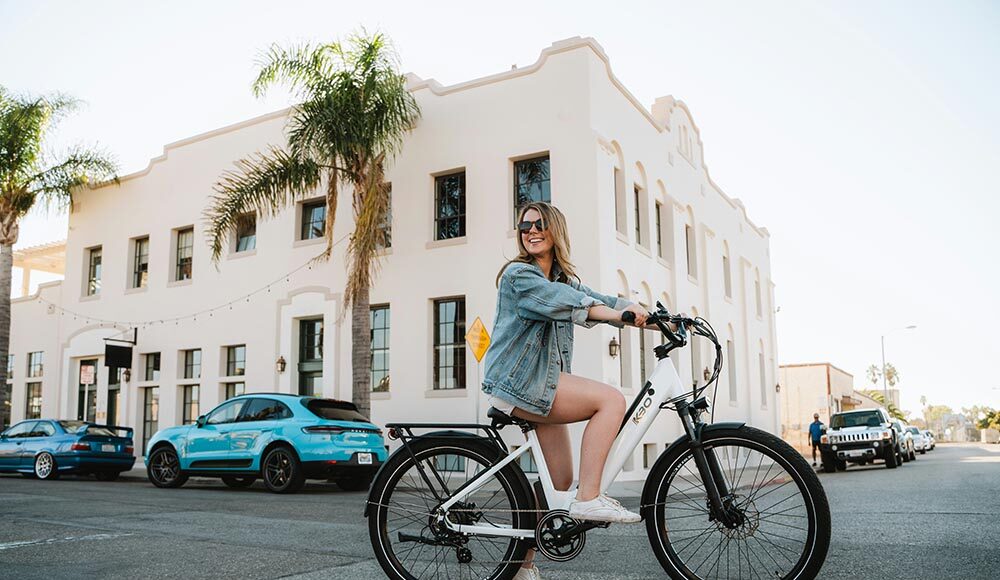
Last year, my friend Jake, a barista in Brooklyn, made a switch that changed his daily commute: he traded his gas-powered moped for a Qlife moped style ebike.
At first, he was skeptical—he’d loved the feel of a moped’s wide seat and easy handling through city traffic—but within a week, he was raving about how much simpler his rides had become. What makes Qlife’s ebike stand out isn’t just its moped-like looks, but how it solves the small, annoying problems that city riders face every day, from parking headaches to high fuel costs.
Design That Merges Moped Nostalgia with Modern E-Bike Builds
Qlife’s design isn’t a random mix of bike and moped—it’s an intentional adaptation of moped ergonomics for electric power. Unlike skinny mountain bikes or road bikes that force riders to hunch over, Qlife’s ebike has a low, wide seat (30 inches from the ground, perfect for someone who wears work pants or a skirt without adjusting) and foot pegs positioned slightly forward, just like a classic moped. Jake, who’s 5’8”, says he can ride for an hour without getting sore in his back or legs, something he never could do on his old road bike.
The frame is made of lightweight aluminum, so it’s 50 pounds lighter than a standard gas moped. That detail matters when you’re rushing to catch the subway after a shift: Jake can lift his Qlife onto the subway’s luggage rack in seconds, no help needed. The handlebars are also wider than a typical bike’s, which gives more stability when weaving through tight alleyways in Manhattan, where car doors often swing open without warning. Even the small touches, like the matte black finish that doesn’t show fingerprints, make it feel like a moped you don’t have to worry about scratching.
Urban-Focused Performance That Fits City Traffic
When it comes to performance, Qlife built its ebike specifically for city streets, not rural trails. The 250W brushless motor has a peak output of 500W, which is enough to reach a top speed of 20 miles per hour—exactly the limit that lets you ride without a license or registration in most U.S. states, including New York. Jake used to have to renew his moped’s registration every year, pay for insurance, and deal with city inspections, all of which added up to $300 a year. Now, he just rides, no extra paperwork.
The battery is a 48V 12Ah lithium-ion unit, which gives a range of up to 40 miles on a single charge. Jake’s commute is 10 miles each way, from his apartment in Queens to the coffee shop in Brooklyn, so he only needs to charge his Qlife every three days. On weekends, he can ride to Coney Island or up to Long Island without worrying about running out of power. Even the steep hills in Brooklyn, like the one near Prospect Park, are no problem—Jake says he used to have to walk his old road bike up that hill, but now he just twists the throttle and goes, no sweat.
Safety Features Built for City Riding Risks
City riding comes with unique dangers: distracted drivers, jaywalkers, and parked cars with opening doors. Qlife’s ebike is designed to handle all of these. First, the lighting system: it has automatic LED headlights and taillights that turn on when it gets dark, plus reflective strips on the sides that make it visible from 50 feet away. Jake had a close call last winter when a car pulled out of a parking spot without looking; his Qlife’s bright light made the driver see him in time, something he says wouldn’t have happened with his old bike’s weak headlights.
Another big safety feature is the smart Bluetooth lock. Jake’s old moped was stolen two years ago from outside a laundromat, so he’s extra careful about theft. The Qlife’s lock connects to his phone, so it automatically locks when he walks away and unlocks when he approaches. He can also lock it remotely if he’s worried, and get an alert if someone tries to move it. He’s left it parked on busy streets in Manhattan for hours, and it’s never been touched. The brakes are also responsive: front and rear disc brakes that stop the bike in 15 feet from 20 mph, which is faster than most regular bikes, perfect for sudden stops.
Practical Storage and Customization for Daily Tasks
For people who use their ebikes for more than just commuting—like Jake, who sometimes delivers small orders for the coffee shop—storage is key. Qlife’s ebike has a rear rack that can hold up to 50 pounds, enough for a large cooler, a grocery bag, or a stack of coffee cups. Jake uses it to carry his apron, a water bottle, and sometimes a friend’s lunch when they meet after work. There are also two small hooks on the handlebars, perfect for a canvas bag or a backpack, so you don’t have to wear it while riding.
Customization is another big plus. Qlife offers 12 different colors, from bright red to matte gray, so you can pick one that fits your style. Jake chose a sky blue that matches the coffee shop’s logo, and he’s gotten at least 10 questions from customers about where he got it. You can also add accessories like fenders (to keep your pants dry in rain), a basket, or a phone mount, which Jake installed to navigate his route easily. The pedals are foldable too, so if you need to bring the bike into your apartment or an elevator, you can fold them up to save space.
Cost Savings That Beat Traditional Mopeds and Cars
When Jake first told me he was buying a Qlife, I thought it was going to be expensive. But at $1,199, it’s half the price of a new gas moped, which usually costs around $2,500. The savings don’t stop at the purchase price, though. Jake’s old moped cost him about $150 a month in gas, plus $25 a month for insurance, and $50 a year for registration. His Qlife costs less than $5 a month to charge, and there’s no insurance or registration fee. He also saves on parking: in Brooklyn, parking a moped costs $15 a day, so his monthly parking bill was $450. Now, he parks his Qlife on the street for free, so that’s another $450 a month saved.
Jake did the math last month: over a year, he’s saved almost $7,000 by switching to his Qlife ebike. That’s more than his monthly salary at the coffee shop, which makes it a no-brainer. Even compared to a car, it’s cheaper: a used car costs $5,000 to $10,000, plus monthly payments, gas, insurance, and parking. For someone who lives in a city and only needs to go a few miles a day, a Qlife ebike is way more practical and affordable.
I’ve ridden Jake’s Qlife a few times now, and I can see why he loves it. It’s not just a bike—it’s a tool that fits the way city people live, solving the small frustrations that make commuting a chore. Whether you’re a barista in Brooklyn, a student in Chicago, or a delivery driver in Los Angeles, Qlife’s moped style ebike is designed to make your daily ride easier, cheaper, and more enjoyable. It’s the kind of product that doesn’t just replace an old vehicle—it improves the whole experience of getting around a busy city.