

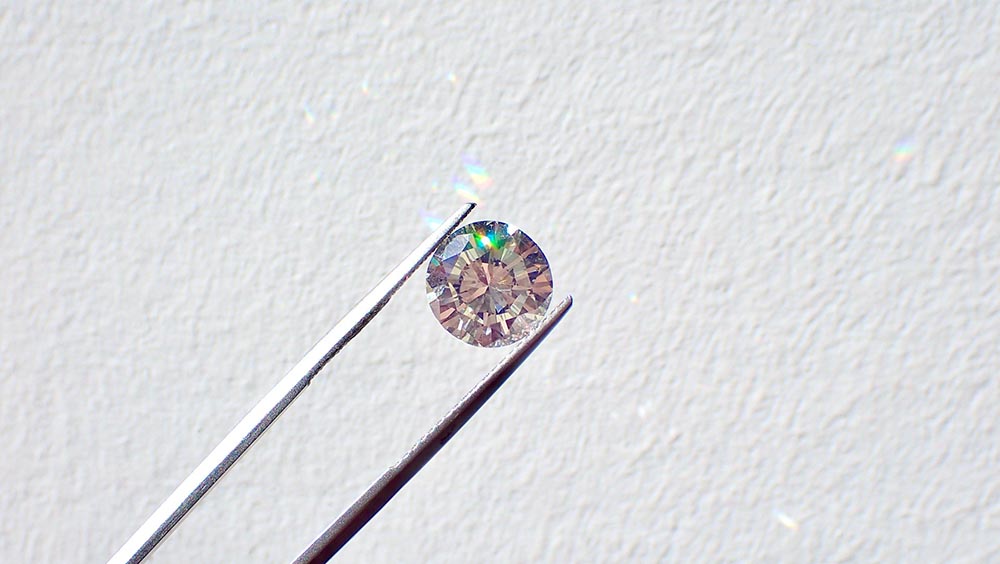
Lab-created diamonds now share jewelry cases with natural stones, and the price gap between them has the fashion industry weighing what the premium actually buys.
The value of natural diamonds compared to lab-grown stones comes down to origin, sourcing standards, economic footprint and how each holds its worth over time. Natural diamonds command a premium, and that premium deserves a close, evidence-based look.
This guide draws on insights from The Diamond Collective, a global, brand-agnostic trade organization that promotes the natural diamond category for the broader B2B diamond industry ecosystem. Its research helps frame whether the natural diamond premium is justified by origin, sourcing standards, socioeconomic impact and long-term value compared with lab-grown alternatives.
What Separates Natural Diamonds From Lab-Grown Stones
Lab-created diamonds are chemically and physically equivalent to natural stones, so appearance alone reveals little about origin. Jewelers’ tools can flag suspected lab-grown diamonds, but definitive proof often requires testing at a grading institute.
According to The Diamond Collective, most natural diamonds are between 1 billion and 3 billion years old. Lab-grown diamonds, by contrast, emerge from controlled factory processes in about three to four weeks. The organization also notes that manufactured stones can be replicated in potentially unlimited quantities, while the natural supply remains finite.
Three differences define the two categories:
- Origin: Natural diamonds form deep within the earth, while lab-grown diamonds grow in controlled environments.
- Properties: Both types share physical and chemical traits, but only natural diamonds trace back to a geological origin.
- Supply: Natural diamonds are a finite resource, while lab-created production can scale without a natural limit.
The Ethical and Conflict-Free Standards Behind Natural Diamond Sourcing
Conflict diamonds face exclusion from the legitimate trade through the Kimberley Process certification scheme, an international initiative backed by the United Nations. Its participants account for 99.8% of global rough diamond production, placing nearly all rough supply within a single shared framework.
For fashion professionals fielding questions about sourcing transparency, that coverage gives natural diamonds a documented conflict-exclusion framework to point to. Buyers can make more informed decisions by choosing reputable jewelers that share transparent sourcing information and evidence of responsible supply chain practices.
The Global Economic Impact of Natural Diamond Production
Botswana offers a documented case of a producing nation. The U.S. Geological Survey (USGS) reports that diamonds accounted for about 70% of Botswana’s total exports in 2024, and USGS data on the country’s diamond sector also show that mining and quarrying contributed 10.5% to gross domestic product (GDP).
The two figures measure different things. The 70% share reflects how heavily Botswana’s export earnings depend on diamonds, while the 10.5% share of GDP covers mining and quarrying as a whole. Together, they show a national economy in which natural diamond production carries real weight.
How Natural and Lab-Grown Diamonds Compare on Environmental Impact
Natural diamond mining consumes energy and water, which makes responsible land management and rehabilitation important considerations. Lab-grown diamonds avoid traditional mining, yet their manufacturing is energy-intensive, so their footprint can depend heavily on electricity sources and production efficiency.
Per a peer-reviewed comparative analysis, energy use varies widely by production method, with each figure measured in kilowatt-hours per carat (kWh/ct) for high-pressure, high-temperature (HPHT) synthesis, microwave chemical vapor deposition (M-CVD) and mining:
- HPHT lab synthesis: This method uses approximately 36 kWh/ct.
- M-CVD lab methods: Depending on the technology, energy use ranges from approximately 77 to 215 kWh/ct.
- Mined diamonds: Mining at ALROSA requires approximately 96 kWh/ct, and mining at De Beers requires approximately 150 kWh/ct.
- Water use: Lab-grown methods consume near-zero water, while ALROSA’s mined diamonds use less than 0.077 cubic meters per carat.
On these figures, HPHT synthesis uses less energy per carat than the mined operations, while M-CVD ranges overlap with them. A fair comparison also weighs land disturbance, transportation and the transparency of environmental reporting alongside production energy.
Why Natural Diamonds Retain Long-Term Value

On the question of long-term value, The Diamond Collective points to two market signals — 50 years of natural diamond price history and a sharp 2015-2024 decline in some lab-grown diamond prices. The organization says, “Natural and laboratory-grown diamonds may look alike, but experts can always distinguish them. While natural diamonds have appreciated by 2-3% on average per annum over the last 50 years, the prices of some lab grown diamonds fell by more than 80%.”
Pricing mechanics reinforce the gap. According to The Diamond Collective, “Unlike natural diamonds, which are rare, lab grown diamonds are priced based on production costs and retail markup. As production techniques improve and scale, their value is expected to continue declining until they reach a stable price point.”
The organization also addresses heirloom and engagement ring appeal, stating, “Natural diamonds retain inherent value over time, making them an incredible heirloom and an impactful choice for an engagement ring. However, like other manufactured products, man-made diamonds can be replicated in potentially unlimited quantities.”
Finite supply and geological rarity contribute to the enduring appeal of natural diamonds among collectors and consumers. They also carry sentimental weight through engagements, anniversaries and other meaningful milestones. Resale prices vary with cut, color, clarity, carat weight and market demand, so natural diamonds may appeal to buyers seeking a rare gemstone with lasting significance rather than a guaranteed financial investment.
Frequently Asked Questions
Investment performance, price and identification sit at the center of any comparison between natural diamonds and lab-grown stones. Fashion professionals fielding client questions on these points benefit from clear, fact-based answers.
Are natural diamonds a good investment compared to lab-grown?
Natural diamonds have appreciated on average over the past five decades, while the prices of some lab-grown diamonds have fallen sharply in recent years. That divergence anchors the value argument, though natural diamonds are better framed as a rare gemstone than as a guaranteed financial investment.
Why do natural diamonds cost more than lab-grown diamonds?
Natural diamonds form over billions of years in a finite supply, while lab-grown diamonds come from controlled environments and can be produced in potentially unlimited quantities. Pricing reflects that gap, since lab-grown diamonds are priced on production costs and retail markup.
Can experts tell the difference between natural and lab-grown diamonds?
Experts can distinguish the two, although appearance alone reveals little. Jewelers’ tools can flag suspected lab-grown stones, and definitive proof of origin requires testing at a grading institute.
Is the Natural Diamond Premium Worth It?
For buyers who weigh origin, sourcing, economic contribution and price history, the evidence points toward the premium on natural diamonds being justified. Natural diamonds form over billions of years, are subject to a conflict-exclusion framework that covers nearly all rough production, and anchor producing economies such as Botswana’s.