There’s a very short time to make a statement at a fashion pop-up.
The guests might show up on recognition of the label itself, you might bring a friend with you or just see something through the entrance to pick you up. The room should provide a space that is clear in providing an introduction to the various audiences without necessitating them to watch the entire presentation before engaging in an exploration activity.
To be sure, digital motion can help with that introduction but it is different when it comes to creating a visual story. The best-planned question is one that the visitor should ask about the collection and how it relates to a real garment, accessory, or a real conversation.
Choose one collection story
Begin with some specific aspect in the work. It could be a unique shape or texture of material or a detail that alters the shape when used, such as a zipper or a hook. It’s much easier to state a small idea in a small area than a broad assertion of innovation or luxury.
Record it in a language the team can use when talking about the display and the merchandise together. Make an edit before creating content. Select those that most effectively express the concept, and plan for some items to be present and some to be “guided” visually.
The animation’s images and visuals should complement the experience that visitors can enjoy. If the piece is unavailable, change the way the display looks or be clear about the status instead of causing an inviting impression that may lead to disappointment.
Put the garment at the center
The ability to use a moving image to introduce a product cannot be duplicated by seeing how it is made and touching its material texture. Set up the actual items in a way that someone looking drawn to the visuals may be able to locate the matching item without having to look around the room.
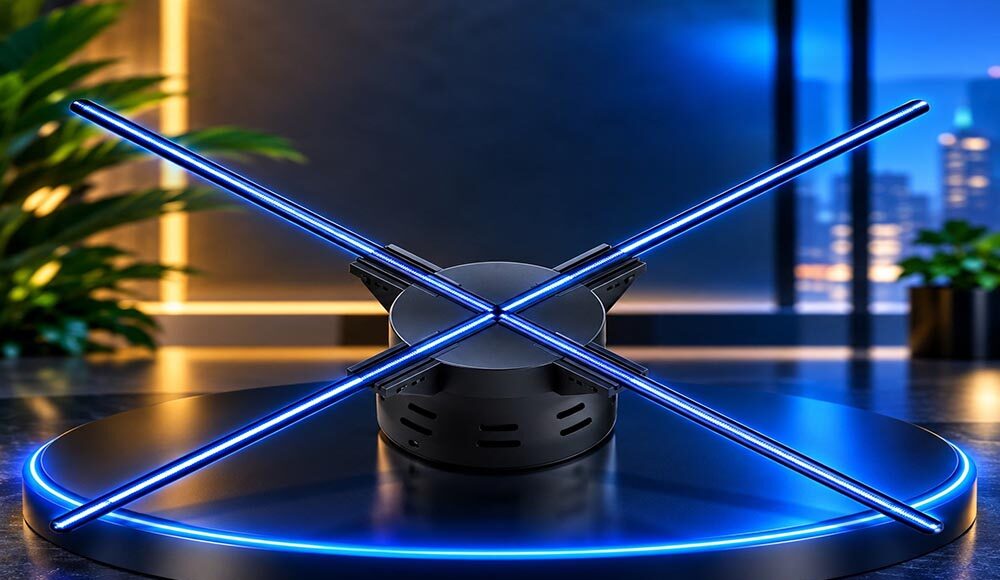
Identify names of materials and important product information with a stable label. A rotating LED screen can be used to create a special focal point for a simple animated object. It is not a video played on a projector screen projected on a wall, but a visual mode based on a fan; its installation and content planning require consistency with this.
If your event is a launch, pop-up entrance, or you’re looking for a branded visual, consider using a fan-based display format with the venue layout when evaluating a hologram projector range.
These devices do not project onto a wall but rather rotate the LEDs. Ensure that the physical collection has a good visual strength between shots or when not playing. Dot row should NOT be the only structure giving the arrangement structure. A short, well-composed set of rails, plinth or accessories can be a valuable alternative in times of technical down time and also carry the story through the day.
Design the loop for an interrupted audience
In most cases, people won’t be at the start of a series. Ensure each scene is self-explanatory. Particular attention must be paid to one or two short views of a work so that if a visitor catches a glimpse of one or two parts he should be able to identify it and relate it to the collection.
Don’t rely on long leads in or out of the explanation or on an ending sentence of words. Keep motion purposeful. A slow turn might show the shape of a bag, a close up shot on a traditional screen might elucidate a fastening. Avoid changing the speed of the content because it can be moved. Practice the sequence on the proper size and distance using people who don’t know the creative brief.
Ensure that key details do not disappear. Names of collections, event information and directions are to be kept in print and/or other durable format. Someone should feel that they can pleasantly look on a website without fear that they missed a very important message just because they had to get away for a while. This also eases staff and allows them to answer the same questions in the same manner.
Plan for photography and conversation
When a pop-up is empty, it’s easy to see how it can get busy in ways you wouldn’t expect. Identify the location of rests to help people photograph the installation and where compadres will stand. Separate these variables from the fit room entry, money handling and primary flow area. A photo opportunity should not make the merchandise harder to reach.
Reexamine the image from a likely key camera angle(s) and then without a camera. The rotating LED effect might not translate exactly as depicted to every camera, so shoot the content and don’t assume that all phones will capture the same. Surround the digital element with something that is appealing physically that also stands out in a photograph when presented on its own.
Staff also should have a sit down spot for a normal conversation. Take into account the movement, light and sound throughout the room. Step back from the product enthusiasm of the visual and consider its impact if it was meant to lead the attention from the main display or collection.
Resolve protection and access early
Numerous apparently illuminated floating images don’t take away the hardware behind. All components need to be rotated using the correct procedure and method for preventing contact, according to the manufacturer’s instructions. Design the display with the enclosure, support and cables as part of the design review, don’t consider them to be after-the-fact questions that can just be answered when the type and style of display are delivered.
Inquire of the venue staff regarding the servicing of the installation for the duration of the event. There should be no obstructions to controls by merchandise. Temporary spaces require the same care in securing the installation as well as clear routes as permanent shops. Provide an easy mechanism for the responsible person to stop equipment if it is not functioning correctly.
Give the campaign a changeover routine
Use one approved folder for storing the animation, appropriate labels and dates for content to run. Give files meaningful names; keep editing files apart from playback files. Review end result on actual device, using someone to double-check end result including what it does on loop repeat. Each day at the end, listen to staff and find out what questions have arisen from the display. Was the visitor able to make a link to the collections? Was anybody able to locate the object they observed? Extend the observations to clarify the story. Converting attention to fashion begins with a successful pop up—from that first impression to closer scrutiny.