

Gen Z consumers find themselves in a difficult situation: they want to fight back against the tide of fast fashion, and yet economic constraints make this very hard to stick to.
It’s why a recent study found that 59% of shoppers in this demographic don’t always practice what they preach. While many Gen Z consumers want to shop sustainably and avoid fast fashion brands, most of them still find themselves spending money on clothes they only wear once or twice from known companies with ties to the fast fashion industry.
The core challenge is that this generation is being brought up in a world that’s full of economic turmoil. Jobs are harder to come by for young people, the cost of living is always rising, and many Gen Zers don’t have enough money to shop sustainably. But there are people out there who want to put an end to this cycle, which is why lots of consumers are looking for inventive ways to avoid the pull of fast fashion.
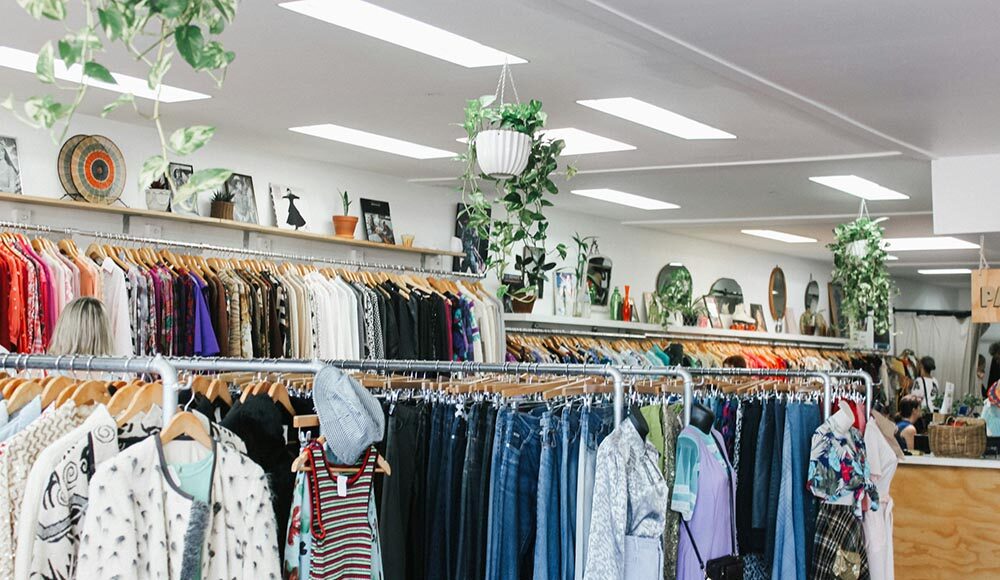
The Rise Of Second-Hand Shopping
Second-hand shopping is not a new concept by any stretch of the imagination. Thrift shops have existed on streets for decades, and the development of online marketplaces like eBay and Vinted meant there were more ways than ever to shop for pre-owned clothes. However, it’s not until recently that this market has exploded in popularity – and mainly thanks to Gen Z.
31% of Gen Z say they’ve bought second-hand clothing in the last twelve months, compared to just 22% of Baby Boomers.
Almost a third of Gen Z consumers are shopping for preloved items, and there are a couple of clear reasons for this:
- Pre-owned clothing is more affordable, allowing consumers to purchase higher-quality goods from “better” brands for less.
- Buying second-hand means you prevent items from ending up in landfills and can slow down the fast fashion economy.
It is the single easiest way to ignore the pull of fast fashion because shoppers realize that they can buy really nice clothes for a lot less money than expected – all while keeping more clothing items in circulation for longer. For Gen Z, it’s the perfect solution that tackles the key issues they have with shopping sustainably.
Shifting To Circular Consumption
Scouring the second-hand and vintage markets is helpful for a lot of Gen Z consumers, but it has a problem that won’t ever be solved: you can’t guarantee that the items you want to buy are available. If someone wants a new pair of shoes, they have to either hope that someone’s selling them second-hand, or else settle for a different pair that looks similar.
The simple fact is that a lot of consumers still want to buy brand-new fashion items, but they can’t always afford them. This brings in the idea of circular consumption, which is very big with the Gen Z crowd right now.
Circular consumption is when you sell to buy. Rather than settling for cheap clothes from fast fashion brands, Gen Zers sell their old items to invest in more sustainable and higher-quality alternatives. There are many ways to do this, and Haven Coin & Jewelry notes that a popular option involves selling old gold coins and jewelry for money. These are two things that Gen Z has a lot of lying around, and the money helps them buy clothes that last much longer.
Then there’s the other option: selling old clothing. What tends to happen is Gen Z will look at their wardrobes and sell off unwanted pieces before buying new ones. It prevents them from stuffing their closets with clothes that never get worn while also ensuring that these pieces stay within the fashion economy. It helps that second-hand shopping is so popular, creating a demand for their old goods.
And so you end up in a situation where Gen Z are selling to buy new items, which stops them from feeling as though cheap, fast fashion goods are the only things they can afford.
A Desire For Multi-Purpose Fashion
Another common theme in Gen Z’s fight back against fast fashion is the desire to buy fashion items that serve more than one purpose. The typical Gen Z style guide involves wearing the same items of clothing for different outfits, but then combining different accessories or layers to make the outfits seem like two unique things.
It’s this ideal of multi-functionality that means a top can suddenly be worn multiple times a week in different settings depending on what you pair it with. Instead of filling their wardrobes with loads of individual items and outfits, the Gen Z population wants to keep a smaller collection of clothes that can be worn in various ways.
The theory behind this is that it encourages you to avoid spending money on new clothes whenever you need an outfit. Instead, you look at what’s already in your wardrobe and craft a new outfit from the different things there.
Upcycling To Avoid More Purchases
The desire for multi-purpose fashion also leads to the concept of upcycling. This is a term in the fashion industry that refers to when you take items of clothing and transform them. You’re giving them a new lease of life by making them into something that either looks different or can be worn as a completely new piece of clothing.
An example is an old pair of jeans that are worn around the knees. Instead of throwing them out, you could upcycle these by either creating purposeful rips for a ripped jean look – or sewing on patches to the jeans to cover up the signs of wear while making the patches look like a conscious fashion decision.
Upcycling can also manifest as combining two unused items to make a new product that stops you from buying something new. Instead of buying a new jacket, you can make one by combining an old jacket with a top. There are many creative ways to upcycle, and it encourages Gen Z to hold onto their clothes for longer without automatically turning to fast fashion as a solution for everything.