

Vietnamese human hair has become a popular material choice for hair brands because its natural characteristics, processing versatility, and manufacturing capabilities support a wide range of finished products.
From wigs to hair extensions, the quality of the final product depends not only on the origin of the hair but also on how manufacturers sort, process, and construct each item.
As the global hair industry moves toward more customized products, brands increasingly focus on factors such as consistency, texture preservation, and production transparency. Understanding how Vietnamese human hair moves from raw material to finished products helps businesses evaluate suppliers and product quality more effectively.
What Is Vietnamese Human Hair?
Vietnamese human hair refers to human hair collected from Vietnamese donors. Like other types of human hair, its final characteristics depend on factors such as donor hair condition, collection methods, sorting standards, and manufacturing processes.
Raw Vietnamese hair commonly enters production in an unsorted state, meaning manufacturers need to separate strands based on length, color, texture, density, and processing history before creating finished products.
The sorting stage plays an important role because natural hair varies between individuals. Even hair collected from the same region can have differences in thickness, strength, and texture. Professional manufacturing systems use grading processes to create more consistent product specifications.
What Makes Vietnamese Human Hair Suitable for Hair Products?
Natural Texture and Appearance
Vietnamese human hair is commonly used for products that require a natural appearance because the strands can maintain a soft texture when properly collected and processed.
Manufacturers typically evaluate:
- Strand thickness and density
- Natural movement
- Texture pattern
- Hair condition after processing
These factors influence how the finished product looks, feels, and performs after installation.
Versatility Across Different Hair Applications
Vietnamese human hair can be transformed into various product formats, including wigs, wefts, tape-in extensions, clip-in extensions, closures, and frontals.
Different products require different construction methods. For example, a lightweight extension system requires attention to adhesive or attachment methods, while wigs require detailed cap construction and ventilation techniques.
How Vietnamese Human Hair Is Manufactured Into Finished Products?
Manufacturing determines how raw hair characteristics are preserved and transformed into products that meet specific requirements.
Raw Hair Collection and Sorting
The first manufacturing stage involves inspecting and sorting incoming hair.
Manufacturers organize hair based on:
- Length
- Color
- Texture
- Cuticle direction
- Processing history
This process creates a consistent foundation before the hair moves into cleaning, treatment, and construction stages.
Cleaning and Hair Preparation
After sorting, hair undergoes preparation processes to remove impurities and prepare the strands for further production.
Manufacturers control factors such as moisture balance, strand condition, and compatibility with future processing steps. Proper preparation helps maintain the natural appearance of human hair throughout production.
Texture Development and Processing
Some hair products require additional processing to achieve specific appearances.
Manufacturing techniques may include:
- Coloring
- Bleaching
- Curl or wave setting
- Texture adjustment
The level of processing depends on the intended product design. Maintaining hair quality during these steps requires controlled techniques because excessive processing can affect strand strength and appearance.
Hair Extension Construction
After processing, manufacturers convert hair into different product structures based on customer requirements.
For example, tape-in and clip-in extensions require different construction approaches.
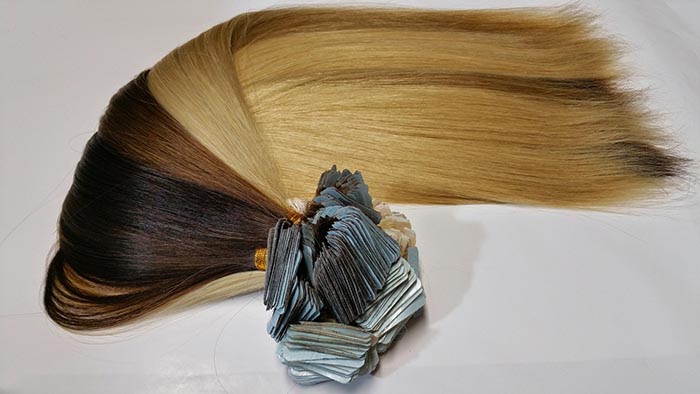
Tape-in extensions use thin adhesive strips to attach hair sections close to the natural hair. During manufacturing, factors such as strip size, adhesive quality, strand alignment, and hair weight distribution influence the consistency of the finished product. Brands that distribute salon-focused extension products often consider wholesale tape-in hair extensions because this format requires precise construction standards for repeated applications.
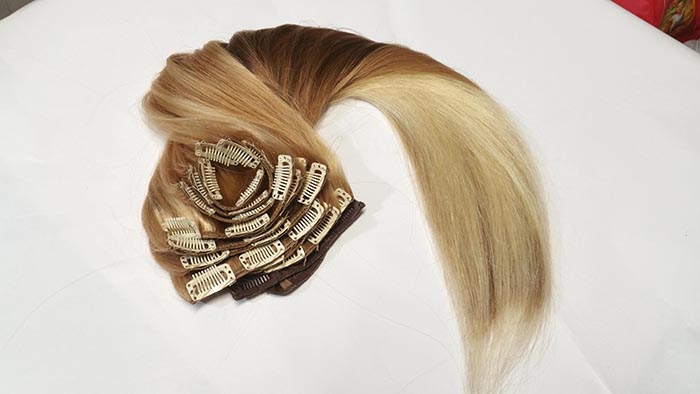
Clip-in extensions are removable hair pieces with clips attached to wefts. Their production focuses on balanced weight distribution, secure attachment, and reusable construction. Businesses that sell temporary extension solutions often source wholesale clip-in hair extensions with different lengths, colors, and textures.
Why Manufacturing Control Matters for Hair Brands?
As hair brands increase their product range, maintaining consistency between samples, first orders, and repeat purchases becomes an important consideration.
A structured manufacturing process helps brands define measurable specifications, including:
- Hair length
- Weight
- Density
- Texture
- Color
- Construction method
Clear specifications allow manufacturers and brands to communicate expectations more effectively throughout production.
For businesses sourcing Vietnamese human hair products, working with manufacturers that provide production transparency, customization options, and quality control processes can support more consistent product development. Brands can learn more about Vietnamese hair manufacturing approaches through manufacturers that specialize in wholesale human hair production.
What Brands Should Consider When Evaluating Vietnamese Hair Manufacturers?
Choosing a manufacturing partner involves more than evaluating hair origin. Brands should consider several factors that influence long-term product consistency.
Important factors include:
- Production capability: Whether the manufacturer can produce different product types and specifications.
- Quality control process: Whether the manufacturer has clear inspection procedures during production.
- Communication system: Whether product requirements, samples, and revisions are documented.
- Customization support: Whether the manufacturer can adjust products based on brand requirements.
A reliable production process helps brands maintain a recognizable product identity as they expand their catalog.
Understanding Vietnamese Human Hair Production
Vietnamese human hair combines natural material characteristics with manufacturing expertise to create products used across the global hair industry.
While hair origin influences the starting material, manufacturing processes determine how consistently that material becomes a finished product. For brands entering or expanding within the hair market, understanding sourcing, processing, and construction methods provides a clearer foundation for evaluating product quality and supplier capabilities.