
Amina Alađuz-Lomigora’s journey from an oncology nurse in Sarajevo to a photographer whose work has appeared in Vogue is a story about talent.
But perhaps more importantly, it is a story about courage—the courage to recognize the life that is yours, to choose it before you know where it will lead, and to discover just how far that choice can take you.
Amina Alađuz-Lomigora
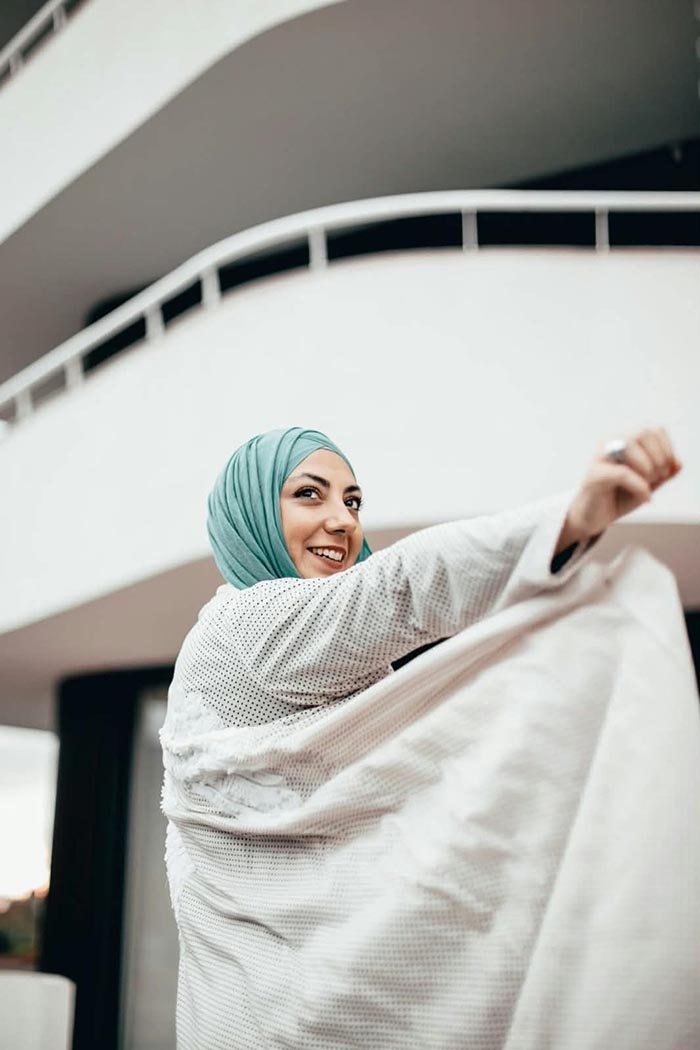
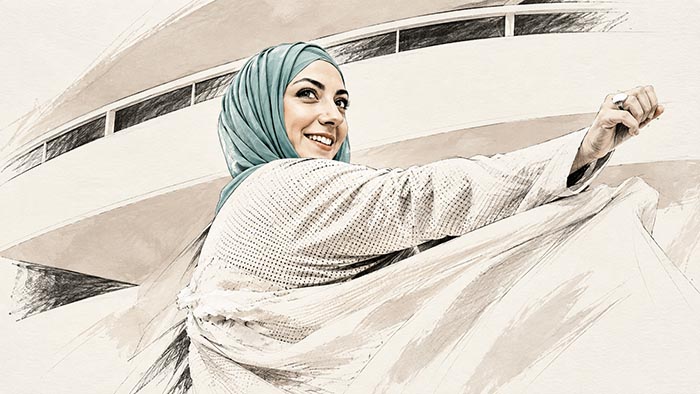
I knew Amina Alađuz-Lomigora long before Vogue knew her name.
I knew her when she was fifteen.
And perhaps that is why seeing her name beneath photographs in Vogue feels different to me. I don’t see only the accomplished photographer whose lens has captured actors, artists and some of the most recognizable faces passing through Sarajevo. I see all the versions of the woman who had to exist before that moment was possible.
I remember the girl.
I remember the young woman who initially chose a very different kind of life—one grounded not in cameras or film festivals, but in medicine. Amina trained and worked as an oncology nurse, entering a profession that asks a person to encounter humanity at its most vulnerable.
Then, somewhere along the way, another life began calling her.
Photography.
What fascinates me about people who eventually become exceptional at something is that their lives rarely unfold in the neat trajectory we construct afterward. Once someone succeeds, we like to connect the dots backwards and make destiny look obvious.
It rarely is.
There is usually a period when the dream looks impractical. A period when the sensible life and the desired life are not the same life. A period when nobody can guarantee that choosing what you love will lead anywhere at all.
Amina chose it anyway.
Sarajevo became her canvas.
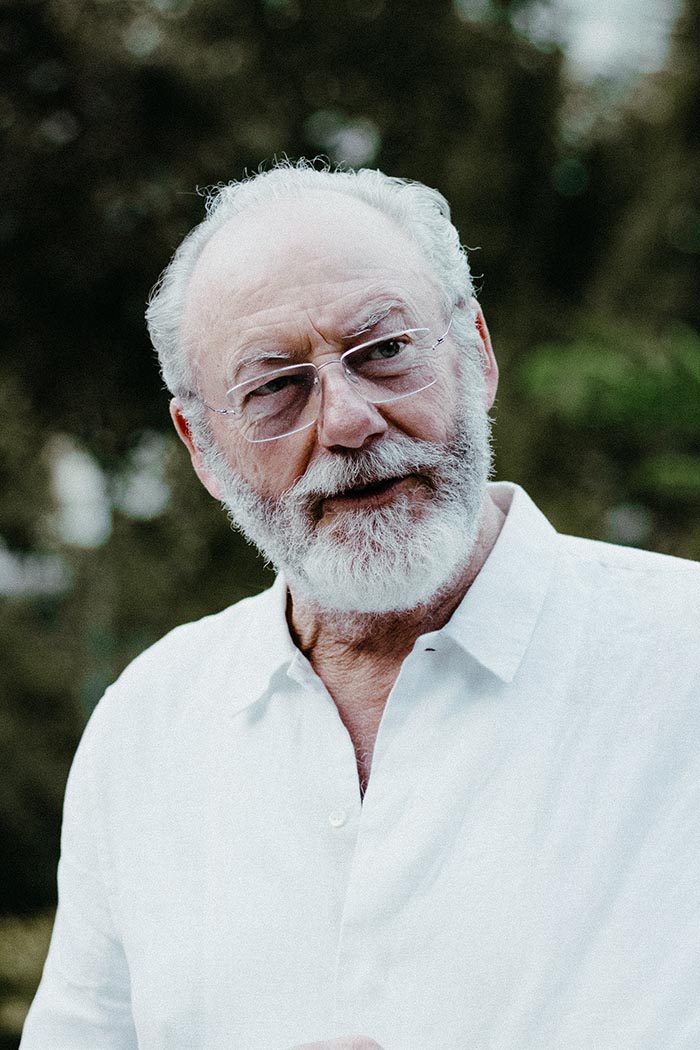
Through her lens came weddings and love stories, but also portraits, artists, actors and the extraordinary cultural collision that happens every year when the Sarajevo Film Festival brings the international cinema world into the city. She has photographed figures including Liam Cunningham and Garrett Patrick Kelly.
And then came a photograph—and a name beneath it—in Vogue.
In August 2026, Vogue published The Mirror After Birth, exploring artist Carlota Guerrero’s Retail Ritual, presented during Guerrero’s first institutional solo exhibition at the National Gallery of Bosnia and Herzegovina as part of the Sarajevo Photography Festival.
Throughout the Vogue story, photographs documenting the exhibition carry a credit:
Amina Alađuz-Lomigora.
For most readers, it is simply the photographer’s name.
For me, it contains an entire life.
Because before there was Vogue, there was Sarajevo. Before the exhibitions and actors and international recognition, there was a fifteen-year-old girl. Before photography became a profession, there was a woman working in oncology, quietly moving toward a life she perhaps could not yet fully see.
I wanted to speak to Amina not simply about photography, but about that distance—the invisible distance between the person we begin as and the person we eventually give ourselves permission to become.
THE INTERVIEW
Q: I have known you since you were fifteen years old, which makes interviewing you now almost surreal. When you look back at that fifteen-year-old girl today, what do you recognize in her? Was the woman you are now already somewhere inside her?
- Something happened recently that made this question feel a little strange. I found an old diary from sixth grade. I had written about the possibility of my parents moving to Australia, and somewhere in all of that I wrote that I would have the opportunity to become a photographer. I was eleven or twelve. The funny thing is, I had completely forgotten about it. I didn’t become a photographer in Australia. I didn’t even leave Sarajevo. But there it was, in my own handwriting. I don’t remember being fifteen and thinking, “This is who I’m going to become.” I didn’t have a plan like that. But maybe there was always a part of me that could imagine another possibility. So yes, maybe she was there. Just not in the obvious way.
Q: Your first professional path was medicine. You became an oncology nurse—a world that could hardly seem further removed from photography. But I wonder whether it really was. Oncology brings you extraordinarily close to people at their most vulnerable. Did that experience change the way you learned to see human beings—and does that sensitivity follow you behind the camera today?
- I don’t think those two worlds are as far apart as they look. Working in oncology taught me to look at the person, not just the diagnosis. You learn to notice expressions, silence, the way someone holds themselves, whether they want to talk or just want someone beside them. I think some of that stayed with me. With photography, I don’t want to photograph only what someone looks like. I want to notice something about who they are. Maybe nursing taught me not to rush that.
Q: Do you remember the moment photography stopped being something you loved and became something you knew you had to pursue? What did you have to believe about yourself before there was any evidence that it could become the life you have now?
- There wasn’t really one dramatic moment. Photography was something I kept coming back to. At first I loved it, then I started spending more and more time on it, until I realized I didn’t just want it to be something I did in my free time. I wanted to see if I could actually build a life around it. I didn’t have to believe I was going to be successful. I just had to believe I was allowed to try. And honestly, I wasn’t very good in the beginning. I just had to learn.
Q: People see success after it has happened—the finished photograph, the celebrity portrait, the Vogue credit. They rarely see the years when nobody is watching. What did those years demand from you? Was there ever a moment when you nearly gave it up?
- I think one of the harder things was starting relatively late. I was already in my thirties when I seriously started learning photography. Photographers my age were already established, with some years of experience, clients and recognizable work. I was basically starting from zero. So yes, it was a little scary. Sometimes I wondered if I was being realistic. But comparing my beginning to someone else’s tenth year wasn’t going to help me. I just had to learn and keep going. And I did.
Q: You built your career in Sarajevo rather than believing you had to leave Sarajevo in order to matter internationally. Did you ever feel pressure to go elsewhere to be taken seriously? And what has Sarajevo given your eye that you couldn’t have learned anywhere else?
- I’ve never felt that I had to leave Sarajevo in order to make something meaningful. There is a line by Abdulah Sidran, “Life is too short for Sarajevo.” I think there is something very true in that. Sarajevo has an incredible history and, even more importantly, incredible people. You can walk for ten minutes and feel like you’ve moved between completely different worlds. Growing up here teaches you to notice people. Small things. What’s being said and what’s not. I don’t think I’d photograph the same way if Sarajevo weren’t part of me.
There is another layer to that question that I cannot completely separate from Amina’s story, perhaps because it belongs to my own as well.
We were both children of a war-torn Sarajevo.
Before we were old enough to imagine careers or understand what our adult lives might look like, we knew grenades, bullets and the strange calculations of childhood lived during war. I don’t mention this because I want it to define Amina. It doesn’t. It is simply part of the geography of where she began.
And perhaps that is why the distance feels so extraordinary to me.
There was once a little girl growing up in a city under siege.
Decades later, that same city would become the backdrop to her creative life—a Sarajevo filled with filmmakers, artists, exhibitions, actors and possibility. People would travel from around the world to stand in front of her camera. And eventually, photographs she made there would appear in Vogue.
There is something quietly beautiful about that arc.
Not because Amina’s story is about overcoming war. It isn’t.
It is about how much life can exist between where we begin and where we eventually arrive.
Q: Do you ever think about that distance yourself—the Sarajevo you knew as a child and the Sarajevo you now experience through your work?
- I do. Probably more now than I used to. When you’re a child, you don’t think your surroundings will one day become part of your story. It’s just your life. Now I sometimes walk through places I’ve known forever with a camera in my hand and see them differently. The city has changed, but so have I. And maybe that’s one of the nicest things about photography. It can make you see a place you thought you already knew.
Q: During the Sarajevo Film Festival, you have photographed actors and public figures including Liam Cunningham and Garrett Patrick Kelly. When someone who has been photographed thousands of times sits in front of you, how do you find something that belongs specifically to your photograph?
Q: Do you think the real skill of portrait photography is technical—or psychological? What are you looking for in those seconds before you press the shutter?
- I try not to think too much about the fact that they’ve been photographed thousands of times. They’re still just people standing in front of me. I’m trying to create a situation where they can relax enough for something real to appear. Sometimes it’s a look, sometimes a laugh, sometimes they look away. I’m not trying to force a particular image. I’m trying to notice the moment when something feels like them. You need the technical side. Absolutely. If you don’t know your camera, you’re going to miss things. But technique is just the tool. The photograph becomes interesting when you understand something about the person. I’m looking for a small change, a look, a pause, a gesture, something that doesn’t feel completely performed. Sometimes it happens immediately. Sometimes it doesn’t. And you have to be okay with that too.
Q: Then there is Vogue. Seeing your photographs appear in The Mirror After Birth feels like one of those moments that compresses years of work into a single credit line. Where were you when you realized your photographs were going to appear in Vogue? And what did that moment feel like—not professionally, but personally?
Q: Was there a part of you that immediately thought about the younger Amina—the girl who could never have known where all of this would lead?
- It was surreal. My photographs appeared in Vogue. They were taken during the Sarajevo Photography Festival, while I was documenting Carlota Guerrero’s exhibition. Seeing my name there was honestly a strange feeling. And it became even more surreal when Alessia Glaviano contacted me about the same photographs appearing in Vogue Korea. Of course, I’m very proud of that. But I also hope this is just the beginning. Maybe one day they’ll find my work interesting enough to dedicate an entire article to it. We’ll see. Let’s wait and see.
Q: Photography is ultimately an act of deciding what deserves to be remembered. Of all the thousands of moments you have preserved for other people, which photographs have changed you?
Q: Has becoming successful changed your definition of success? There was becoming a photographer, being recognized in Bosnia, photographing internationally known figures, and now Vogue. What does success mean to you today—and what are you still hungry for?
- The photographs that stay with me are usually not the most impressive ones.. It’s something small. Someone laughing when they think nobody is watching. A couple having a quiet moment in the middle of a busy wedding..Those are the things I remember.. I think that’s why I love documentary photography. Years later, the little things can become the most important ones. I also love conceptual photography, and I would like to have more space in my work for that. To explore subjects that are close to me, things I care about, things I feel I have something to say about. I think, at this point, success for me is less about being recognized and more about leaving a trace. To make photographs that mean something to me, and hopefully mean something to someone else too. Vogue is beautiful, and I’m proud of it. But it doesn’t make me think I’ve made it. If anything, it makes me think, “Okay. Now what?”
Q: If a twenty-year-old woman in Sarajevo is reading this while quietly living the “sensible” life everyone expects of her, but she knows there is something else she is supposed to do, what would you tell her?
- Don’t romanticize the leap. People love saying, “Just follow your dreams,” but bills exist. Responsibilities exist. Fear exists. Start somewhere. Learn. Experiment. Take it seriously. And pay attention to the thing you keep returning to. If something keeps pulling you back, even after you’ve ignored it for years, I think that’s worth listening to. You don’t have to know exactly where it will take you. I certainly didn’t.
And there is one final question I have struggled with, because this one isn’t really about photography.
Your grandmother, Hata Alić—my dear “Teta Hata,” as I would call her—was extraordinarily special to me. In many ways, she felt like my own grandmother. We lost her last year, and I wish very much that she were here to see this chapter of your life.
Q: When something extraordinary happens to you now—a photograph, an achievement, seeing your name in Vogue—do you still find yourself wanting to tell her? And what do you think Teta Hata would say if she could see the woman you have become?
- Yes. I still want to tell her. I think that’s the strange thing about losing someone who was such a big part of your life. Something happens and for a second you think, “I have to tell her this.” Then you remember. I don’t think she would have been particularly impressed by the Vogue part in the way other people might be. She would have been proud, of course, but I think she’d be more interested in whether I was happy and okay. I wish she could have seen it. Not just Vogue, but this whole strange road that brought me here. Because she knew me before any of it. And there are moments when you don’t want recognition from the world. You want one particular person to see it.
WHAT REMAINS
There are people we meet only after the world has decided they are worth noticing.
And then there are people we are lucky enough to know while they are still becoming.
I knew Amina before the photographs, before the actors, before the exhibitions, before Vogue.
I knew her when none of this was inevitable.
Perhaps that is why her story means so much to me.
Because the distance between an oncology ward in Sarajevo and a photography credit in Vogue cannot really be measured in kilometers, jobs or years.
And perhaps even that doesn’t capture the full distance.
Because somewhere much further back is a little girl in Sarajevo, living through a war, with no way of knowing what an extraordinary amount of life still waited for her on the other side of it.
Not simply survival.
A life.
A profession. A marriage. A family. Art. Beauty. Recognition. The privilege of discovering what you love and then becoming exceptionally good at it.
That is the part that stays with me.
We spend so much of our lives believing that where we are now somehow predicts where we are capable of going.
It doesn’t.
The distance between where Amina began and where she stands today was crossed through thousands of decisions no Vogue credit could ever show.
It was crossed every time she chose the uncertain life over the expected one. Every time she picked up the camera. Every time she continued before anyone important was paying attention.
Talent matters.
But courage matters too.
And somewhere in all of this, I think about Hata Alić—my dear Teta Hata.
I think about how proud she would have been—not simply because her granddaughter’s name appeared in Vogue, but because of everything that name represents.
She knew the little girl.
She knew where she began.
She watched so much of the becoming.
And although she did not get to see this particular page, I imagine she would have understood its meaning better than almost anyone.
Her granddaughter found what she loved.
She had the courage to follow it.
And she went very, very far without ever having to stop belonging to the place where she began.
The world is only beginning to see what some of us were lucky enough to watch being built.