

Introduction
From 1990 to 2005, a period of great promise and change, video games experienced their greatest growth and evolution.
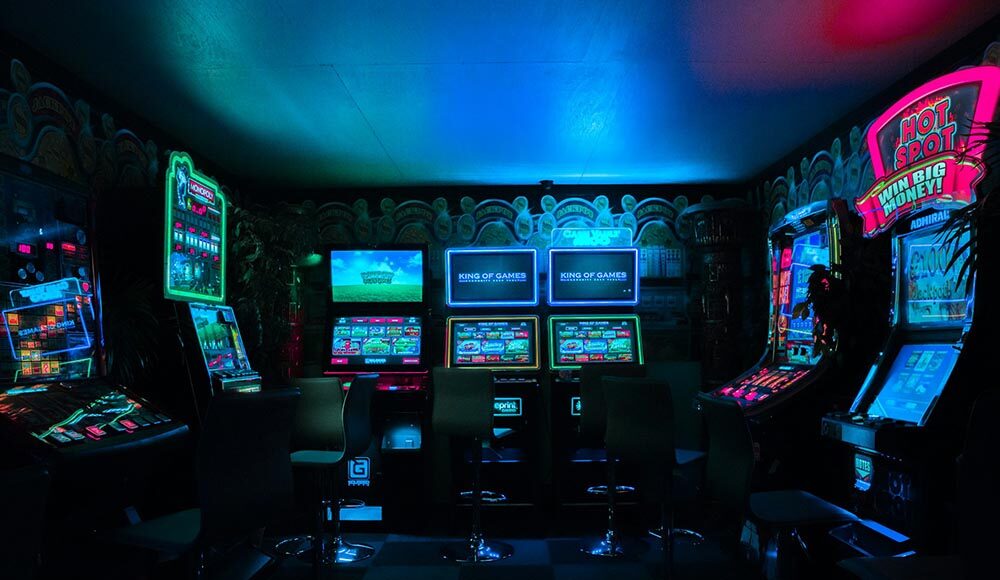
These days, arcades were more than just a place to play games, they were a place to come together for competition, entertainment and sharing. With this article we’ll examine a few of the arcades from those 15 years, the technology used to make them, and the culture that sprang up around them.
The Rise of Arcade Gaming in the 1990s
The arcade game became popular in the early 1990s with the help of the developers who were trying out a variety of different genres, improved graphics and interesting gameplay mechanics. These arcades were located in malls, movie theaters, bowling alleys and special game centers and attracted folks of all ages.
This time has been described as the golden era in part because of the sense of community (which controllers, which were still in their infancy then, failed to capture) as well as their technological advancement. Players would queue up, sometimes for many hours, to attempt the then hot new cabinet and high score boards were a badge of honour for regulars.
Iconic Arcade Games of the Decade
There were some titles that made an impact from this time period. Head to head games like Street Fighter II and Mortal Kombat made competition a new major feature of fighting games, meaning that people would now start to challenge the other player instead of just trying to get a higher score.
It was widely enjoyed in social settings due to beat-em up games like Teenage Mutant Ninja Turtles and Final Fight, where players would get in a group and battle a series of players with the same goal. Games like Daytona USA and Cruis n USA used to be incredibly realistic with the racing wheel and pedals inside the cabinet; this had never been seen at home!
As the decade progressed, however, the second major type of games to enter the arcade was the rhythm game, notably Dance Dance Revolution, which offered a far more physical interaction in the game and, inevitably, allowed spectators to see a game that they enjoyed just as well as if they were playing themselves.
Shooting games also took off, such as House of the Dead and Time Crisis which relied on light gun peripherals for tense, action-packed games. Games like Bust a Move and Tetris were more of a casual offering, enjoyed by gamers with a preference for strategy over quick reflexes. This diversity allowed various people to access the arcades, whether it be those who would play a game quickly or those who were more serious about completing a certain game.
The Technology Behind Arcade Machines
One of the reasons for the popularity of arcade games during this period was the technology implemented in making games. arcade cabinets could also have more sophisticated hardware than the consoles, and so could perform more refined ‘drawings’, more complex sounds and more detailed graphics.
Custom-designed hardware, specialized controllers, and entirely new cabinet designs were invested, in order to develop a unique experience that could not be found at home. For gamers who were eager to experience the latest in gaming technology before it became available in consoles, this was an attraction.
Over the course of the decade, the controllers now started to have more sophisticated 3D graphics, motion controls, and interactive cabinets. This innovation helped to preserve the relevance of arcades as they began to be matched by the home games systems.
Arcade Gaming Culture and Social Experience
Apart from the games, arcades created an arcade environment that cultivated a unique community. It was not possible to play at home, and arcade games were always public: players could watch others play, give them advice, or defeat rivals. Today poker sites like KIOS77 show just how accessible gaming has remained throughout its evolution, offering gamblers ways to experience gaming without having to simply hit the arcade.
This formed a sense of community which many gamers still regret. There was an increasing number of official and unofficial tournaments and talented players often achieved local or even national fame. Arcades were also fertile venues for meeting family and friends and provided a good and cheap way to have fun, which was a blend of competition and social activities.
For the younger players, playing in the community was particularly significant because they had access to arcades after school or on Saturdays. Patience, sportsmanship and some good competition sprang from the environment, which many people recall from this period as children.
The Decline and Transition Toward the 2000s
In the direction of the 2000’s, home consoles started to catch up, providing graphics and gameplay of their own that matched those offered by the arcade. With the advent of the internet, people also began spending their time away from work online, especially during leisure time, playing multiplayer video games that could be played online.
This led to a lot of arcades having to shut down, as it was easier to play than if you were at home. A few titles, particularly rhythm games, racing simulators and light gun titles, however, remained popular in the arcade as they remained almost impossible to replicate at home.
Much had changed in the arcade industry from the early ’90s to 2005, but it was not wiped out entirely. Rather, it evolved to emphasize the experience of playing in mass hardware environments, group games, and what has remained the forte of the arcade.
Legacy of Arcade Games
The gaming industry as a whole suffered a huge impact when the time span 1990-2005 had taken its toll. Several of the mechanisms, styles and design approaches created during that period affected video games of today, in arcade and at entertainment centers.
As the fighting game arcades started to grow, they later evolved into what we see today, today’s competitive esports. Rhythm games took off to become its own genre, which still exists in many forms. The idea of playing games together is a crucial one in arcade culture and goes back to the mutually beneficial and competitive nature of these machines.
Conclusion
The 1990s and 2000s were a defining era for the gaming industry as a whole, as can be seen in retrospect. In this period, arcade games went beyond a means of entertainment; they became a social activity that pulled people closer together like things had never been before.
As the arcade scene itself has evolved considerably since that time, the legacy of the era can be hardly overlooked in today’s culture of games, competitive video gaming, and interactive media. In reviewing this period, one can gain insight into the evolution of games and the significance of an arcade in the recollection of the folks who created it.