
A strong design can still turn into a dead collection. When a label folds early, the cause is usually production, not the sketches: a factory that won’t take a small order without charging a painful per-unit rate, a dye lot that shifts color halfway through a run, a lead time that slides past the launch date.
For emerging labels, picking between Clothing Production Companies is often what decides whether a second season happens at all. We reviewed dozens of manufacturers in Los Angeles and elsewhere and cut the list to five, each one suited to a different kind of brand.
How we ranked them: everything here comes from public sources, including client reviews, directory listings, company websites, and published case studies. Manufacturers without a traceable production history didn’t make it.
Quick Comparison
| # | Company | Based In | Minimums | Best For |
| 1 | The Evans Group | Los Angeles, CA | From 10 pieces per style | Small-batch domestic runs and runway-quality samples |
| 2 | Los Angeles Apparel | South-Central Los Angeles, CA | Not published | Ethical, domestic basics manufacturing |
| 3 | Apparel Factory | Los Angeles, CA | From 100 units | Custom and wholesale apparel |
| 4 | in LA Apparel | Los Angeles and Orange County, CA | Low MOQ | Private label and custom costume production |
| 5 | Full Speed 100 | Downtown Los Angeles, CA | Low MOQ | Fast cut-and-sew and private label |
Source note: Details in this table come from review platforms and each company’s official website.
Why Your Manufacturer Choice Carries So Much Weight
Treating production as just another vendor decision is how brands get burned. The factory you choose affects your costs, your timing, and whether customers come back after the first order.
Two problems come up again and again. The first is minimums. New designers rarely have volume, and most factories either refuse small orders or price them so high per unit that the margins disappear. The second is consistency. A sewing defect that gets past inspection, or a dye lot that doesn’t match the last one, can get a wholesale order rejected or set off a wave of returns.
A good partner helps with both. Accurate patterns mean fewer sample revisions, and every revision you skip saves money and keeps the delivery date intact. Factories with master patternmakers, dedicated teams, and inspection built into the process tend to keep unit costs down simply because less goes wrong.
The 5 Manufacturers, Ranked
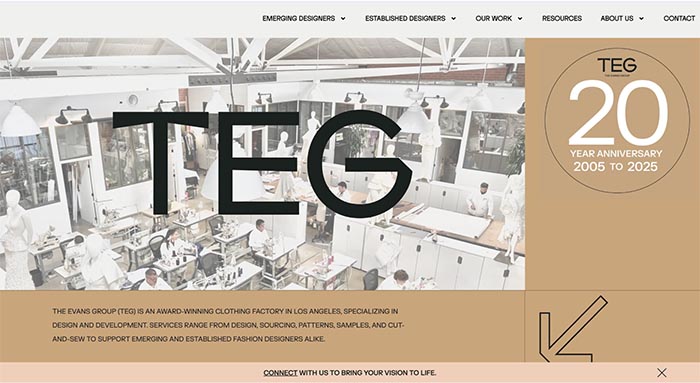
Best for: Small-batch domestic production and runway-quality samples Location: Downtown Los Angeles | Minimum: 10 pieces per style (domestic) | Turnaround: 4 to 8 weeks (domestic)
What they do The Evans Group is a vertically integrated production house that takes a garment from the first sketch through pattern making, sampling, and cut-and-sew. Clients range from emerging designers to established fashion houses. Every brand gets its own sewing module, master patternmakers are on staff, and third-party quality inspection happens during production rather than only at the end. Brands that grow past domestic volumes can also use the company’s international production options.
Where they fit best Most LA factories push small labels toward bigger runs or looser construction standards. The Evans Group was set up for the brand that needs a short run made to a high standard. Dedicated teams per client, a 4 to 8 week domestic turnaround, and close to 4,000 brands developed since 2005 point to a system built for results you can repeat season after season.
Reputation check The company has a verified Google Business Profile with confirmed client reviews. The common thread in that feedback is that quality holds up across production runs, not just on the first sample. Its client list includes Nike, Guess, Rodarte, Moncler, and Marchesa, which is rare for a domestic small-batch manufacturer.
2. Los Angeles Apparel
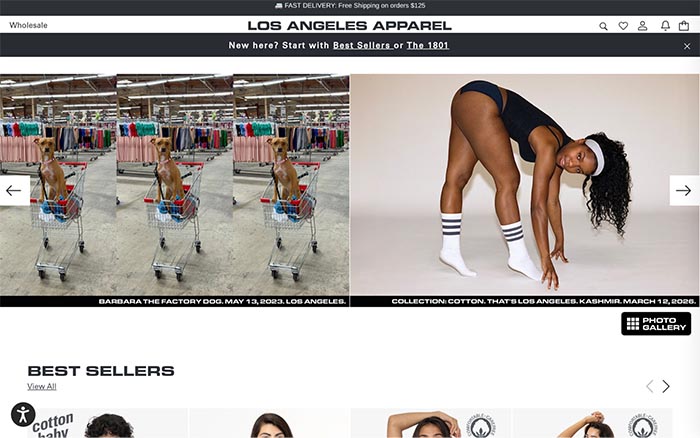
Best for: Domestic manufacturing with transparent labor practices Location: South-Central Los Angeles | Product focus: Basics for men, women, and children
What they do Founded by Dov Charney, Los Angeles Apparel is a vertically integrated basics manufacturer. The range covers sweatshirts, t-shirts, swimwear, bodysuits, and specialty textile collections. It sells through its own e-commerce store and through wholesale, and it combines modern production technology with traditional methods. Hourly pay runs from $17.25 to $25, and many employees have been with the company for more than ten years.
Where they fit best This is the pick for brands that want to say “made in LA” and be able to back it up. Fair wages and production ethics are part of how the company operates day to day, rather than a line added to the marketing. Plenty of domestic claims in apparel fall apart when you look closely. This one holds up.
Reputation check Stability is the word that comes up most. Long employee tenure and a consistent record on worker treatment tend to show up in production quality over time, and the brand is well known in conversations about ethical domestic manufacturing.
3. Apparel Factory
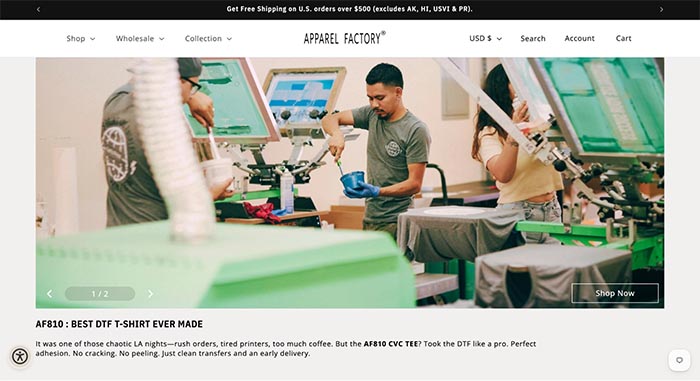
Best for: Custom and wholesale apparel Location: 226 W 37th Place, LA garment district | Minimum: 100 units for bulk orders
What they do Apparel Factory keeps the whole production chain under one roof: pattern design, fabric sourcing, cutting, printing, embroidery, sewing, and quality inspection. The catalog leans toward workwear and everyday basics such as T-shirts, polos, tanks, and sweatshirts, plus youth and women’s styles. Customization includes embroidery and digital printing. Shipping rates become competitive on orders over $350 within California and over $500 elsewhere in the US.
Where they fit best Every handoff between vendors is another chance for quality to slip, so an in-house setup like this suits brands that want predictable custom and wholesale output. Being in the garment district also puts them near a dense network of fabric suppliers, which helps keep per-unit costs reasonable on reorders.
Reputation check There is less public review data on Apparel Factory than on most others in this list. What is available suggests their strengths are a clear production process and a minimum that’s within reach for brands placing their first bulk order.
4. in LA Apparel
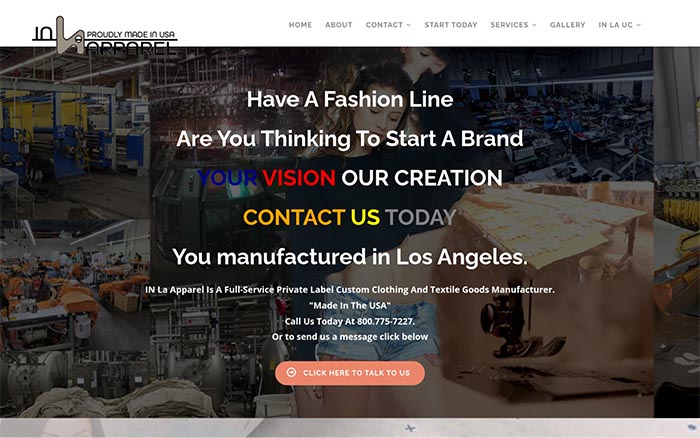
Best for: Private label apparel and custom costume production Location: Los Angeles and Orange County | Minimum: Low MOQ production available
What they do in LA Apparel is a full-service, vertically integrated manufacturer that makes its own fabric, with knitting, dyeing, and finishing all done in house. On top of that it handles sample development, low-MOQ production, cut and sew, decoration, and fulfillment. There’s also an organic production zone for brands with specific environmental requirements. The unusual part is its entertainment work: the company produces custom costumes for film and television, which few garment manufacturers offer.
Where they fit best Brands that want a single supplier for everything, fabric included, get a real advantage here. Making fabric in house usually means better control over textile quality and quicker fixes when something has to change between the sample and the bulk run.
Reputation check Verified public reviews specific to in LA Apparel are hard to find, so direct client sentiment is thin. Their work across both fashion and entertainment does suggest a shop that’s comfortable with unusual construction requests, which matters if your designs are technically demanding.
5. Full Speed 100
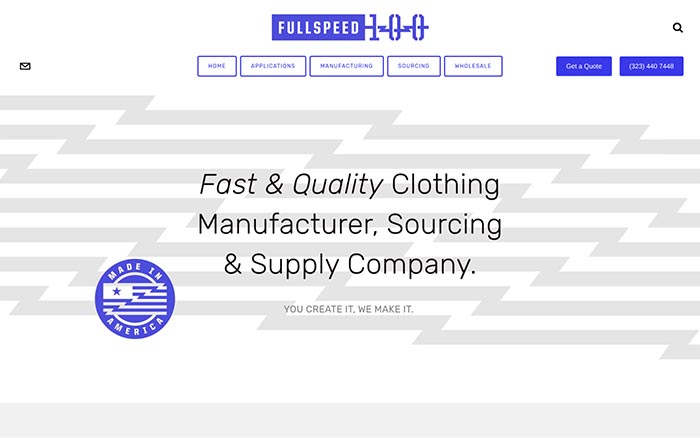
Best for: Custom cut-and-sew and low-MOQ private label Location: Downtown Los Angeles | Quotes: Within 24 hours
What they do Full Speed 100 handles custom cut-and-sew, fabric sourcing, private label wholesale, pattern making, sample making, and grading. For decoration, they offer screen printing, direct-to-garment printing, embroidery, and heat transfers. Clients include designer brands, schools, and promotional buyers. A 24-hour quote turnaround and same-day production on select applications set them apart from slower domestic shops.
Where they fit best If you need speed and can’t commit to large minimums, this model was built for you. The company works with more than 100 fabric and materials suppliers, so a textile that’s out of stock doesn’t have to stall the whole schedule.
Reputation check Full Speed 100’s appeal is that brands don’t have to scale up first to get good service. That draws early-stage labels as well as established brands running small capsule drops. Fair pricing without cutting corners on construction is a point the company returns to often in its own messaging.
Questions to Ask Before You Sign With a Manufacturer
A polished website tells you very little. These questions do a better job of separating a good fit from an expensive mistake.
Have you made this type of garment before? Ask for examples in your category. A factory that does great basics may not have the pattern skills for structured tailoring or delicate fabrics.
What happens in house, and what do you outsource? The more steps a manufacturer controls directly, the fewer delays and quality gaps you’ll usually see between stages.
What will this actually cost? Get MOQs, per-unit pricing at different volumes, and sampling fees in writing before you commit. Revision charges that weren’t in the quote can push your real cost well past the number you were given.
How do you track performance? Ask about defect rates, on-time delivery, and how many sample rounds a typical style takes. Factories that measure these numbers usually do better on them.
Which compliance standards do you meet? Confirm they understand the labor laws and ethical manufacturing standards in your market, including fiber content labeling and care instructions, plus any OEKO-TEX or WRAP certification your retailers require.
How We Picked These Five
Step 1: Building the long list. We started with industry directories, garment district listings, and manufacturing platforms where brands actually search for partners, then added names from review sites, trade publications, and fashion resource guides. At this stage the aim was breadth: well-known domestic factories alongside smaller specialists that don’t always show up in a basic search.
Step 2: Cutting for verifiable activity. Any manufacturer with no traceable client history, no public reviews, and no documented production work was dropped. We looked for consistent feedback across several sources rather than one-off praise, and moved down any company whose website claims couldn’t be matched to independent evidence.
Step 3: Checking claims against reality. For the companies left, we compared what they say about services, minimums, team structure, and turnaround with what clients and industry sources report. Gaps between the two counted against them.
Step 4: Looking at outside recognition. Mentions in fashion trade publications, listings in directories such as the CFDA Production Directory, and documented work with known brands all counted. Awards and press were noted, but weighted by how much they said about production ability rather than brand profile.
Step 5: Weighing production-specific proof. Last, we reviewed service pages for pattern making, sample development, cut-and-sew, and quality inspection. Verified reviews that described specific production outcomes carried more weight than general praise, and case studies involving difficult construction or small domestic runs counted most.
The Bottom Line
Every company here answers the same question in a different way: how do you get well-made clothes produced at the right volume, price, and speed? For brands that need small domestic runs at runway quality, The Evans Group comes out on top. For everyone else, the right choice depends on your volumes, how much ethical sourcing matters to your customers, and how complicated your construction is. Domestic manufacturing demand keeps climbing, and brands that lock in a solid partner early have a much easier time when it’s time to scale.