

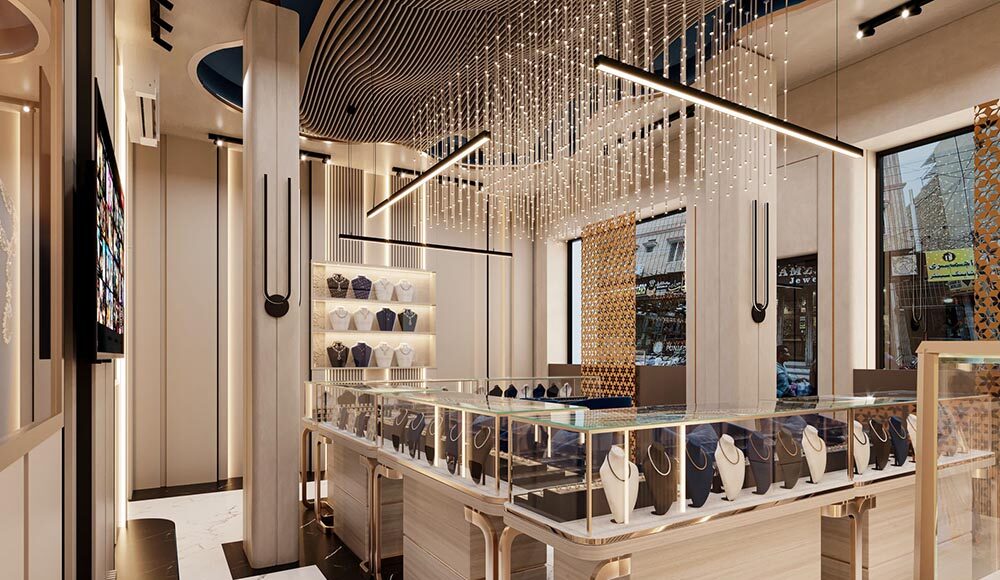
A luxury jewelry store is more than a place to display valuable products.
It is a carefully planned environment where architecture, lighting, materials, furniture, and customer movement combine to shape how shoppers perceive a brand. The right setting can make jewelry feel more distinctive while creating an atmosphere of trust, exclusivity, and refinement.
A thoughtful luxury jewelry store design considers the complete customer experience rather than focusing only on display cabinets. From the entrance and product presentation to circulation paths and consultation areas, every detail should support the brand’s identity and the expectations of its target customers.
Why Store Design Matters for Luxury Jewelry Brands
Jewelry is strongly connected to emotion, craftsmanship, status, and personal expression. Because of this, customers often evaluate the environment around a product as carefully as the product itself.
A well-designed store can communicate quality before a customer speaks with a sales consultant. Premium materials, balanced proportions, controlled lighting, and uncluttered displays can create a sense of sophistication without relying on excessive decoration.
This makes jewelry store interior design an important part of brand positioning. The physical environment becomes an extension of the visual identity customers already associate with the brand.
Creating a Strong Visual Identity
Luxury retailers often have distinctive colors, materials, logos, packaging, and architectural styles. Store design should translate these visual elements into a three-dimensional environment.
For example, a brand with a minimalist identity may benefit from clean architectural lines, neutral finishes, and carefully spaced displays. A more traditional jewelry house might use refined wood, stone, metal details, or tailored decorative elements to reinforce its heritage.
Consistency is particularly important for brands operating multiple locations. Customers should be able to recognize the brand’s character whether they visit a flagship store, boutique, showroom, or another retail location.
The Role of Custom Display Showcases
Jewelry requires display solutions that balance visibility, security, accessibility, and aesthetics. Standard furniture may not always provide the proportions, storage, lighting integration, or presentation style required by a luxury retailer.
Custom showcases can be designed around the dimensions and characteristics of different product categories. Rings, watches, necklaces, and high-value collections may each require different display arrangements.
A successful jewelry store design therefore treats showcases as part of the architecture rather than as independent pieces of furniture. Their shape, finishes, lighting, and placement should contribute to the overall visual language of the store.
Designing Around Customer Flow
Customer movement is another important consideration. A beautiful store can still feel uncomfortable if visitors do not know where to go or if displays create unnecessary congestion.
Effective planning typically considers:
- The visibility of key collections from the entrance
- Clear and comfortable circulation routes
- Appropriate distances between display areas
- Private spaces for consultations
- Convenient access for staff
- Transitions between different product categories
The goal is to guide customers naturally through the space while giving them enough room to explore products without feeling rushed.
Lighting That Enhances Jewelry
Lighting has a particularly significant influence on jewelry retail. Diamonds, gemstones, polished metals, and watches can appear dramatically different depending on the intensity, direction, and color of light.
General illumination establishes the mood of the store, while focused lighting draws attention to individual products or collections. Display lighting must also be carefully controlled to avoid unwanted glare and reflections on glass surfaces.
A sophisticated lighting strategy can create visual hierarchy, helping customers notice important collections while maintaining a calm and luxurious atmosphere throughout the store.
Materials and Details Shape Perception
Material selection contributes to how customers interpret the quality of a retail environment. Stone, wood, metal, glass, fabric, and other finishes can be combined to create contrast and visual depth.
However, luxury does not necessarily mean using the most expensive materials everywhere. The more important factor is how materials are coordinated.
Well-chosen finishes, precise detailing, clean construction, and consistent proportions can create a premium impression without making the interior feel excessive or visually crowded.
Integrating Brand Strategy With Spatial Design
A successful retail environment starts with an understanding of the brand. Before selecting furniture or finishes, designers need to consider the company’s positioning, customer profile, product range, and long-term retail strategy.
DG Display Showcase approaches high-end retail projects as complete environments, bringing together concept development, spatial planning, customized showcases, and project implementation. This integrated approach can help ensure that the interior, displays, and customer experience work toward the same brand objectives.
For jewelry, watch, perfume, and other premium retail categories, this connection between brand strategy and physical space is especially valuable. The store should not simply look luxurious; it should communicate what makes the brand distinctive.
Designing for Flagship Stores and Multi-Store Projects
The requirements of a flagship store can differ significantly from those of a smaller boutique. Flagships may include larger product ranges, dedicated consultation spaces, hospitality areas, or more elaborate architectural features.
Multi-store projects introduce another challenge: maintaining brand consistency while adapting the design to different locations and floor plans.
A flexible design system can help address these differences. Core elements such as showcase styles, materials, lighting principles, signage, and brand details can remain consistent while individual stores are adapted to their available space.
The Future of Luxury Jewelry Retail
As customers increasingly expect memorable experiences from physical stores, luxury jewelry retailers are placing greater emphasis on environments that feel distinctive and personal.
Technology may support this experience through digital displays, interactive product information, smart lighting, or integrated customer-service systems. Yet technology works best when it complements rather than overwhelms the physical environment.
The strongest luxury retail spaces combine functionality with emotional appeal. They give customers a comfortable setting in which to explore products while reinforcing the craftsmanship and identity behind the brand.
Conclusion
Premium jewelry retail depends on much more than attractive merchandise. Spatial planning, custom showcases, lighting, materials, customer flow, and brand identity all contribute to how customers experience a store.
A carefully considered jewelry store design can transform a retail location into a cohesive brand environment. For companies developing a flagship, boutique, showroom, or multi-location retail concept, working across design and customized display solutions can help turn a brand vision into a practical and memorable customer experience.
DG Display Showcase brings together retail design expertise and customized manufacturing capabilities for high-end jewelry and other luxury retail environments. The emphasis is on creating spaces that connect product presentation with brand positioning, functionality, and the expectations of modern luxury shoppers.