

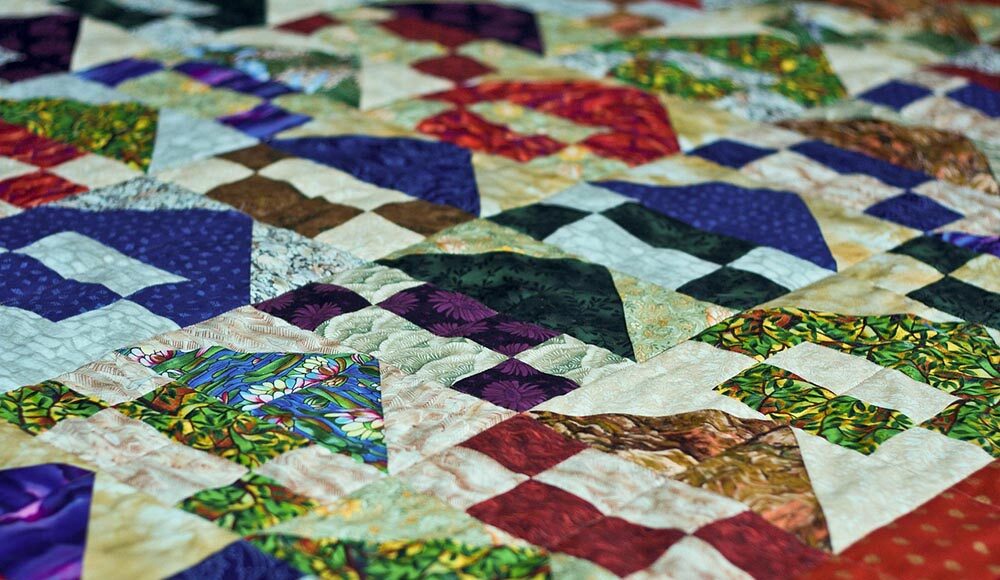
Quilted coats and patchwork pieces have moved from heritage curiosity to wardrobe staple.
The difference between looking considered and looking costumed comes down to a handful of styling decisions.
Patchwork has a habit of returning. It arrives with the folk revivals, disappears when minimalism takes over, and comes back whenever fashion turns toward craft, sustainability, and things that look made rather than manufactured. The current run has lasted longer than most, helped by a growing appetite for garments with visible handwork and a story attached.
It is not the first time the technique has been taken seriously. The Metropolitan Museum of Art’s survey of American quilts and coverlets notes that by the middle decades of the nineteenth century, quilts had become an acknowledged art form within many communities. Some were made not as everyday bedcovers at all, but to commemorate an event or a relationship, and were preserved and treasured rather than used. Pieced work, where the decorative top layer is built from many small pieces of fabric stitched together into a design, is where a great deal of that artistry went.
It is also one of the easier trends to get wrong. Patchwork carries strong associations, and a poorly styled quilted coat reads less as fashion and more as fancy dress. The good news is that the rules for wearing it well are consistent and easy to apply.
Understand What You Are Actually Wearing
Patchwork and quilting are related but not identical, and the distinction matters when you are shopping.
Patchwork refers to piecing: joining fabric sections into a larger design. Quilting, as the V&A defines it, is a method of stitching layers of material together, which is what gives a quilted garment its loft and texture. The technique is far older than its association with bedding suggests: it was used in the medieval period to produce clothing that was light as well as warm, including padded garments worn under armour, or in place of it by those who could not afford metal. A quilt coat is usually both pieced and quilted. A patchwork skirt may be pieced without being quilted, and a quilted jacket may be a single fabric with no piecing at all.
This affects how a piece behaves on the body. Quilted garments have volume and structure and hold their shape. Pieced but unquilted fabrics drape more like ordinary cloth. Knowing which you are dealing with tells you how much room the rest of the outfit needs to give it.
Rule One: Let It Be the Only Statement
A patchwork piece is a maximalist item by definition. It contains multiple prints, several colours, and visible seams doing decorative work. Pair it with a second competing element and the eye has nowhere to rest.
The reliable formula is one loud piece against quiet ones. A quilt coat over a plain white shirt, straight-leg denim, and simple boots looks deliberate. The same coat over a floral dress and printed scarf looks like a costume. Solid colours, clean lines, and unfussy silhouettes give a patchwork piece the space to be interesting.
Rule Two: Pull a Colour From the Print
Rather than trying to match a patchwork piece exactly, choose one colour within it and echo that colour elsewhere in the outfit. A rust tone in the piecing picked up in a boot or a bag ties the look together without competing.
This is a more forgiving approach than matching, because it acknowledges that a pieced garment contains many colours and asks you to commit to one. It also stops the outfit from looking accidental, which is the main risk with anything that reads as handmade.
Rule Three: Balance the Volume
Quilted garments add bulk. A quilt coat is essentially a wearable layer of padding, and worn over loose trousers and a chunky knit it can flatten a silhouette entirely.
The fix is standard proportion play. Volume on top wants something narrower below, and the reverse holds too. A quilted jacket sits well over a slim trouser or a fitted dress. A voluminous patchwork skirt wants a closer top half. Adding a belt over a longer quilted coat also restores a waistline that the padding would otherwise erase.
Rule Four: Modernise With the Accessories
Patchwork carries a nostalgic charge, and everything around it either amplifies that or offsets it. Styled with a prairie dress, a straw bag, and a wide-brimmed hat, a quilt coat sits firmly in period costume. Styled with a structured leather bag, contemporary sunglasses, and a sharp boot or a clean trainer, the same coat reads as current.
The most reliable modern pairing is denim. A quilt coat over jeans and a plain tee works because denim is entirely neutral in this context: it carries no competing decorative information and it shares the workwear lineage the quilted piece is drawing on.
Rule Five: Start Smaller Than a Coat
The full quilt coat is the most photographed version of this trend and the hardest to wear. Anyone testing the waters is better served by a smaller entry point.
Quilted or patchwork bags and totes add texture without asking anything of the rest of the outfit. A patchwork skirt, a quilted vest, or a pieced jacket in a limited palette all deliver the effect at lower volume. A patchwork detail on an otherwise plain garment, a pieced yoke or panel, is subtler again.
Consider Having One Made
Because these pieces are labour-intensive, well-made ready-to-wear versions are expensive, and cheap ones tend to look it, with printed patchwork rather than genuinely pieced fabric. This is one of the few current trends where commissioning or making the piece yourself is a serious option rather than a compromise.
Anyone with basic sewing skills, or a local maker willing to take a commission, can produce something better than most of what is available at the mid-market. Working from a considered palette of fabrics, sourced from a specialist quilt shop, rather than from salvaged scraps is what separates a garment that looks designed from one that looks improvised. Coordinated fabric collections, where a designer has already grouped prints that share a palette, take most of the difficulty out of the colour decisions, and the resulting piece is genuinely one of a kind.
There is also a growing practice of making coats from vintage quilts, though it is worth checking the provenance of any quilt before cutting it. Antique and hand-pieced examples have real value and, once cut, cannot be returned to what they were.
Why This One Keeps Coming Back
Patchwork endures because it answers something the market keeps asking for. It is visibly handmade in an era of mass production, it is inherently sustainable in its logic of using what exists, and no two pieces are identical, which is increasingly rare and increasingly valued.
Worn badly it looks like a costume. Worn with restraint, a single strong piece against a quiet background, it looks like exactly what it is: a garment somebody made, rather than one that came off a line. That is a difficult quality to buy, and it is the whole reason the trend keeps returning.