

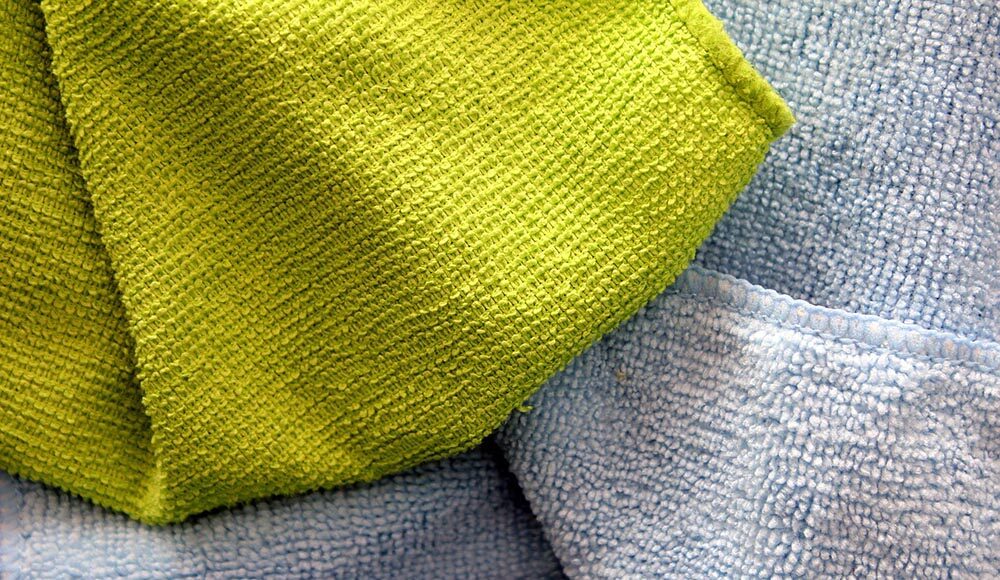
Non-woven fabric is used in many everyday products, including filters, wipes, face-mask layers, protective clothing, packaging materials, and agricultural products.
For many years, polypropylene has been one of the most common materials used to make these fabrics. Today, manufacturers are exploring polylactic acid, better known as PLA, as an alternative for applications where renewable raw materials and end-of-life options are important.
PLA is different from traditional petroleum-based plastics because it can be produced from renewable plant-based sources such as corn starch or sugarcane. Under suitable industrial composting conditions, certain PLA products can also biodegrade. However, PLA is not a perfect replacement for polypropylene. Its performance depends on how the non-woven fabric is produced, how it is used, and what happens to it after disposal.
How PLA Becomes Non-Woven Fabric
PLA production begins with sugars obtained from crops such as corn, sugarcane, and other starch-based sources. These sugars can be fermented to produce lactic acid. The lactic acid is then processed into a polymer that can be melted and converted into fibers.
Unlike woven fabric, non-woven material does not require traditional weaving or knitting. Instead, fibers are formed into a web and then bonded or mechanically entangled.
Several production methods can be used to make PLA non-woven materials. Spunbonding produces continuous filaments by extruding molten PLA through a spinneret and placing the fibers onto a moving surface. Meltblowing creates much finer fibers that can be useful in filtration applications.
Other techniques include spunlacing, where high-pressure water jets entangle the fibers, and needle-punching, where barbed needles mechanically lock fibers together. Thermal bonding is another option and uses controlled heat to join fibers without requiring conventional adhesives.
The construction method can have a major effect on the finished material. For example, a fabric designed for filtration may need a different fiber structure from one intended for packaging or hygiene products.
A manufacturer specializing in PLA non-woven fabric may therefore offer several grades and structures rather than one material for every application.
Why Some PLA Fabrics Use More Than One Polymer
Pure PLA fiber can have some practical limitations. It may feel stiffer than conventional polypropylene and can be more difficult to process at very high production speeds.
One approach is to use bicomponent fibers. In this construction, different polymers are combined within the same fiber. A PLA component can provide the bio-based portion, while another polymer can improve softness, processing behavior, or surface characteristics.
This approach can make the finished material easier to manufacture and more suitable for products that need a softer feel. However, it also means the final fabric may not be completely PLA-based.
That distinction matters when evaluating environmental claims. A product made with some PLA is not necessarily equivalent to a product made entirely from PLA.
Strength and Flexibility Depend on the Design
PLA non-woven fabric can provide useful mechanical performance, but its properties are not identical to polypropylene.
Some PLA fiber structures can provide good tensile strength, but they may have lower elongation. In simple terms, the fabric may resist a pulling force well but have less ability to stretch before breaking.
The difference becomes important when designing products that must bend, stretch, absorb movement, or withstand repeated handling.
Fiber diameter, web structure, bonding method, density, additives, and processing conditions can all affect the final result. This means it is difficult to say that PLA non-woven fabric is simply “stronger” or “weaker” than polypropylene.
The correct comparison depends on the specific product.
Moisture, Airflow, and Surface Feel
Non-woven fabrics are often selected for their ability to manage air or liquids. These characteristics are particularly important in filters, wipes, hygiene products, protective materials, and packaging.
PLA can be engineered into structures with useful air and moisture permeability. However, performance can change considerably depending on fiber size and bonding technique.
Surface feel is another consideration. Some PLA materials can feel firmer or rougher than polypropylene. For products that touch the skin, manufacturers may therefore need to modify the fiber structure or combine PLA with another material.
Research and development in sustainable textiles continues to focus on improving these characteristics. Fashion and textile industries are also exploring alternative materials, showing that material selection is becoming more complex than simply choosing between natural and synthetic fibers.
What Does “Biodegradable” Really Mean?
The word “biodegradable” can create confusion because it does not automatically mean that a product will disappear quickly in normal outdoor conditions.
Compostability depends on the environment in which the material is processed. The U.S. Environmental Protection Agency explains that commercially compostable plastics are generally designed to break down under controlled conditions in commercial or industrial composting facilities, where heat, moisture, microorganisms, and other conditions are managed.
The current ASTM D6400 standard also focuses on plastics designed for aerobic composting in municipal or industrial facilities where thermophilic conditions are achieved.
This means a PLA product labeled “compostable” should not automatically be assumed to break down in a backyard compost pile.
Home composting is usually cooler and less controlled than an industrial composting facility. Landfills provide a completely different environment, while litter exposed to the outdoors may behave differently again.
For this reason, consumers and manufacturers should check the specific disposal instructions and certifications for the finished product rather than relying only on the word “PLA.”
Where PLA Non-Woven Fabric Is Used
PLA non-woven materials can be considered for several applications where renewable materials or controlled compostability are useful.
Potential applications include:
- Tea bags and coffee filtration materials
- Hygiene products
- Medical and protective products
- Air and liquid filtration
- Food and packaging materials
- Agricultural products
- Seedling containers
- Mulching materials
- Automotive interior components
- Home textile products
The exact suitability depends on the product requirements.
For example, a short-life packaging material may not need the same long-term durability as an automotive component. Similarly, a filtration material may require a very specific combination of airflow, fiber size, strength, and particle capture.
This is why PLA should be viewed as a material option rather than a universal replacement for every petroleum-based non-woven fabric.
PLA Can Be Useful, But It Has Trade-Offs
PLA has several attractive characteristics, but there are also limitations that manufacturers need to consider.
The first is cost. PLA can be more expensive than common commodity polymers such as polypropylene.
Processing can also require adjustments because PLA does not behave exactly like polypropylene during fiber production. Temperature control, spinning conditions, cooling, and bonding all need to be considered.
Another challenge is durability. Some applications require a material to remain stable for a long period. If a product is designed to last for years, the manufacturer must consider how the material’s mechanical properties may change during storage and use.
End-of-life management is another important factor. A PLA product may have a compostability advantage only when the appropriate processing conditions and infrastructure are available.
Is PLA Better Than Polypropylene?
There is no single answer.
Polypropylene remains attractive because it is widely available, relatively inexpensive, lightweight, durable, and well established in non-woven manufacturing.
PLA becomes more interesting when renewable feedstocks, compostability, or a different environmental profile are important parts of the product’s design.
The right material depends on the application. A manufacturer should compare strength, flexibility, moisture behavior, temperature resistance, processing requirements, cost, expected service life, and disposal options before selecting a polymer.
This broader approach is important because a material should not be judged only by where its raw ingredients come from. Its manufacturing process, product lifespan, and end-of-life pathway also matter.
The Future of PLA Non-Woven Materials
PLA non-woven fabric is unlikely to replace polypropylene everywhere. Instead, its strongest opportunities are likely to remain in applications where its specific advantages justify the additional cost and processing considerations.
Ongoing development may improve fiber softness, production speed, strength, durability, and compostability. Researchers are also investigating blends and advanced fiber structures that can balance performance with environmental goals.
The textile industry is already experimenting with a range of alternative materials, but sustainability claims need to be evaluated carefully rather than accepted at face value.
A Material With Potential, Not a Perfect Solution
PLA non-woven fabric offers an interesting combination of renewable raw materials, flexible manufacturing options, and potential compostability under suitable conditions.
At the same time, it has limitations involving cost, processing speed, stiffness, durability, and end-of-life infrastructure.
The most important question is therefore not simply whether PLA is “better” than polypropylene. It is whether PLA is the right material for a particular product and whether the product can be manufactured, used, and disposed of in a way that makes its advantages meaningful.
For manufacturers, understanding those trade-offs is the key to deciding where PLA non-woven fabric makes practical sense.