

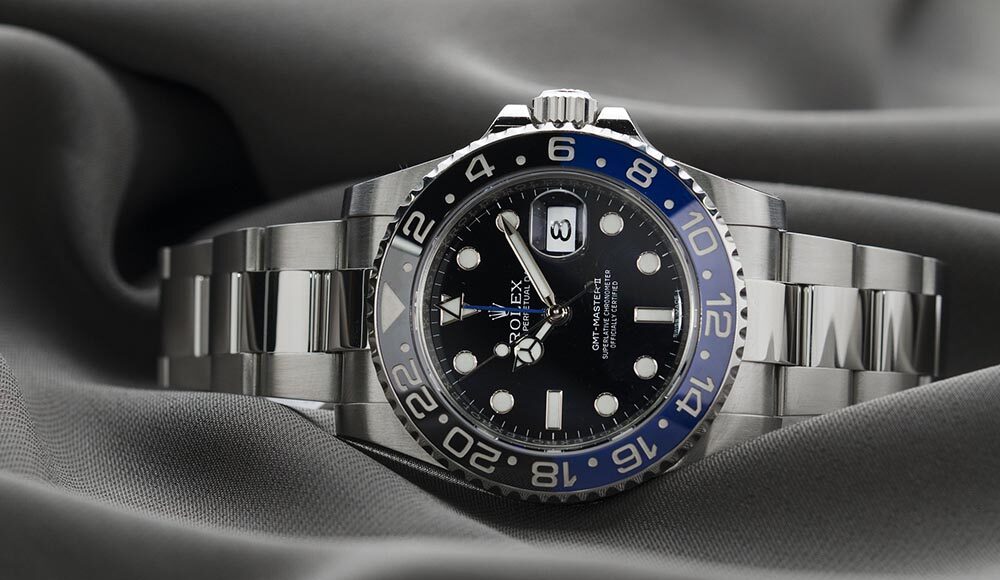
Look at a simple stainless-steel watch and it is tempting to think it should be easy to reproduce.
There may be three hands, a date window, a plain bracelet and very little decoration. Compared with a tourbillon or complicated chronograph, there does not seem to be much going on.
In practice, simplicity can make a watch surprisingly unforgiving. When there are fewer things competing for your attention, the details that remain become much more noticeable. A slightly unusual case shape, a date sitting too high or a bracelet that does not move naturally can change the entire impression.
That is one reason some of the most discussed replica watches are not particularly complicated watches at all. They are models people know extremely well, and there is nowhere for an inaccurate detail to hide.
A Black Submariner Doesn’t Give You Much to Distract the Eye
The Rolex Submariner is probably the clearest example. At first glance, there isn’t much to it: black dial, black bezel, steel case and an Oyster-style bracelet. Yet reproducing that combination convincingly requires dozens of small things to work together.
The shape of the crown guards matters. So does the thickness of the bezel, the position of the date, the magnification above it and the way the lugs transition into the bracelet. Even the shade and texture of the black dial can change how the watch appears under different lighting.
That explains why there are so many versions of the same basic watch. Browse a collection of Rolex Submariner replica models and what initially looks like a group of similar black sports watches quickly becomes a collection of different references, movements and factory interpretations.
The interesting part is that the differences are not always obvious in a photograph. Sometimes it is only when two examples are placed side by side that one case suddenly looks a little too wide or one bracelet seems slightly less refined.
Familiarity Makes Small Mistakes Look Bigger
People have seen certain luxury watches thousands of times without realizing it. They appear in films, advertisements, airports, offices, restaurants and social media feeds. You do not necessarily need to be a watch collector to have a rough mental picture of what a Rolex looks like.
That familiarity raises the difficulty considerably.
If someone reproduces an obscure watch that most people have never handled, tiny proportion differences may go unnoticed. Do the same thing with a Submariner or Datejust and something can simply feel wrong, even when the observer cannot explain exactly what it is.
It might be the thickness of the hour markers. It could be the distance between lettering on the dial. Sometimes it is not the dial at all. The watch may look perfectly acceptable until the bracelet moves, the clasp opens or the crown is unscrewed.
This is where looking only at the front of a watch becomes misleading.
Factories Tend to Be Better at Particular Watches, Not Everything
Factory names have become almost a language of their own in replica-watch discussions. VSF factory watches, Clean, ZF and APS are mentioned so frequently that newcomers can easily assume the goal is simply to identify the highest-ranked factory and buy whatever it makes.
The reality is more complicated.
A manufacturer can do a particularly convincing version of one model while another factory handles a different watch better. Case construction, dial production, bracelet finishing and movements present different challenges from one reference to another.
The detailed VSF Factory guide on SuperLuxuryReps.is is useful in this context because it approaches the subject by model rather than treating the factory name as an automatic answer.
That distinction becomes more important as replicas improve. Once several factories are capable of producing a broadly convincing watch, the decision starts coming down to smaller model-specific differences.
Integrated Bracelets Create a Completely Different Problem
Then there are watches such as the Audemars Piguet Royal Oak.
Its dial receives plenty of attention, but much of the character of a Royal Oak actually comes from its case and bracelet. The bracelet does not simply attach to the watch. Visually, it feels like an extension of the case itself.
That means poorly shaped links or an awkward transition near the lugs become difficult to ignore. Polished and brushed areas also sit very close together, so inconsistent finishing tends to be more visible than it would be on a conventional bracelet.
Spend some time looking through different Royal Oak models and the difficulty becomes easier to understand. Small changes in case material, dial treatment and bracelet construction can completely alter the character of what is fundamentally the same recognizable design.
With this type of watch, visual accuracy is only half of the equation. How the bracelet bends around the wrist matters just as much.
Thin Watches Have Their Own Problems
Patek Philippe-style watches present almost the opposite challenge.
Instead of producing a heavy, obviously sporty watch, the goal is often to recreate something that appears thinner and more restrained. Excess thickness becomes immediately noticeable because it changes the proportions of the entire watch.
A millimeter does not sound like much until it is added to the side of a watch that was designed to look slim.
The same applies to bezels, hands and dial furniture. Elegant watches tend to rely on fine proportions rather than aggressive visual elements. Make the markers too large or the bezel slightly too thick and some of that delicacy disappears.
Looking across different Patek Philippe replica watches also shows why there cannot really be one universal formula for producing a convincing replica. A Nautilus presents different problems from an Aquanaut, and both are completely different from a traditional dress watch.
The factory has to solve the particular watch, not simply reproduce the brand name.
Sometimes the Bracelet Tells You More Than the Dial
This is probably one of the most overlooked parts of judging a watch from online photographs.
A dial photographs beautifully. Bracelet tolerances do not.
You can zoom into a picture and examine printing, markers and hand alignment, but it is much harder to tell how smoothly the links articulate. You cannot really feel whether the clasp is hollow, whether an edge is uncomfortable or whether the bracelet makes excessive noise.
Those things become obvious within a few minutes of wearing the watch.
A good bracelet does not need to feel extremely heavy. It needs to feel controlled. The links should move freely without feeling loose, the clasp should close confidently and the entire bracelet should follow the wrist rather than fighting against it.
Tiny things, but that is how this hobby works. Once the dial gets good enough, attention moves somewhere else.
The Movement Changes the Experience Even When You Can’t See It
The movement is another area where simplicity can be deceptive.
A three-hand watch might appear mechanically straightforward compared with a chronograph, but the movement still controls several interactions the owner experiences directly. Winding, setting the time, changing the date and listening to the rotor all contribute to how the watch feels.
A loud rotor can make an otherwise convincing watch suddenly feel less refined. So can a crown that feels rough while winding or uncertain when engaging with the threads.
This is why movement discussions should not be reduced entirely to calibre numbers. A technically impressive movement is useful, but the way it behaves in the actual watch matters too.
Many buyers only discover this after ownership. Before buying, the movement is a specification. Afterwards, it becomes something they interact with.
QC Becomes More Important as the Watches Get Closer
There is another slightly unexpected consequence of better replica manufacturing: quality control becomes more important, not less.
When major components were obviously inaccurate, deciding between two watches was relatively easy. One had the better dial or clearly better case and the comparison ended there.
When both examples are reasonably close, the individual watch starts to matter.
A marker could be slightly misaligned. A bezel may sit a fraction off center. One bracelet may have more play than another. These are not necessarily factory-wide problems; sometimes they are simply variations between individual pieces.
That is why it makes sense to understand the inspection process before ordering rather than focusing exclusively on factory reputation. A practical super clone buying guide can help with the terminology, factory differences and things worth checking before making a decision.
It is less exciting than arguing about which factory ranks number one, but probably more useful.
Perfect in a Macro Photo Isn’t the Same as Convincing on the Wrist
There is a point where watch comparison becomes almost too detailed.
Modern phone cameras allow people to magnify a dial far beyond anything they would see during normal wear. Under that level of inspection, almost any watch will reveal something worth discussing.
A letter might be fractionally thicker. An engraving might sit slightly differently. The lume application could look uneven when enlarged several times beyond life size.
Those differences are interesting, particularly to collectors, but they need context.
A flaw visible only under extreme magnification may matter less in everyday ownership than a bracelet that feels uncomfortable or a crown that is unpleasant to operate. Neither should be ignored, but they affect the experience differently.
The better question is not always, “Can I find a difference?”
Sometimes it is, “Will I actually notice the difference when I wear it?”
Simplicity Leaves Nowhere to Hide
That brings us back to the apparently simple watch.
A plain steel sports watch can actually be one of the hardest designs to reproduce convincingly because every component has to carry its share of the impression. There is no complicated dial or unusual mechanism drawing attention away from the case, bracelet or proportions.
When those pieces work together, the result can feel remarkably coherent. Nothing jumps out because nothing needs to.
When they do not, the opposite happens. You may not immediately know what is wrong, but you keep looking at the watch trying to figure it out.
That is probably why supposedly simple watches generate so much discussion among replica-watch enthusiasts. The closer the design gets to minimal, the more important each remaining detail becomes.
Complication can impress people.
Simplicity has to convince them.