


Afriend of a friend “cured” their knee with one injection.
Someone’s aunt looks a decade younger after a treatment nobody can quite explain.
Regenerative medicine has picked up this strange, half-mythical reputation online, somewhere between real science and modern snake oil, and most people can’t tell which side of that line a given clinic sits on.
The techniques themselves—platelet-rich plasma, stem cell therapy, exosome skin rejuvenation treatments, and many more—are genuinely being studied and used in serious clinical settings. The gap is in who’s offering them and how.
Why This Field Gets Confused With Miracle Cures
The volume alone tells you something is off.
One estimate puts the number of U.S. stem cell clinics offering unapproved injections at over 2,700, marketing everything from orthopedic injuries to neurodegenerative conditions to heart disease, most of it without the clinical trials that would normally back up those claims.
That’s not a fringe problem.
It’s the default landscape patients are walking into, which is exactly why the burden falls on the person booking the appointment to tell a real treatment from a confident pitch.
PRP, Stem Cells, Exosomes: Not the Same Bet
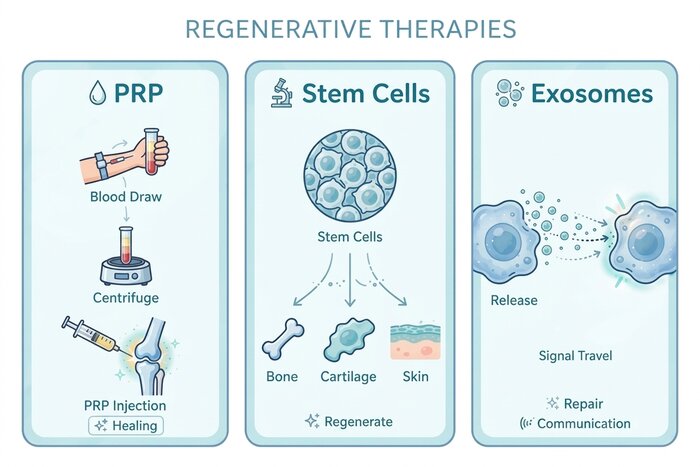
People tend to lump these together, but they work differently and carry different levels of risk and regulatory oversight.
- PRP uses a patient’s own blood, spun down to concentrate platelets and growth factors, then reinjected into the treatment area. It’s been around the longest and has the most established safety record.
- Stem cell therapy is broader and murkier, sometimes using a patient’s own fat or bone marrow cells, sometimes donor-derived cells, with far more variability in how those cells are processed.
- Exosomes aren’t cells at all, but the signaling particles cells release. That’s part of why they’ve drawn interest for applications ranging from skin and hair to wound healing and even eye conditions like dry eye disease and corneal damage.
The cost and outcome differences matter because the regulatory picture is genuinely inconsistent.
That doesn’t mean the field is fraudulent. It means the burden falls on patients to ask better questions than “Does this work?” and start doing better research from the very beginning.
What to Look for in a Modern Regenerative Medicine Clinic
Two clinics can offer the exact same “stem cell therapy” and mean completely different things by it—different sourcing, different processing, and different hands doing the work.
The name on the treatment matters far less than who’s behind it. Here’s what actually separates the real thing from the pitch.
Who’s Actually Doing the Procedure
Look for training specific to the treatment area, not a general background with a weekend certification tacked on.
Orthopedic work should involve someone trained in musculoskeletal medicine; aesthetic work should involve a dermatologist or plastic surgeon.
Ask how many procedures they’ve actually done.
What They Say When You Ask About FDA Approval
A clinic worth trusting will tell you plainly whether a treatment is FDA-approved, used off-label, or fully experimental.
FDA enforcement has specifically targeted unapproved stem cell products sold on unsubstantiated claims, so a provider who dodges the question or hides behind “cutting-edge” language without data is telling you something.
Whether They Diagnose First or Sell First
A legitimate provider evaluates your specific condition, imaging, history, and prior treatments before recommending anything.
If a clinic offers you a treatment plan during a free consultation without a real diagnostic workup, that’s a sales process, not a medical one.
Where the Cells or Platelets Actually Come From
Sourcing matters enormously.
Is it autologous, meaning derived from your own body, or from a donor or manufactured product?
Ask how the material is processed, where, and under what quality controls. Some of the worst outcomes on record trace back to products manufactured overseas with minimal oversight and then marketed domestically as premium regenerative treatments.
How They Talk About Results
Be wary of guarantees.
- Ethical clinics will describe what current evidence supports, what their own patients typically experience, and where the limits are, rather than promising a specific outcome.
- If a clinic won’t say “this doesn’t work for everyone” out loud, that’s a red flag disguised as confidence.
What Happens After You Leave the Clinic
Regenerative treatments often need follow-up assessment to track whether they’re actually working and a plan for what happens if they don’t.
A clinic with no structured follow-up protocol is treating the procedure as a transaction rather than ongoing care.
The Questions That Cut Through the Sales Pitch
Before booking a consultation, or during one, these are worth asking directly:
- “Is this treatment FDA-approved for my condition, or is it being used off-label?”
- “Where do the cells or exosomes come from, and can I see documentation on sourcing?”
- “What percentage of your patients see meaningful improvement, based on what data?”
- “What happens if this doesn’t work for me?”
- “Who is actually performing the procedure, and what’s their specific training in it?”
None of these are aggressive questions. They’re the kind any provider confident in their process should be able to answer without hesitation.
If the answers come back vague, rehearsed, or redirected toward urgency (“we only have a few spots left this month”), that tells you plenty on its own.
The field is moving fast, applications keep expanding, the same way successful research makes progress, and some of it is genuinely promising.
Just make sure the promise is coming from evidence, not from the person trying to sell it to you.