
Most eyewear trends start on a runway. The frames shown in February usually reach normal stores by summer, in simpler and cheaper versions.
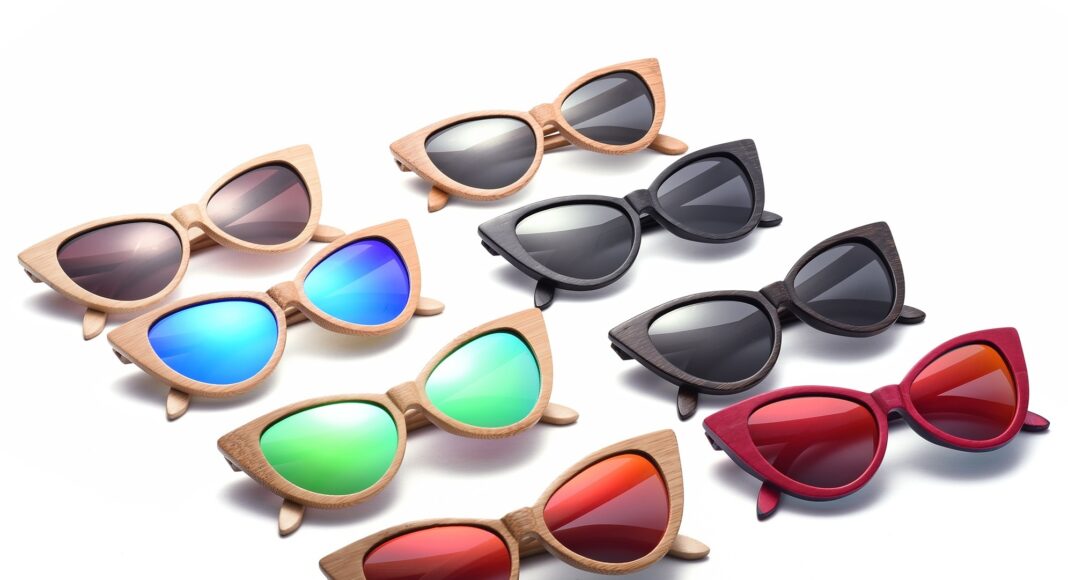
The 2026 shows brought back the cat-eye, and it looks nothing like the version people wore ten years ago. The new one is narrower and flatter. That change matters more than it sounds, and not only for style reasons.
The Cat-Eye Led the 2026 Shows
Bottega Veneta showed the sharpest version. Its frames were angled hard at the outer corners and fitted with gradient lenses. Ralph Lauren used fine wire instead, which made the same shape look almost delicate.
The two houses agree on one thing. The upsweep is much smaller than it was in the 2010s, and that is what makes this version wearable outside a show.
The shape had already been built. Valentino, Chloé, and Stella McCartney each reworked the cat-eye for spring and summer, months before the autumn shows confirmed it.
Wireframes Replaced Thick Acetate
Thin metal was everywhere this season.
Chanel, Gucci, and Stella McCartney all used fine wire rims instead of heavy plastic. The effect is lighter. The frame reads as a line across your face rather than a block sitting on it.
Wire suits a cat-eye particularly well. The upsweep stays visible without adding bulk, which keeps the shape from tipping into costume.
Oversized Came Back Sculpted
Big frames returned, but not the floppy kind.
At Celine, Michael Rider used oversized disc shapes across his looks and then kept them in his first campaign images for the house. They were round and clean rather than shapeless.
Miu Miu took the opposite approach and used color. Its frames arrived in blue, red, and yellow, styled closer to sportswear than to traditional eyewear.
The Lift Is Real, but It Is an Illusion
Cat-eye frames are supposed to lift your face. That is mostly true, though not in the way most guides describe it.
Nothing about the frame lifts anything. The upswept corners pull your eye upward and outward, and that reads as higher cheekbones. The effect is visual, not physical.
What decides whether it suits you is the angle of the sweep, not the shape itself. A gentle sweep of ten to fifteen degrees works on almost everyone. Push it to twenty-five or forty degrees, and the frame starts to wear you instead.
Cat-Eye Frames Are Not Only for Women
The wire cat-eye at Ralph Lauren reads as a slight upward angle rather than a wing. On a wider face, it simply looks like a well-shaped frame.
Darker materials help. Matte black or deep tortoise acetate in an angular cut keeps the shape quiet. That is usually what people want from a pair they wear daily.
Check the Lens Height Before You Buy
This is the part most style guides skip.
If you wear progressive lenses, the frame needs enough height to hold them. Standard progressives need roughly eighteen millimetres of fitting height, and a lens height of around twenty-eight to thirty millimetres. Newer short-corridor designs can work at about twenty-two.
Shallow cat-eye frames often fall below that. When they do, the frame cuts off the bottom of the lens, and the bottom is the part you read with.
Retailers that publish full measurements make this easier, and a good range of Cat-eye glasses will list lens height alongside width. The two are easy to confuse, and only one of them decides whether your prescription will work.
Virtual try-on will not answer this for you. It shows how a frame sits on your face, which is useful, but it cannot tell you whether a progressive lens will fit inside it.
Strong Prescriptions Need Smaller Frames
Frame size changes how thick your lenses look.
If you are short-sighted, your lenses are thickest at the outer edges, and a wide frame gives those edges more room to show. Dropping from a fifty-four millimetre frame to a forty-eight millimetre one makes a visible difference in the same prescription.
Lens material does the rest. The same prescription in a thinner, higher index material can cut edge thickness close to half. Acetate rims also hide thick edges better than fine wire.
That is worth knowing before you order the exact frame you saw on a runway. Thin metal looks good in photographs and shows every millimeter of lens edge in person.
The Shape Is Older Than the Trend
Altina Schinasi designed the cat-eye in the late 1930s and called it the Harlequin, after the masks used in Italian commedia dell’arte. She sold the first pairs through a small optical shop on Madison Avenue in New York.
The design won her an American Design Award in 1939. It has come back roughly once a generation since, which is part of why the shape reads as familiar rather than new.
Choosing Your Pair
Cat-eye frames are having another moment, and this version is easier to live with than the last one. The smaller sweep and flatter front both help the shape work with a real prescription rather than fight it.
Buying habits have shifted alongside it. People are purchasing fewer pairs and spending more on each one, which pushes them toward frames they want to be seen in.
Start with fit and lens height, then pick the shape. Getting those two numbers right matters more than which house showed the frame.