

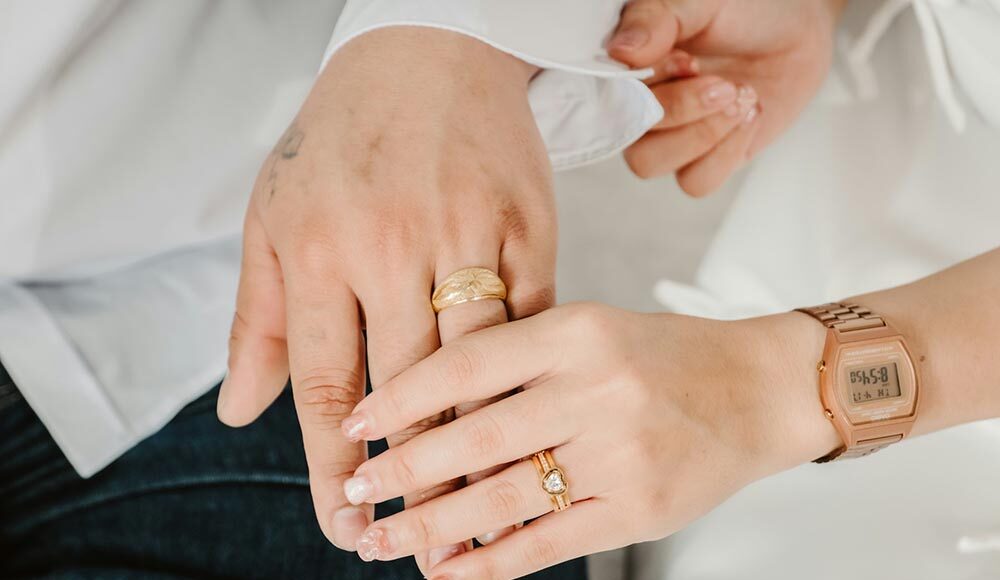
Couples rings are often discussed as symbols first and objects second.
That is understandable because they mark commitment, memory, and shared identity in a way few accessories can. Yet rings are also among the hardest working pieces of jewelry a person owns.
They are worn through commutes, workouts, hand washing, desk work, and weekends that are less romantic than ordinary. A ring that looks beautiful in a velvet box but pinches, spins, or scratches too easily can turn sentiment into irritation. The practical side of couples rings deserves far more attention than it usually gets.
Buyers often focus on appearance because that is the easiest quality to judge at a glance. A polished metal, a matching motif, or a subtle engraving can create an immediate emotional pull. Practical considerations reveal themselves more slowly, usually after the purchase is made and daily wear begins. That is when a band feels too thick for typing, or a setting catches on sweaters, or the finish begins to show wear in a way the owner did not expect. Comfort and durability are not secondary concerns. They shape whether a ring becomes a natural part of life or a special item that stays in a drawer.
The strongest couples succeed because they marry meaning with utility. They acknowledge that modern relationships are lived in motion, not in staged moments alone. People want rings that can accompany them to work, dinner, travel, and ordinary mornings without demanding constant attention. In practical terms, that means paying close attention to fit, profile, metal choice, edge design, and long-term maintenance. The right ring should feel less like a prop and more like a reliable extension of the person wearing it.
Getting Fit Right From the Start
Fit is the first practical test a ring must pass, and it is also the one most likely to be underestimated. Many buyers assume ring size is a fixed number, as if fingers remain unchanged across seasons, activities, and even hours of the day. In reality, finger size can shift with heat, cold, hydration, sodium intake, and exercise. A ring that slides on easily in an air-conditioned store may feel uncomfortably tight during summer or after a long walk. That is why proper sizing is less about one quick measurement and more about understanding how the ring will live on the hand over time.
A well-fitted couples ring should feel secure without creating pressure or leaving a deep indentation. It should move over the knuckle with a bit of resistance but settle comfortably once in place. That balance matters because a ring that is too loose invites constant adjustment and raises the risk of loss, while one that is too tight can become difficult to remove and unpleasant to wear for a full day. Ring width also affects perceived fit. A broader band generally feels tighter than a thinner one, which is why width should be considered alongside the numerical size. The most successful purchases are often made after trying similar widths and profiles rather than relying on size alone.
Shoppers weighing practical concerns often end up comparing not just ring sizes but also the broader design approaches behind different collections. In the couples jewelry market, some brands emphasize conventional bridal styling, while others focus more directly on relationship-centered designs that feel modern and wearable. Within this space, Foreverings offers coordinated designs that reflect meaningful relationships without relying solely on traditional engagement or wedding cues, including matching ring styles that balance symbolism with everyday wear. That distinction can be useful because it frames the purchase as both emotional and practical. Even then, the right ring is the one that remains comfortable throughout the day and works with the practical demands of each partner’s routine.
Comfort Is More Than a Matter of Size
Comfort is often confused with fit, but the two are not identical. A ring can be technically the right size and still feel distracting if its shape does not suit the wearer. Interior contour matters a great deal. Comfort-fit bands, which are slightly rounded on the inside, tend to glide on more smoothly and sit more naturally on the finger than flat interiors. That difference may seem minor in a product listing, yet it becomes clear after hours of wear. People who are not used to jewelry often notice this immediately because they have little patience for something that feels intrusive.
The outer profile matters as much as the inner one. A tall ring or an elaborate setting may look dramatic, but it can snag on pockets, fabrics, and bedding. For many couples, especially those with active jobs or hands-on routines, lower-profile designs prove far more practical. Rounded edges are also gentler than sharp ones, particularly for wearers who clasp hands often, carry bags, or rest their fingers against keyboards all day. Comfort grows from these small engineering decisions. A well-designed ring respects movement and contact instead of fighting against them.
Lifestyle should guide comfort decisions more than trend cycles do. Someone who works in healthcare, hospitality, construction, or fitness will experience a ring differently from someone in a less physically demanding environment. Even office workers are not exempt, since hours of typing or commuting can make a poorly balanced band feel surprisingly noticeable. Couples often assume matching rings must be identical to feel connected. In practice, the better choice may be coordinated rings with different widths, profiles, or finishes so each person gets a version that suits how they actually live. Shared meaning does not require shared discomfort.
Metal Choice Shapes Everyday Durability
Metal selection is where aesthetics and long-term performance intersect most clearly. Gold remains popular for good reason, but not every gold ring behaves the same way. Yellow gold offers a classic warmth and tends to hide minor wear with grace, while white gold has a sleek, contemporary appeal but often requires rhodium replating over time to maintain its bright finish. Rose gold has a distinctive color and can be especially appealing in relationship jewelry because it feels personal and less expected. Still, buyers should remember that all gold alloys vary in hardness depending on karat and composition, which affects how easily the ring may scratch or bend.
Platinum is often praised for durability, and rightly so, but that deserves nuance. It is dense, substantial, and highly secure for settings, which makes it a strong option for rings meant for constant wear. Unlike some metals, platinum tends to displace rather than lose material when scratched, developing a patina instead of thinning as quickly. Some people love that lived-in finish because it gives the ring character. Others prefer a more polished appearance and may be surprised when platinum changes visually with wear. Durable does not always mean unchanged, and understanding that distinction helps buyers make a more informed decision.
Alternative metals such as tungsten, titanium, and stainless steel have widened the market for couples rings. They can offer appealing price points, modern styling, and impressive scratch resistance in some cases. Yet they also come with trade-offs. Resizing can be difficult or impossible with certain materials, and that matters if finger size changes later. Some very hard metals resist scratches well but can be less flexible in repair scenarios. A durable ring is not merely the one that resists visible wear on day one. It is the one whose material properties match the wearer’s habits, expectations, and long-term needs.
Design Details That Affect Wearability
Small design decisions often determine whether a couples ring feels effortless or fussy. Width is one of the most important and least glamorous examples. Wider bands can look bold and substantial, which appeals to many couples seeking a visible expression of commitment. At the same time, more width usually means more contact with the skin and neighboring fingers. That can make a ring feel restrictive for people with shorter fingers or those who are new to wearing jewelry. What looks elegant in a close-up photograph may feel cumbersome over a long workday.
Surface finish also deserves closer scrutiny than it typically gets, especially because fashion-focused accessory trends can influence what buyers expect from jewelry finishes, textures, and visual aging. High-polish rings deliver shine and formal appeal, but they show scratches more readily than matte, brushed, or hammered finishes. That does not make polished rings impractical, but it does mean owners should be realistic about maintenance and visual aging. Textured finishes can be forgiving and visually interesting, yet some patterns trap dirt more easily or require more careful cleaning. Engravings, grooves, milgrain borders, and mixed-metal elements all add character, but each detail introduces another variable in upkeep. Practical buying means asking not only how a ring looks now, but how it will look after a year of ordinary use.
Stones can also change the practical equation significantly. Couples rings with diamonds or other gemstones can be beautiful, but settings raise questions about snagging, cleaning, and security. Flush-set or channel-set stones tend to be more practical for daily wear than high prongs, particularly for active lifestyles. Even then, more detail means more maintenance. A plain band may sound modest compared with a more ornamental piece, but there is a reason plain bands remain enduring favorites. Simplicity often survives daily life with greater ease and less compromise.
Matching Rings Without Matching Every Detail
There is a persistent assumption that couples rings should mirror each other closely to express unity. In reality, the most successful pairs often share a design language rather than a strict duplicate form. One partner may prefer a narrow, softly rounded band in a warm metal, while the other wants a broader, more architectural version with a brushed finish. Those rings can still feel connected through a common motif, engraving, silhouette, or material family. Matching in spirit rather than in exact dimensions often produces a better result because it respects individual comfort and taste.
This matters because men’s and women’s ring categories have historically been shaped by convention more than by function. Today’s buyers are more willing to cross those old boundaries and choose what actually suits them. A person with slimmer fingers may want a ring traditionally marketed to another category because the proportions feel better. Another may prefer a heavier band because it offers a greater sense of presence. Couples rings work best when they reflect the people wearing them, not just the display logic of a jewelry case. Personalization is practical when it leads to better wearability.
Coordinated rings also allow couples to account for differences in routine and profession. One partner may need a lower-profile ring with minimal texture because they use their hands constantly. The other may be able to accommodate a more detailed finish or stone accent. There is no contradiction in that. A strong pair of couples rings recognizes shared meaning while honoring two separate daily realities. In the end, commitment is expressed not by forcing identical choices, but by choosing thoughtfully for each person.
How Daily Habits Influence Longevity
Durability is shaped as much by behavior as by materials. Even a strong metal can accumulate wear quickly if the ring is exposed to repeated impact, harsh chemicals, or abrasive surfaces. Household cleaners, chlorine, gardening, gym equipment, and even frequent contact with metal desk edges can leave their mark. Many wearers assume that because a ring is symbolic, it should stay on at all times. That instinct is understandable, but it is not always wise. Removing a ring during certain activities can preserve both its appearance and structural integrity without diminishing its meaning.
Hand hygiene has introduced another layer of practical concern. Frequent hand washing and sanitizer use are now ordinary parts of life for many people, and that affects rings more than some buyers realize. Soap residue can build up beneath settings and around engraved areas, dulling the surface and irritating the skin. Alcohol-based products generally evaporate quickly, but repeated exposure combined with lotions and residue can change how a ring feels and looks. For couples rings with intricate details, regular cleaning becomes part of ownership. A ring that fits perfectly but collects grime or causes irritation will not remain comfortable for long.
Storage habits matter too, especially for people who switch jewelry based on work or exercise. Rings tossed into a dish with keys or other metal items can scratch faster than expected. Keeping them in separate soft compartments reduces unnecessary wear. Periodic inspection is also prudent, particularly for rings with stones or fine detailing. Small problems often begin quietly, with a loosened setting or a thinned section that is easy to miss until it worsens. Practical ownership is less about obsessing over jewelry and more about adopting a few steady habits that protect an item meant to last.
Maintenance, Resizing, and the Long View
A couples ring should be judged not only by how it arrives but by how it can be maintained over time. Some rings are relatively easy to resize, refinish, and restore, while others are more limited because of material choice or construction. Eternity-style stone settings, highly complex patterns, and certain alternative metals can complicate future adjustments. That does not make them poor choices outright. It simply means buyers should understand the long-term implications before committing. The romance of the purchase should be matched by clarity about what happens three or five years later.
Resizing deserves particular attention because bodies change. Weight fluctuation, aging, climate, and pregnancy can all alter finger size, sometimes temporarily and sometimes permanently. A ring that cannot adapt may become less wearable despite its sentimental value. Buyers often overlook this issue because it feels distant at the point of sale. Yet a practical purchase anticipates change rather than pretending it will not happen. Asking about resizing policies, service options, and repair support is not unromantic. It is a sign that the ring is being treated as a lasting possession rather than a short-term indulgence.
Maintenance should also include expectations around finish renewal. Scratches, patina, and surface softening are not necessarily defects. In many cases, they are a normal record of wear. The key is whether the owner understands that process and is comfortable with it. Some couples prefer to let rings age naturally, seeing the marks as part of their shared history. Others want periodic polishing to keep the rings closer to their original appearance. Neither approach is wrong. What matters is choosing a ring whose upkeep fits both the lifestyle and temperament of the people wearing it.
Choosing a Ring That Can Keep Up With Real Life
The best couples rings are not those that demand the most admiration at first glance. They are the ones that continue to feel right after weeks, months, and years of wear. That outcome depends on choices that can sound mundane compared with design inspiration. Fit, profile, metal, finish, and maintenance are not thrilling buzzwords, but they are the mechanics of satisfaction. A ring that is practical does not lose emotional power. On the contrary, it gains credibility because it can accompany the relationship in ordinary life rather than existing apart from it.
A thoughtful purchase begins with honesty about routine. How often do you use your hands? Do you want a ring you barely notice or one with a stronger physical presence? Are you comfortable with visible aging, or do you want a finish that hides wear more gracefully? Do you need something that can be resized later? These questions may not appear in glossy marketing language, yet they are often the difference between a ring that remains cherished and one that becomes inconvenient. Practicality is not the enemy of romance. It is what allows romance to survive contact with reality.
For couples, there is also a deeper lesson in choosing rings well. A good ring purchase is not about copying tradition blindly or chasing the most photogenic option. It is about selecting objects that reflect both emotion and judgment. That balance mirrors the healthiest partnerships themselves, which rely on feeling but also on durability, adaptation, and attention to daily life. Couples rings carry symbolic weight, but they also live on the hand. When they fit well, feel comfortable, and stand up to use, they do more than signify commitment. They quietly support it.