

It may sound rather unexpected, but in moments of fatigue, stress, and emotional overload, well-groomed nails can unexpectedly give us a sense of composure.
This is precisely the conclusion reached by clinical psychologist Charlynn Ruan, who believes that a manicure can work as a signal of self-respect and as a way of showing care for one’s own body and mental state.
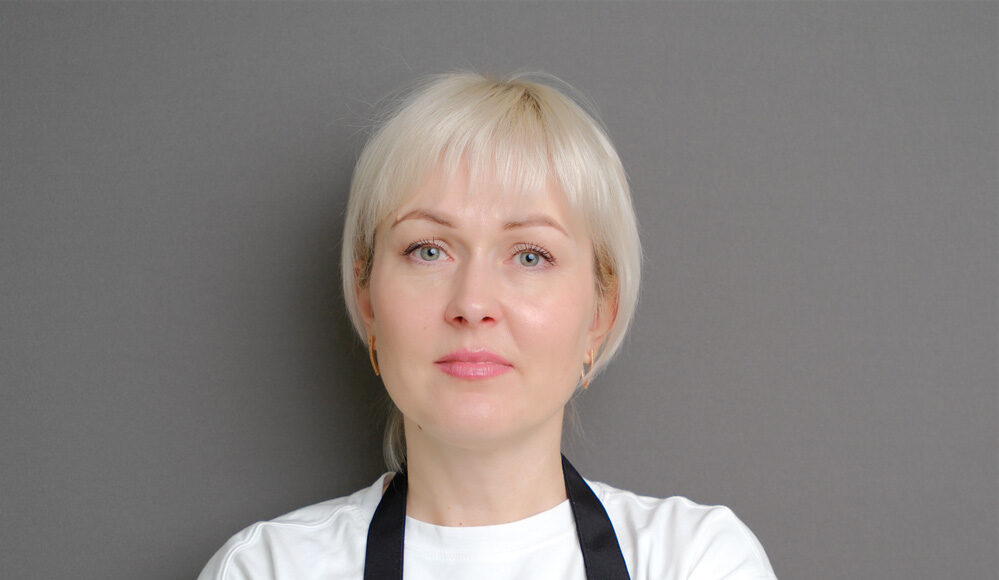
“Unlike basic hygiene, which is a strict necessity, a manicure is perceived as a pleasant act of care — something done not out of obligation, but for joy,” says Iryna Safina, an international specialist in nail aesthetics, supporting the American psychologist’s view. “When life feels chaotic, a neat manicure works as a small but reliable anchor of stability: at least one part of reality is orderly and under control.”
Ambassador of Emotional Care
It is this idea of manicure as a visible psychological anchor that forms the foundation of Mindful Manicure Practice, an original methodology developed by Iryna Safina.
Iryna is a specialist in nail aesthetics with more than 20 years of experience, the author of scientific and practical developments in the nail industry, and the recipient of international industry awards: Client’s Choice: Nail Master (2023) and Rising Star in Nail Industry (2025).
She is a Senior Member of the Eurasian Beauty Guild, an international association that brings together beauty industry experts from around the world, a certified IBJA judge, and a member of the judging panel of the World Beauty Championship, where she evaluates competition entries, participates in shaping competition results, and contributes to maintaining unified professional standards.
In each of these responsible and honorable roles, Iryna Safina consistently and methodically promotes the idea of manicure as an additional source of emotional support.
The Mindful Manicure Practice Methodology
In Iryna Safina’s methodological guide, manicure is presented not as a mechanical service, but as a comprehensive practice in which technique, aesthetics, atmosphere, and communication work in synergy.
“Everything begins with preparing the space,” says the author. “In classic salon service, this aspect is often given far less attention than, for example, execution technique.”
However, according to the expert, the space directly affects the client’s state: “Neutral scents, soft lighting, the absence of harsh sounds, and the visual cleanliness of the workstation all create a basic sense of safety. Thanks to this, a woman does not simply ‘get her nails done’ — she disconnects from the mode of tension for an hour or an hour and a half.”
The second principle of the methodology is emotional contact. Safina notes: “A nail technician should not be turned into a psychologist, but the service should not be reduced to dry, purely technical work either.”
According to the specialist, whose professional profile is shaped at the intersection of practical experience, scientific analysis, original methodologies, and expert evaluation, the balance between silence and support is part of professional culture.
“Yes, indeed, not every client wants to talk during the procedure. Not every client arrives in a resourceful emotional state. That is why the technician’s task is to read boundaries: not to impose communication where it is not needed, and to offer light conversation when it is appropriate.”
Another element on which Mindful Manicure Practice is built is color. Iryna Safina proposes treating it as a tool and looking at the palette more broadly.
“Try choosing a coating not according to trends and not ‘for the season,’ but with consideration of the emotional effect of color: pastel tones can work as an instrument of stabilization, warm shades can add energy, and cool tones can create a sense of calm.”
Technique as the Foundation of Trust
A separate place in Iryna Safina’s guide is given to tactile culture.
“Hands are one of the most active and, at the same time, emotionally sensitive parts of the body,” says the expert. “That is why manicure is always not only a visual practice, but also a bodily one.”
Soft, confident, yet unhurried movements of the technician, delicate treatment, and attentiveness to the client’s reactions — all of this, according to the author of Mindful Manicure Practice, creates a feeling of care. And this in no way diminishes the importance of technique; on the contrary, it makes technique the foundation of trust.
“Manicure is no longer equal only to an aesthetic result; it is becoming part of the culture of conscious self-care,” Iryna Safina demonstrates, arguing that the future of nail service lies in the ability to create an experience after which a woman feels more collected, calm, and present in her own life.