

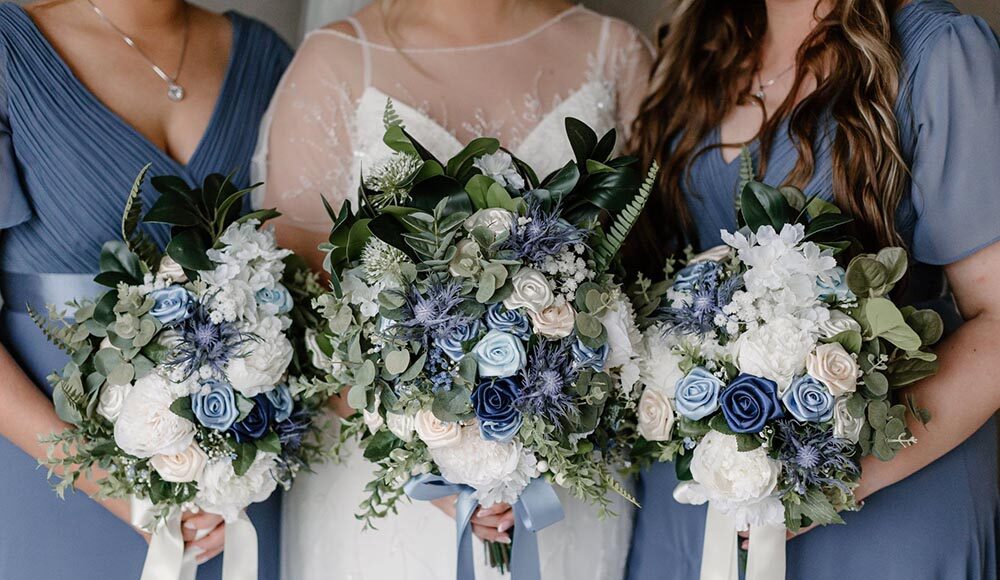
Wedding flowers are one of those expenses that can look manageable on a mood board and become surprisingly complicated once real planning begins.
A bridal bouquet turns into bridesmaid bouquets. Then come boutonnieres, centerpieces, aisle flowers, ceremony arrangements, delivery, setup, and sometimes installations that require additional labor.
The biggest flower mistakes are rarely about choosing the “wrong” rose. They usually come from planning too late, comparing prices that cover different things, ignoring seasonality, or assuming every floral element has to be fresh.
Here are nine mistakes that can quietly increase the budget—and how to avoid them.
1. Setting the Flower Budget Too Late
The easiest way to overspend is to start choosing individual arrangements before deciding what the whole floral plan needs to include.
The Knot’s Real Weddings data, based on 10,474 U.S. couples married in 2025, reported an average wedding-flower spend of $2,800. But that figure can include bridal and wedding-party flowers, centerpieces, ceremony décor, delivery, setup, and florist labor.
Use an average as context, not as a shopping list.
Before requesting quotes, write down what you actually need:
- bridal bouquet;
- bridesmaid bouquets;
- boutonnieres and corsages;
- ceremony flowers;
- aisle arrangements;
- centerpieces;
- sweetheart-table or cake flowers.
Then separate the list into pieces that must be fresh, those that could be artificial, and arrangements that might be rented or reused.
That makes every quote easier to evaluate.
2. Comparing Prices That Do Not Include the Same Things
A common comparison sounds like this:
“Fresh wedding flowers cost thousands, while this artificial bouquet costs much less.”
The problem is that those numbers often describe completely different purchases.
A full-service florist proposal may include flowers, design work, delivery, setup, breakdown, and labor. The price of one premade artificial bouquet usually covers one finished bouquet.
Neither price is necessarily misleading. They simply are not directly comparable.
For a fair comparison, create the same shopping list on both sides. For example:
- one bridal bouquet;
- four bridesmaid bouquets;
- five boutonnieres.
Then compare similar sizes, styles, and levels of service.
Artificial flowers can offer more predictable pricing in some situations, but they are not automatically cheaper than every fresh alternative. Material quality, arrangement size, design complexity, shipping, and whether an item is premade all affect the final price.
Couples who want to understand what finished faux arrangements actually look like can browse Rinlong artificial wedding flowers to compare coordinated bouquets, personal flowers, and wedding décor before building a like-for-like budget against fresh floral options.
3. Ignoring the Growing Season
Fresh flowers are agricultural products, so availability changes throughout the year.
A variety that is easy to source in season may become harder or more expensive to obtain several months later.
Instead of building the design around one exact flower, explain what you like about it.
Rather than: “I need peonies.”
Try: “I like large, soft blooms in pale blush and ivory.”
That gives the florist room to achieve a similar look with flowers that are practical for the wedding date.
Artificial arrangements are less dependent on natural blooming seasons, although inventory, materials, shipping, and demand can still affect pricing.
4. Building the Entire Wedding Around One Exact Flower
Seasonality is not the only supply issue. Weather, transportation delays, crop conditions, and demand can all affect fresh-flower availability.
A more flexible floral brief focuses on:
- color palette;
- bouquet shape;
- overall mood;
- greenery;
- flower size;
- texture;
- level of formality.
This also makes it easier to combine fresh, artificial, dried, or rented elements without making the wedding feel inconsistent.
Guests are more likely to notice whether the flowers look coordinated than whether every arrangement contains one exact flower from an inspiration photo.
5. Choosing Arrangements at the Wrong Scale
More flowers do not automatically create more impact.
A small arrangement may disappear against a large ceremony backdrop, while an oversized centerpiece can block sightlines and overwhelm an intimate table.
Before ordering, consider the actual dimensions of the venue.
How large are the tables? How wide is the ceremony space? How far will guests be from the flowers?
The same principle applies to the bridal bouquet.
A wide or cascading bouquet may look beautiful by itself but cover important details on the wedding dress. Ideally, the bouquet should frame the outfit rather than hide the waistline, bodice, or silhouette.
6. Assuming DIY Automatically Means Cheap
DIY can save money, but it can also move expenses somewhere else.
Fresh-flower DIY may require tools, floral tape, containers, transportation, cool storage, cleanup supplies, workspace, and several hours of preparation.
Artificial arrangements remove some of the timing pressure, but DIY faux flowers still need to be sourced, trimmed, arranged, shaped, and stored.
Simple bud vases and hand-tied arrangements are more beginner-friendly than large installations or complicated cascading bouquets.
So the useful question is not simply:
“Can we DIY this?”
It is:
“What can we realistically make well, and what would be easier to buy finished?”
7. Forgetting About Pollen and Fragrance
Flowers are usually chosen visually, so allergy and fragrance considerations may come quite late.
Some fresh flowers release pollen or have noticeable fragrance. This may matter for bouquets carried close to the face or arrangements positioned near sensitive guests.
Artificial flowers do not produce natural flower pollen, although they can collect dust or other environmental allergens.
That does not mean the entire wedding has to switch to artificial flowers. Sometimes changing personal flowers or arrangements closest to guests is enough.
8. Looking Only at the Wedding-Day Cost
The invoice is only one part of the decision.
Timing, transport, setup, storage, and what happens after the wedding also matter.
Fresh flowers provide natural fragrance, movement, and variation. Afterward, they can be donated, dried, pressed, composted, or professionally preserved.
Artificial flowers involve manufacturing, synthetic materials, packaging, and transportation, so they should not automatically be described as the greener option.
Their reuse potential is where they have a clearer advantage.
An artificial arrangement might be:
- kept as home décor;
- reused at another celebration;
- lent to another couple;
- donated;
- resold;
- repurposed into smaller arrangements.
The environmental comparison depends on sourcing, materials, transport, disposal, and how often an arrangement is reused—not simply whether it is fresh or artificial.
9. Assuming Every Important Flower Has to Be Fresh
There is no universal rule saying the bridal bouquet must be fresh while artificial flowers belong only in large decorations.
Silk flowers can be useful when couples want predictable colors, earlier delivery, easier preparation, or a bouquet that can remain intact after the wedding.
Couples comparing fresh and artificial bridal bouquets can browse Rinlong silk flowers for weddings to evaluate bouquet shapes, color palettes, and premade designs before deciding which option fits their wedding style and timeline.
Quality matters more than the word “faux.”
When checking an artificial bridal bouquet, look at:
- matte rather than glossy petals;
- variation in bloom size and color;
- realistic greenery;
- natural spacing;
- overall bouquet shape;
- whether flexible elements can be reshaped;
- how it appears in daylight, indoor light, and direct flash.
A hybrid approach can work too.
Some couples choose an artificial bridal bouquet they can keep afterward while using fresh ceremony flowers. Others carry fresh personal flowers for fragrance and use artificial arrangements elsewhere.
The right balance depends on photography, allergies, weather, timing, budget, and after-wedding plans.
Fresh vs. Artificial Flowers at a Glance
| Factor | Fresh Flowers | Silk / Faux Flowers |
| Cost | Depends on season, variety, florist labor and delivery | Depends on material, size, construction and shipping |
| Availability | Some flowers are seasonal | Less dependent on natural growing seasons |
| Preparation | Usually arranged close to the wedding | Can generally be inspected earlier |
| Allergies | Some flowers release pollen or strong fragrance | Do not release natural flower pollen |
| Weather | May be affected by heat, handling and dehydration | Generally more stable during the event |
| Appearance | Natural movement, texture and variation | More predictable; realism depends on quality |
| Afterward | Can be preserved or repurposed | May remain intact for reuse or storage |
| Sustainability | Depends on growing, sourcing, transport and disposal | Depends on materials, manufacturing, transport and reuse |
Spend Where It Matters
The most expensive wedding-flower mistakes usually come from assumptions rather than expensive taste.
Assuming every arrangement must be fresh. Assuming DIY will always cost less. Assuming one national average tells you what your own flowers should cost. Or assuming a specific flower will be available exactly as imagined months later.
A better approach is to plan the complete floral list early, compare like with like, consider seasonality and venue scale, and decide what each arrangement actually needs to accomplish.
Fresh, artificial, rented, dried, and hybrid flowers can all have a place.
The expensive mistake is choosing one before asking what the wedding actually requires.