

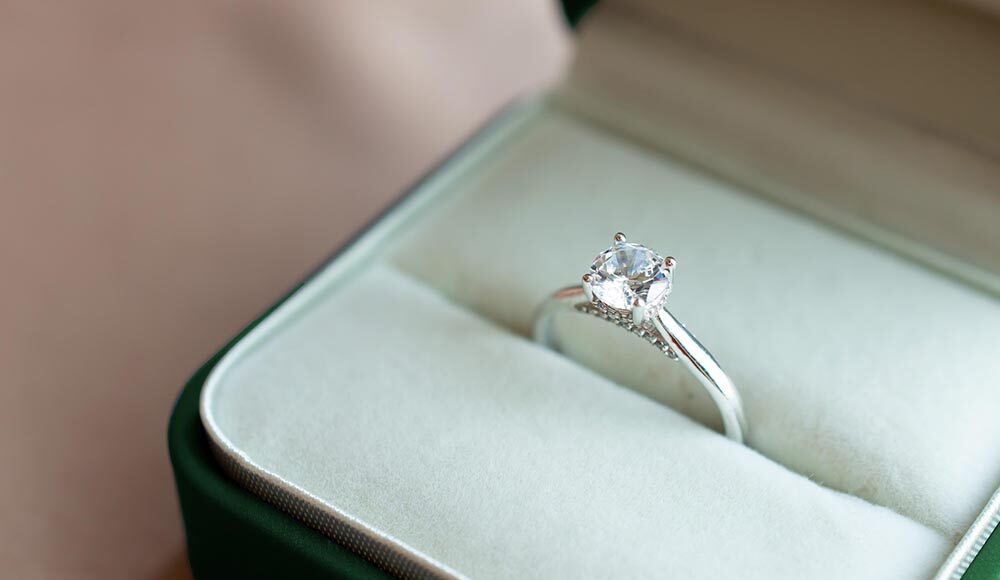
Buying an engagement ring used to mean visiting jewelry stores, trying on different settings, and comparing whatever happened to be available in your area.
Today, you can browse thousands of rings and loose stones without leaving home.
That convenience comes with a catch: there are a lot of choices.
An online jeweler that works well for someone looking for a classic diamond may not be the best fit for someone who wants a colorful gemstone or an unusual setting. Price, certification, design, customization, and return policies can all change from one retailer to another.
Here are seven online options worth knowing about before you make your choice.
What to Check Before Buying an Engagement Ring Online
Before getting distracted by different settings and diamond shapes, look at the basics.
Diamond certification:
If you’re buying a diamond, find out whether it comes with a grading report from a recognized laboratory. The Gemological Institute of America (GIA) recommends understanding the 4Cs cut, color, clarity, and carat weight and getting a reputable grading report when buying online. (GIA 4Cs)
Return and resizing policies:
Ring size can be tricky when you’re buying a surprise. Check whether the retailer offers resizing and how long you have to return the ring.
What you’re actually paying for:
Compare the stone, setting, metal, and any customization separately when possible. Two rings with similar photos can have very different prices.
Natural or lab-grown:
Make sure the listing clearly tells you what type of diamond or gemstone you’re getting. Neither option is automatically right for everyone; it comes down to what you want from the purchase.
Customer support:
Online shopping shouldn’t mean you’re left alone with a complicated purchase. Look for retailers that provide accessible customer service and enough information to answer your questions.
7 Best Places to Buy Engagement Rings Online
1. True Sanity: Best for Pricing Transparency
It can be surprisingly difficult to figure out why one engagement ring costs more than another. The stone is only part of the equation; the metal, setting, craftsmanship, and customization can all affect the final price.
Rather than choosing a jeweler based on one feature, compare its pricing, policies, stone specifications, and designs with other retailers on this list. If you want to explore engagement rings with transparent pricing, True Sanity can be a useful option to include in your comparison.
2. James Allen: Best for Examining Diamonds Online
One advantage of shopping for a diamond online is the sheer number of stones available. The downside is obvious: you can’t pick one up and look at it yourself.
James Allen makes that part of the process easier with detailed 360-degree views of its diamonds. Shoppers can zoom in on individual stones and spend time comparing them before making a decision.
That makes the retailer particularly interesting for someone who wants to examine diamonds closely rather than choosing based on a standard product photograph.
3. Brilliant Earth: Best for Sourcing Information
For some couples, the story behind the ring matters almost as much as the ring itself.
Brilliant Earth puts considerable attention on sourcing and offers both natural and lab-grown diamonds. Its collection also includes recycled precious metals and contemporary engagement-ring designs.
The retailer may appeal to shoppers who want sourcing information to be part of the buying process. As with any major jewelry purchase, it’s still worth checking the details of the individual ring and comparing its price with similar options elsewhere.
4. Blue Nile: Best for Comparing a Large Number of Diamonds
Sometimes having too many choices is a problem. Sometimes it’s exactly what you want.
Blue Nile has a large online diamond inventory, giving shoppers plenty of stones to compare across carat weight, color, clarity, cut, and price.
If you’ve already learned the basics of diamond grading, that selection can be useful. Someone shopping for an engagement ring for the first time may need a little more patience to sort through all the specifications.
5. Whiteflash: Best for Cut-Focused Shoppers
If sparkle is near the top of your wish list, pay attention to cut.
Whiteflash has built much of its reputation around diamond cut and light performance. Its A CUT ABOVE® collection is aimed at shoppers who want to place particular emphasis on how a diamond interacts with light.
That makes it a natural place to compare if you’re less interested in simply getting the biggest stone and more interested in how the diamond looks when you wear it.
6. Frank Darling: Best for Unconventional Designs
Not everyone wants the same round diamond sitting in a traditional solitaire setting.
Frank Darling takes a more modern approach, with designs featuring unusual proportions, clean lines, and architectural details. The collection feels more curated than some of the enormous online jewelry catalogs.
That’s a plus if scrolling through thousands of nearly identical rings sounds exhausting. If maximum choice is your priority, though, a larger retailer may suit you better.
7. Angara: Best for Colored Gemstone Rings
A diamond doesn’t have to be the centerpiece of an engagement ring.
Angara is particularly useful for shoppers considering sapphires, rubies, emeralds, and other colored gemstones. Its selection gives buyers more room to play with color, size, and gemstone characteristics.
A colored gemstone can also give a traditional engagement ring a completely different personality. If you’ve always wanted something less conventional, this is one category worth exploring before settling on a diamond.
Don’t Automatically Spend More for a Bigger Diamond
Carat weight is one of the easiest things to compare because it’s a single number. But it isn’t the whole story.
Cut affects how a diamond handles light, which has a major impact on brilliance and sparkle. GIA notes that cut is one of the key factors behind a diamond’s visual performance. (GIA 4Cs)
So before moving up in carat size, compare the stones themselves. A slightly smaller diamond with a strong cut can be more appealing than a larger stone that doesn’t perform as well visually.
Your budget doesn’t have to go toward size alone.
How to Narrow Down Your Choices
Start with the question that matters most to you.
Want to spend time comparing individual diamonds? James Allen and Blue Nile give you plenty to explore. More interested in cut and sparkle? Whiteflash deserves a closer look.
If you’re drawn to modern settings, Frank Darling may have more of the styles you’re after. Angara makes more sense if you’re leaning toward a sapphire, ruby, or emerald. And if sourcing information is high on your list, Brilliant Earth gives you another direction to investigate.
True Sanity can also be considered by shoppers who want to compare pricing transparency in engagement rings alongside the other factors that affect the final purchase.
The point isn’t to find the retailer with the longest list of features. It’s to find one that makes sense for your ring, budget, and priorities.
Frequently Asked Questions
Is buying an engagement ring online safe?
It can be, provided you buy from an established retailer and check its certification, return policy, warranty, shipping, and customer-service information before ordering.
What certification should an online diamond have?
Look for a grading report from a recognized gemological laboratory. GIA recommends asking for a reputable grading report when buying a diamond online. (GIA 4Cs)
Are lab-grown diamonds a good choice for an engagement ring?
They can be. Lab-grown diamonds are real diamonds, but they’re created in a laboratory rather than formed naturally. They’re often less expensive than comparable natural diamonds, which can make them attractive to buyers working with a particular budget.
What matters more: carat or cut?
Neither should be considered in isolation, but cut can have a particularly noticeable effect on a diamond’s brightness and sparkle. If you’re deciding between a larger stone and a better-cut smaller one, compare how the actual diamonds look before making the call.
Choose the Ring, Not Just the Retailer
An engagement ring is a personal purchase, so there isn’t much value in choosing a retailer simply because it appears at the top of a list.
Look at the stones. Compare prices. Read the return policy. Think about the setting your partner would actually wear.
Once you know what you want from the ring, the list of places worth considering gets much shorter and the decision gets a lot easier.