

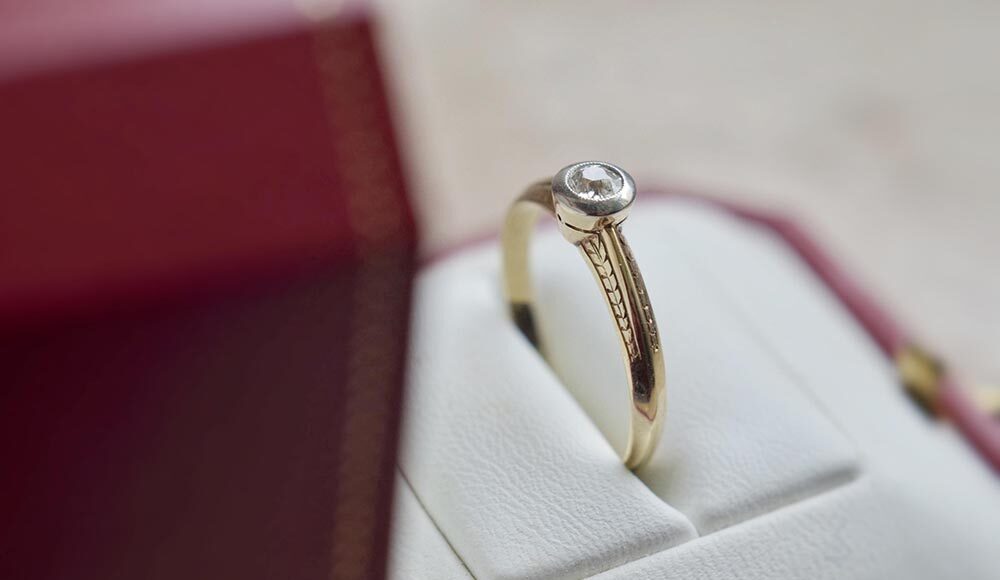
Shopping for an engagement ring is part style decision and part long-term investment.
The stone matters, but so does the store you buy it from. A good jeweller should understand your taste, explain your options clearly and provide reliable paperwork and aftercare.
Define your style before you shop
Start with a clear idea of what you like. You don’t need to know every jewellery term, but a few visual preferences will make the search easier.
Consider which of these broad styles feels most familiar:
- Classic minimalist: a round stone, a slim band and yellow or white gold.
- Vintage romantic: milgrain details, halos, engraved shoulders and warmer rose gold.
- Sculptural modern: oval stones, bezel settings, offset designs and bold proportions.
- Colour-forward: sapphires, spinels or a white diamond framed by coloured side stones.
Save five or six images you keep returning to. Look for patterns in the metal, stone shape, band width and setting height. These references give a jeweller something concrete to work with and help prevent you from being distracted by options that don’t suit your style.
Decide how you want to shop
Online research is useful for comparing designs, prices and store policies. An in-person appointment lets you check scale, comfort, craftsmanship and how a stone responds under different lighting.
The jeweller fit test
The Gemological Institute of America recommends looking for recognised qualifications, such as Graduate Gemologist or Accredited Jewelry Professional credentials. For a significant centre stone, request a grading report from an independent laboratory. The report should identify the stone and document characteristics such as carat weight, colour, clarity and cut.
Ask for the following during an appointment:
- An independent grading report for the centre stone rather than only an in-house estimate.
- A clear explanation of relevant staff qualifications and experience.
- Written confirmation of whether a stone is laboratory-grown or mined.
- An itemised receipt and a written valuation or appraisal suitable for an insurer.
- Time to inspect stones under several types of lighting.
Pay attention to how the jeweller answers questions. Clear explanations are a better sign than pressure, vague claims or an attempt to rush the sale.
Choose the right type of store
- Handmade ateliers: suited to one-off designs and direct contact with the maker.
- Multi-designer galleries: useful for comparing several aesthetics in one visit.
- Vintage specialists: focused on period details, older cuts and unique pieces.
- Online-first brands with showrooms: combine online research with an in-person fitting.
Independent local stores often sit between these categories. In Melbourne, for example, Holloway Diamonds operates a jewellery store in Armadale and lists custom design, remodelling, opening hours and appointment options. Wherever you shop, confirm those practical details before travelling to a showroom.
Check the policies that protect your purchase
Ask about the return window, resizing fees, warranty exclusions and responsibility for shipping or insurance during repairs. If the ring is custom-made, find out whether deposits are refundable and which design changes are permitted after production begins.
Aftercare also matters. Confirm whether the store provides inspections, professional cleaning or repairs, and ask how often the setting should be checked. Get all important terms in writing rather than relying on a conversation at the counter.
Compare custom and ready-to-wear options
A ready-to-wear ring is usually the faster option, although sizing may still add time. Custom work commonly involves design approval, stone selection, production and a final fitting, so allow several weeks and build in extra time during busy periods.
Work backward from your proposal date. Ask the jeweller to explain each stage, identify when decisions become final and provide a realistic completion estimate.
Whether you choose custom or ready-to-wear, try possible wedding bands against the engagement ring before committing. A low or wide setting may limit which bands will sit comfortably beside it.
Set a practical budget
Ignore rules that link ring spending to a set number of months’ salary. Start with an amount that fits your finances, then decide how to divide it between the centre stone, setting, design work and ongoing costs such as insurance.
Laboratory-grown and mined stones can differ significantly in price. Compare them using the same basic criteria, including size, cut quality, colour, clarity and grading documentation. Ask the jeweller to explain the differences without steering you toward the most expensive option. For more help with finding your ring style, return to the visual references you saved.
Use a final checklist
- Independent grading report provided where relevant.
- Staff qualifications and experience explained.
- Laboratory-grown or mined origin disclosed clearly.
- Return, resizing and warranty terms supplied in writing.
- Custom production timeline agreed with a reasonable buffer.
- Receipt and appraisal paperwork suitable for insurance.
- Cleaning, inspection and maintenance requirements explained.
FAQ
How early should we start shopping?
Start several months before the ring is needed if you want custom work. Ready-to-wear designs are generally faster, but resizing, engraving and delivery can still add time. Ask for a written estimate based on the specific ring rather than a general production range.
Which credentials matter?
Recognised gemmology qualifications can indicate relevant training, but credentials shouldn’t replace clear explanations and independent documentation. For a significant diamond, request a grading report from a reputable independent laboratory.
Are returns and free resizing standard?
No. Return, exchange and resizing policies differ by retailer and may be more limited for engraved, altered or custom-made rings. Read the specific terms before paying a deposit or completing the purchase.